




I’m a writer and author with a passion for exploring ideas.
Since 2020, I’ve published monthly book reviews as a way to reflect on what I’ve read. I do my best to challenge my own thinking and remember the lessons worth keeping. Here you’ll find my books, my reviews, and my reflections on the ideas that have shaped my perspective along the way.
My Book
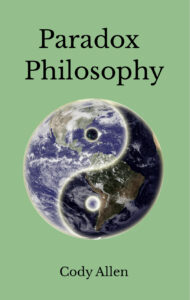 |
Paradox PhilosophyAll things are in both harmony and tension with their opposites—we often choose certainty despite our doubts, fear when there is opportunity for hope, and ourselves when we might think of others—and we should always strive to find greater balance between them. We all want to live meaningful lives, hopefully lives of moral goodness, and philosophy is the study of this venture. Paradox Philosophy is a modern, Westernized version of Yin Yang theory that delivers wisdom towards living a more virtuous life. Available at: |
Book Reviews
- Braiding Sweetgrass by Robin Wall Kimmerer April 12, 2024
 Those of us who have been raised in Western cultures believe that we humans are separate from, and superior to, the natural earth. This philosophy is descendant from the Ancient Greeks who were the first to differentiate us humans from plants and animals and who first began questioning why we are the superior beings on the planet. These same thoughts (the importance of the individual) were strengthened mightily by Enlightenment philosophy and centuries of European “progressivism.”
Across the ocean, in a land that white men would eventually call ‘the new world’ was a different way of thinking: we humans come from, and are inferior to, the earth. This is the way of the indigenous peoples that have had their land and their culture slowly and torturously stripped from them. Despite these hardships, many have spent their lives trying to capture and restore indigenous knowledge for the benefit of us all, our author adding her ecological and native expertise to this endeavor.
It all starts with how we relate to the plants and animals of this earth. “In the Western tradition there is a recognized hierarchy of beings, with, of course, the human being on top” but “in Native ways of knowing, human people are often referred to as ‘the younger brothers of Creation.’” Native cultures recognize that plants and animals have been on the earth far longer than we humans, and because of their tenure they have accumulated immense knowledge that we can learn from them. The biggest difference is evident in the way that each culture relates to plants: Western culture sees a plant as an ‘it;’ Indigenous culture sees a plant as a ‘person.’ “Imagine seeing your grandmother standing at the stove in her apron and then saying of her, ‘Look, it is making soup. It has gray hair,’ Kimmerer writes. We would never refer to a person as ‘it’ because that would be a profound act of disrespect. “‘It’ robs a person of selfhood and kinship, reducing a person to a mere thing. So it is that in Potawatomi and most other Indigenous languages, we use the same words to address the living world as we use for our family. Because they are our family.”
Out of this familial philosophy blossomed the practice of gratitude for the gifts of nature. When the Indigenous people sought to cut down a tree in order to make a canoe, for example, they would first ask the forest which tree might be available. They would fell a tree for use only if there was one available and willing. When harvesting grass and bark to weave into a basket, they will offer a gift to the forest first—they believe that anything taken should be reciprocated for. They believe that if we take care of the land, the land will likewise take care of us, and everyone can live together in harmony.
In the wake of centuries of Western thought dominating current culture, global society has come to a point of seriously harming the planet. It’s not just the raising global temperature, but also the toxins in the air and water, the acid rain, the heavy metals and synthetic hormones in our water, the destruction of forests and ecosystems, and the general way that we relate to nature as something to be dominated and manipulated for our benefit. If we want to save our planet, Kimmerer says, we must change our relationship to the nature world.
“People often ask me what one thing I would recommend to restore relationship between land and people,” she writes, “my answer is almost always, ‘Plant a garden.’ It’s good for the health of the earth and it’s good for the health of people.” In this simple statement we can see the urgent message she expresses in her book: the earth and the people are meant to live harmoniously for the benefit of both.
- The Parasitic Mind by Gad Saad March 8, 2024
 When we think of infections, we almost always think of physical infections that harm the body—things like colds, flus, and the chickenpox. What we less often consider are infections of the mind—bad ideas. In his book, Dr. Gad Saad asks us readers to contemplate an important question: which is more harmful?
Dr. Saad has been a university professor for thirty years at Concordia University of Montreal in addition to having held visiting professorships at a variety of universities in the United States. He has seen first hand the changes happening on the university campus over the three decades of his career and this book is his warning to us all: bad ideas are infecting our young people and spreading themselves throughout society. Some of the parasitic viruses of the human mind that he tackles in his writing include postmodernism, radical feminism, and social constructivism, “all of which largely flourish within one infected ecosystem: the university.”
Postmodernism posits that all knowledge is relative and that there are no objective truths. This makes discussion of pretty much anything one might wish to discuss quite difficult. How might it be possible to discuss the environment if we cannot agree that the sun rises in the east and sets in the west? How can we discuss reproductive rights if we cannot agree on whether or not women are the only gender that can give birth? Beliefs that society used to hold, like the belief that the sun rises in the east and that only women can give birth, are now being challenged, and Saad posits that as these idea pathogens have spread, society has become sicker.
Another pair of infectious ideas exposed by our author are radical feminism, which “scoffs at the idea of innate biologically-based sex differences” and social constructivism, which “posits that the human mind starts off as an empty slate largely void of biological blueprints.” Both are dangerous because they ask us to disbelief our very eyes. On average, across every country and culture, men are physically larger than women and produce more testosterone, whereas women produce more estrogen. Men are more inclined towards aggression and women more-so towards empathy. These are not one hundred percent true for everybody, as there are always outliers, but they do ring true for a majority of Homo sapiens on this planet. If we as a society choose to no longer believe these scientifically-backed ideas, what might the long-term down-stream effects be?
Saad himself is a Lebanese Jew who grew up in a very anti-Semitic culture and at a young age fled the Middle East for his life. He knows first hand how bad ideas can turn a society into a dangerous and hateful place, and can even lead to violence. With his own past in mind, he takes issue with the rising culture of perpetual offense and victimhood he seeing blossoming on university campuses. This is most evident in the way students shout down and cancel conservative speakers invited to give guest lectures due to the ‘violence of their words.’
This phenomenon goes hand in hand with the mass creation of echo chambers void of intellectual diversity. “Just as immunotherapy against food allergies exposes young children to minute traces of the allergens so that, with an incremental increase in the exposure dosage, the body will build immunity against that particular allergen,” he writes, “so too do people need to be exposed to the full repertoire of human interactions so that they can develop as intellectually and emotionally healthy individuals.” If we are only exposed to anti-Semitic ideas, we will become anti-Semitic. Likewise, if we are only exposed to one side of an issue, regardless what that issue is, we will disbelieve the competing idea. This difference of ideas, Saad argues, is something we must embrace and not stifle. University campuses are now littered with safe spaces for students threatened by what they consider ‘offensive speech.’ Freedom of speech, however, is precisely meant to protect the most obnoxious, offensive, and disgusting speech. “Occasionally being offended is the price that one pays for living in a truly free society.” Saad argues for less safe spaces and thicker skin.
So, what is the antidote to these idea pathogens? Reason, science, and the courage to be offended. We must embrace science as the best way to ask questions and search for greater truth. Science and biology is how we know that the sun rises in the east, that women give birth, and that men are physically stronger than women (on average). We must stop banning speech we dislike and instead pose our ideas in contest with them, letting the best ideas win. Not allowing speech we dislike doesn’t make us courageous, it makes us stupid and weak-minded. Strong minds require us to have more mental fortitude.
- The Performance Paradox by Eduardo Briceño February 7, 2024
 When we are young, we are learning everything about everything. As we begin to understand the world around us, we subtly transition from learning into living. This is the same process we follow when learning any new skill: first we learn via practicing, then we perform. The problem many of us encounter is that once we begin performing, our abilities plateau, and our performance ultimately suffers. Our author argues that this is because we abandon learning and practice. In order to continually be our best, whether in the arts, sports, or business, we must “engage in two distinct but equally powerful states of mind: the Learning Zone and the Performance Zone.”
This book draws a lot of inspiration from Carol Dweck’s book Mindset, which is about fostering a growth mindset. Growth mindset is the belief that we can grow and change our abilities through dedication and hard work. It proposes that nobody is stuck where they are—we can all grow and change if we challenge ourselves—and the best way to do this is deliberate practice in the areas where we lack desired skills.
Believe it or not, there are good and bad ways to learn and practice. When asked about practicing, Legendary violinist Leopold Auer once said that “it really doesn’t matter how long. If you practice with your fingers, no amount is enough. If you practice with your head, two hours is plenty.” One of the traps that many of us fall into is practicing elements of our craft that we are already good at. This, again, is not proper practice. In order to be our best we should be challenging ourselves to practice difficult or brand new skills that we can then add to our repertoire. This Learning Zone is one half of the performance paradox.
The other half is the performance part, which many of us get stuck in once we have achieved a certain level of competence. “I already know how to give a presentation,” we might think. “Why would I practice something I already know?” Well, why do professional athletes still have practices in between matches or competitions? Because there are always areas for improvement if we look for them, and simply relying on our performance to expose where the weak areas are often does not uncover them. Sometimes, we can learn while doing (as opposed to learn by doing, a term which our author rejects). This can happen when we make a mistake during a performance which we revisit later to diagnose what went wrong and correct it. Stand-up comedians do this when they test new jokes in front of an audience and gauge the response. Generally, however, it is best to dedicate learning and practice time for making mistakes (because “mistakes are fundamental to continuous improvement”) and when we are in the performance zone, we should focus on doing our best.
When we take this concept from the individual to the collective, it is still applicable: teams need to foster learning environments as well in order to continually improve. One of the most important aspects of being on a team with a growth mindset is eliciting feedback from other group members. We must have the humility to ask where they believe we can improve our work, and we must likewise be truthful with our feedback of others. Fostering a work environment that is supportive of feedback and does not perceive it as negative or attacking is of paramount importance.
As recent research cited in this book shows, engaging in continual learning is tremendously beneficial. “We gain a sense of wonder and awe from our explorations and discoveries; a decrease in anxiety from knowing that we can overcome challenges; personal satisfaction from the growth of our skills and contributions; and greater happiness and well-being as we learn to brush off hiccups and deepen relationships.” The lesson is simple: No matter how good we get at any skill, continuing to make time for practice and learning is key to always performing our best.
- Letters From East of Nowhere by F. Kennerly Clay January 11, 2024
 This book is both beautiful and ugly. It is beautiful in its writing style, in its depth of character, and its brutal honesty about the author’s hardships of having an absent father. Its ugliness comes from its dark depiction of how alcoholism can effect multiple generations of a family.
Clay writes a memoir centered around her father, a man who could never quite seem to let go of the free-wheeling nature of the 1960’s. He dreamed of a life following in the footsteps of Jack Kerouac and never woke up, despite eventually having five children. At a time when letters were a main source of communication, this is where his love for them can be found. As the oldest child, our author has carefully compiled them and presented us with a real, raw, and honest portrait of a man whom she loved and yet was also perpetually let down by.
He was kind and funny, his letters exuding charisma and wit. His children all grew up to share his love of music, and yet sadly, they also inherited his favorite past time: alcohol. This book is, first and foremost, a testament to the effects of alcoholism on multiple generations of a family. A lifelong drinker, Clay’s father never put the bottle down, despite his belief that he could at any time (a stony belief shared by many who drink). Without her father around to teach her otherwise, our author began drinking at the age of 12, eventually getting off the wagon at age 21, before her “elevator hit the bottom floor.” Tragically, one of her brothers was not so lucky, passing away in his mid-40s undoubtedly due to a combination of alcohol and depression, things which a present father figure could have deterred.
This book is a mosaic of stories, pictures, and wisdom, both from Clay’s late father via his letters and from our author herself. She shares honestly and openly, inviting the reader into her relationship with her father and allowing all of their open sores to feel oxygen. It is funny, sad, and emotional throughout. This book, like the life pursued by her father, is an exciting journey.
- How the World Sees YOU by Sally Hogshead December 19, 2023
 There are a million and one marketing books that will teach you tricks to get your product or service our there in the world and noticed. This book is focused on marketing you. In many areas of our lives, especially if we are not traditional marketers, we are the product that must be ‘sold’ to others. In order to best accomplish this task, whether we are an artist, a politician, an engineer, a teacher, or pretty much anybody in any profession, is to understand the way the world sees us.
Our author has spent her entire career as a professional marketer and after many years working for various companies, she has now compiled the ultimate guide to discovering how to ‘market’ individuals. One of the main themes of her work is that instead of focusing on our strengths, we should highlight our differences. “Different is better than better,” she writes, because while we may not necessarily be better than our competition, we are already different. Focusing on our differences and what makes us unique is the best way to stand out and capitalize on our strengths.
In order to discover what makes us truly unique, Hogshead has created an online personality test that can be taken in addition to reading her book. The answers will tell you what your Primary and Secondary Advantages are, and the chart included in the book will tell you your Archetype. This is how the world sees you and is the way that you add distinct value. There are seven main advantages we might be ascribed broken down as follows:
Power personalities speak the language of confidence.
Passion personalities speak the language of relationship.
Mystique personalities speak the language of listening.
Prestige personalities speak the language of excellence.
Alert personalities speak the language of details.
Innovation personalities speak the language of creativity.
Trust personalities speak the language of stability.
As an example, my primary advantage is passion and my secondary is innovation, and my archetype is The Catalyst. According to her charts (and verified by my life experiences) us catalysts are out-of-the-box thinkers, very energizing, and can be very social when we ‘turn on the juice.’ We are creative thinkers who love to connect with others in myriad ways. So, according to our author, this is what I should focus on when I want to add value to others. Indeed, as an artist, I thrive when coming up with creative solutions to problems and I also love bringing others together.
Hogshead has organized her chart into 49 archetypes depending on your combination of advantages, each with their own unique characteristics and unique ability to add value. This brings us to the second theme of her work: Marketing is all about being fascinating. At a time when most people have the attention span of a goldfish, being able to fascinate others and hold their attention is a huge challenge and of paramount importance. In order to be successful, we need to lean into our strengths and recognize that while we may not be able to learn to be as fascinating as the next person, we can certainly unlearn the ways in which we are boring. This brings us back to our first theme, which is highlighting what makes us different and unique. If we put them together, we see that to be our most effective selves we must embrace what makes us different and use these traits to hold other people’s attention. This is how we market ourselves, and it all hinges on how the world sees us.