




I’m a writer and author with a passion for exploring ideas.
Since 2020, I’ve published monthly book reviews as a way to reflect on what I’ve read. I do my best to challenge my own thinking and remember the lessons worth keeping. Here you’ll find my books, my reviews, and my reflections on the ideas that have shaped my perspective along the way.
My Book
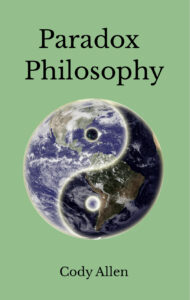 |
Paradox PhilosophyAll things are in both harmony and tension with their opposites—we often choose certainty despite our doubts, fear when there is opportunity for hope, and ourselves when we might think of others—and we should always strive to find greater balance between them. We all want to live meaningful lives, hopefully lives of moral goodness, and philosophy is the study of this venture. Paradox Philosophy is a modern, Westernized version of Yin Yang theory that delivers wisdom towards living a more virtuous life. Available at: |
Book Reviews
- The Gulag Archipelago by Aleksandr Solzhenitsyn December 6, 2023
 We in the West have all heard of Hitler’s holocaust against the Jews. Many of us, however, know little of the holocaust against the people of the Soviet Union. Hitler’s holocaust came and went with his rise and fall; the population destruction in the Soviet Union lasted from 1919 until the closure of the Gulag work camps in 1960, a remarkable 41 years. Hitler’s holocaust is infamous in history and is taught in schools around the world. The story of the Soviet Union’s internal genocide is unknown to many who are not from the region.
The author of this book, Aleksandr Solzhenitsyn, was a commander in the Red Army and saw action on the front lines against the Nazi’s in 1944. Despite his heroism, he was arrested in 1945 for writing negatively about Joseph Stalin to a friend in a private letter. He spent eight years in the Gulag work camps before being released, only to then be sentenced to internal exile in a remote part of southern Kazakhstan. It was there that he wrote much of The Gulag Archipelago, (this is just volume one of three) as he realized the importance of telling the world the horrors of what the Soviet Union had perpetrated against its own people. He was eventually expelled from the country for his writing by the KGB, finding his way to the United States and settling in Vermont.
This book, volume one, is a compilation of stories about the Soviet prison system compiled from a variety of sources including newspapers, letters, documents, personal diaries, things he remembered told to him from other prisoners, and his own personal experiences. It is a searing indictment of the entire Soviet complex, a harangue against communism as it was perpetrated by a government against its own citizens. The Soviet Union was a system built on lies, and our brave author believed that the world needed to know the destruction that such a system of lies perpetrates.
The reality of life in the Soviet Union in its early days was a feeling of perpetual uncertainty; nobody was safe. Anyone could be picked up and arrested at any time and for seemingly any reason. Many people were tortured into signing confessions of guilt (despite their obvious innocence) and given the most common prison sentence—a ‘tenner,’ meaning ten years. In the 1940’s, this often became quarters, or twenty-five years. The criminal code was in its infancy when Lenin came to power in 1918, but as Stalin ruled the country for nearly three decades, the code became more and more encompassing. Anyone who was even suspected of being a threat to power was grabbed off the street and thrown in a cell. Most were then promised a lighter sentence if they named others who had similarly ‘transgressed.’ Many did, and still found themselves beaten and starved anyways.
All of the traditional forms of torture were pursued, including physical beatings, sleep deprivation, exposure to extreme heat and cold, the withholding of food and water, and degradations of all kinds. Many captives experienced being stuffed in an overcrowded cell, with so little room that one could not properly sit down and sleeping was done on top of one another. There is a chapter dedicated to the description of the transport trains, which often visited the same stations as free citizens did, perhaps stopping around the corner of the main platform so as to remain out of sight (and therefore out of mind). There is another chapter describing the almost limitless power of the Bluecaps—the Soviet secret police in charge of arrests and prosecutions.
Solzhenitsyn describes how he came to truly appreciate the people he was held captive with, for they provided stories, the only fruit in season for a human deprived of all else. He met many former military men like himself throughout his time in the jails and Gulags in addition to academics, artists, and people from all trades and walks of life. There were prisoners from other countries and cultures, all thrown into the meat grinder of a prison system, most destined never to escape. As depressing as many of their lives were, it was always exciting when a new prisoner was brought in, for that was the only way to learn about the events of the outside world.
What is most amazing to me is how much of this entire episode is hidden under the heavy dust of history. The Gulag camps were officially closed in 1960, which is only 63 years ago. How shamefully recent! It is both a testament to Soviet secrecy and our own 21st century blind spots that so many people are unaware of the true horror and atrocity of the Soviet genocide. We have only a select few resources to look to for education on the subject, and we owe our courageous author eternal gratitude for bringing such important history to light through his writing.
- Three New Deals by Wolfgang Schivelbusch November 21, 2023
 While the Great Depression started in the United States with a stock market crash in 1929, it quickly spread around the globe throughout the 1930s, eventually affecting nearly every country on earth. International trade fell by a whopping 50% and many countries experienced severe unemployment—some estimate as high as 25% in the United States. Many nations struggled until the Second World War put economies back into action.
Major crises (war; pandemics; economic disasters) almost always lead to more power for those in leadership positions. Perhaps it is the instinctual fear that exists within us humans that causes us to look for someone competent and powerful who will tell us everything is going to be okay when life looks bleak. After the terrorist attacks of September 11th, 2001, for example, President George W. Bush was given a ‘blank check’ and used it to invade the Middle East and massively expand the US government’s surveillance capabilities. This is the same power that was once given to Roosevelt, Hitler, and Mussolini in the wake of the Great Depression, a time in history that produced a similar reaction by many governments from around the world: the centralization of power.
Mussolini, Hitler, and Roosevelt were all charismatic individuals who were given a ‘blank check’ of their own, and this book highlights the similarities in the way they spent it (while also acknowledging their drastic differences—Roosevelt never expressed racism or antisemitism the way his European counterparts did, for example). They all placed an emphasis on national unity, manipulated their citizenry via the use of propaganda, and funded public works as a means of reshaping their societies.
All governments use propaganda to influence their citizenry. Mussolini, Hitler, and Roosevelt propagandized their people with ideals surrounding national unity and all three were largely successful. Interestingly, all three used eagles as central pieces of their political symbols, however, as one historian wrote about Roosevelt’s blue eagle campaign, it was “based on voluntary cooperation, but those who did not volunteer to cooperate were to be forced into participation.” Something similar can be said about Italy under Mussolini’s rule and Germany under Hitler’s. Coming together to solve collective problems is indeed often the surest way to prosperity, and as “divergent as the New Deal and Nazism were when it came to application of direct state coercion, they were similar in their political rhetoric and the underlying psychology behind that rhetoric.” If you weren’t with them, you were against them.
Despite the fact that the United States was a liberal democracy and Germany a repressive dictatorship, both Roosevelt and Hitler (and Mussolini) “depicted their rise to power as the concrete realization of the idea of the nation,” each casting himself as the sole strong man capable of leading his country out of chaos and depression. Roosevelt spoke to his citizens via the radio and his weekly fireside chats and Hitler and Mussolini spoke to their supporters at massive outdoor rallies. In both realms, the effect was the same: people felt as though their leaders were taking care of them. In their own way, they were.
All three of these leading men invested heavily in public works projects as a means of uniting their people and showing them that a better world could exist. The problem, of course, as the history of communism teaches us, is that society can very seldomly be built from the top down—it is most successful when it is built bottom up. So, while the attempts at building new communities were mostly failures, the successes were found in areas of public utility: roads, canals, bridges, highways, hospitals, and schools. Germany’s autobahn highway was started by Hitler during this time.
While we may be able to look back at history and see Roosevelt’s expansion of social services as empathetic towards the starving lower classes and Hitler’s persecution of Jews as genocide, we can nevertheless identify in both governments (as well as Mussolini’s) a “seismic historical change from liberal to state capitalism, replete with a welfare state and government planning and direction of society.”
- Think On These Things by Krishnamurti November 8, 2023
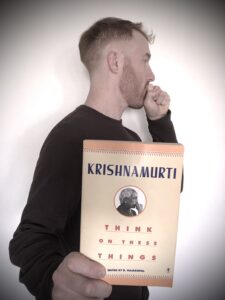 This book is a collection of talks given by the author Krishnamurti to groups of school children, parents, and teachers. He talks about a variety of ideas like education, freedom, and truth, and also answers questions asked by the students.
One of the most important questions that he considers throughout the book is: What is the purpose of education? If we are simply learning something so that we can pass an examination, is that really education? Krishnamurti argues no. “Not to imitate but to discover—that is education,” he believes. “When learning is only a means to get somewhere, the moment you have got where you want to go, you forget the means—and surely that is not learning at all. So there may be the state of learning only when there is no motive, no incentive, when you do the thing for the love of itself.” With this sentiment in mind, we must ask ourselves: Is school a place where children go to learn or one where they are indoctrinated?
This line of thought leads him to examine the role of tradition in society. We are all made to conform to social norms, and it is important to determine for ourselves when this is good and when it is detrimental. The weight of the past drives us to conform, and “through conformity the mind feels safe, secure; it establishes itself in a well-oiled groove so that it can run smoothly without disturbance, without a quiver of doubt.” Yet it is imperative for us to embrace doubt, for how else are we to learn? Certainty kills our impetus to search for new meaning—it is only when we think ‘I don’t know’ that we are able to search for truth.
This leads us to the question of religion, for what is religion but the passing on of traditions from one generation to the next. Krishnamurti believes that “if a man is seeking God he shuns temples because they divide people. The Christian church, the Mohammedan mosque, your own Hindu temple—they all divide people, and a man who is seeking God will have none of these things.” Perhaps religion, like education, is simply another avenue for indoctrination of the youth?
Our author also comments on power and freedom when he comments that “the moment you want to be somebody you are no longer free.” Anything we may aspire to be creates constraints on our behavior, whether we covet a job, a relationship, or a virtue. Only when we are “not moved by the desire to be somebody” are we truly free. While this may be true, don’t we need desire to get us out of bed in the morning? Without aspiration, why do anything in life? More thoughts for us to consider.
One of the most important themes in this book is the search for truth, and it is impressed upon his audiences (and readers) that truth is not something that can be given to us by others: we must find it for ourselves. It is a journey we must all embrace, for it is synonymous with the journey of life.
Think on These Things is a book overflowing with philosophy, some of which I found to be deeply insightful, and some of which I questioned. But of course, that is the purpose of philosophy: to make us think.
- Manufacturing Consent by Edward S. Herman and Noam Chomsky October 25, 2023
 In order to stay informed about the news of the world, we all must place our trust in whoever is doing the reporting. There is simply not enough time in the day to do all of the information-gathering, source-verification, and fact-checking ourselves. While we may be able to do a portion of this legwork about issues we really care about, we offload a vast majority of this process to journalists and reporters and trust them to bring us back the truth.
The problem with this process is that people (and institutions) don’t always report the objective truth—everyone is driven by incentives. Usually people are incentivized by money, however, when governments are involved, it is more often power. So, while we must place our trust in someone to report the news, we must be diligent about who we choose and do our best to recognize what their incentives are.
With this in mind, we can observe that media content distributed by governments is propaganda: its purpose is to not inform the public of facts, but rather to frame the news in its own best interest. Government sanctioned media outlets employ propaganda techniques in a variety of ways, two of which examined in this book are the U.S. government’s dichotomous treatment of ‘worthy’ versus ‘unworthy’ victims’ and also their portrayal of ‘legitimate’ or ‘meaningless’ Third World elections.
In the first case study, our authors note the difference in media treatment given to two different victims: one a Polish priest named Jerzy Popieluszko who was assassinated for resisting his country’s communist regime; the second a group of four American missionaries murdered in El Salvador for helping refugees of the Salvadoran civil war. Based purely on these objective facts, we would expect the American missionaries to be the main story in American news. A propaganda model suggests otherwise.
The U.S. press portrayed Popieluszko in a sympathetic light and his assassins in a negative one. What was the reason for this? Their incentives: anti-communism in any and all endeavors. Popieluszko was murdered for being anti-communist, a sentiment shared by the U.S. government, and the account of his tragic death was therefore prominent news. His story was carried by all of the major news networks, for many weeks, with kind language attributed to him and inflammatory language assigned to his assassins. Our authors compare this media treatment to that of four American women who were kidnapped and murdered in El Salvador. These women received a mere fraction of the attention that Popieluszko did because the U.S. government was friendly with the Salvadoran government and did not want to invite attention to their crooked dealings. Despite numerous reports that the women were murdered by the military, with approval from the Salvadoran government, it was still downplayed. The U.S. was in cahoots with the Salvadoran government and were incentivized to keep quiet any negative press about them.
In the second case study on elections, a similar theme can be found, using elections in El Salvador and Nicaragua as examples. In the Salvadoran election, rebel disruption was a central feature of the U.S. government’s propaganda frame because the rebels opposed the election. This frame was set by the U.S. because they wanted the current Salvadoran government—one they were friendly with—to stay in power. “In the case of Nicaragua, the propaganda format was reversed—the rebels were the good guys, and the election held by the bad guys was condemned in advance.” This frame was taken because the U.S. wanted the leading Sandinista coalition to lose and for the rebel party they were friendly with—the Contras—to win. The U.S. mass media followed the government’s agenda in both cases, even though it meant an exact reversal of the standards they applied to each election. Once again, we can trace this behavior back to the incentives of the U.S. political elite.
Another example of the U.S. government’s propaganda model examined in this book is their portrayal of the carnage in Vietnam, Laos, and Cambodia. The war in Indochina was presented to the American people as the “struggle between Communism and the Free World.” The Vietnamese were presented as “merely agents of Moscow and Peking whose primary means of gaining support was through terror and force” while France was “a gallant ally…fighting alongside the United States to preserve liberty and justice in Asia.” All of this despite the overwhelming evidence that the U.S. were the aggressors, dropping thousands of bombs on poor and defenseless peasants in the countryside. Although civilian casualties were overwhelmingly the result of U.S. firepower, attribution of responsibility by television was “weighted by a 10 to 7 ratio to the account of the enemy; its ‘calculated policy of terror’ contrasted with the unfortunate but legitimate side-effects of U.S. operations.”
The same can be seen in Cambodia by the media portrayal of their leader Pol Pot. At one extreme, he was described as “having forged new patterns of genocide comparable to the worst excesses of Hitler and Stalin,” reports that were downplayed and minimized by U.S. sanctioned media. At the other extreme, Douglas Pike, former head of the University of California Indochina Archives, a man much admired by the New York Times, described Pol Pot in November 1979 as the “charismatic leader of a bloody but successful peasant revolution with a substantial residue of popular support, under which on a statistical basis, most of them [peasants]…did not experience much in the way of brutality.” Once again, we can understand the portrayal of these dichotomous views on Pol Pot by understanding the incentives of the U.S. government: Despite the fact that Pol Pot’s genocide was extensively documented, being friendly with his regime (the Khmer Rouge) was politically advantageous to the U.S. government. Through this lens, it becomes obvious why they chose to highlight his actions in a friendly manner: keeping themselves in positions of power.
These are just a few case studies brought to light in this book, but the overall message is clear: all news brought to the public by government institutions is propaganda. Whether it is an outright refutation of the truth, the choice of what to highlight and what to ignore, or even the words chosen to describe people and events, everything is crafted carefully to adhere to the incentives of the politically powerful. Their objective is always to preserve and expand their power. For those of us consuming media, this is paramount to understand. We must always look below the surface and examine the reasons why a story is being told. Who stands to gain from information presented in such a way? What are the underlying incentives? And, most importantly: Who do we trust to deliver us the news?
- How Trust Works by Peter H. Kim October 11, 2023
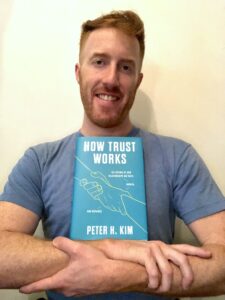 Trust is paramount for all successful and supportive human relationships. In love and in friendship, it is essential. In business, explicit contracts are often drafted so as to protect each party from violations of trust by the other despite the reality that the more trust there is without such binding contracts the better the relationship is for all parties. In politics, trust between the leaders and the people is necessary, and yet we seem to have less and less of it with each passing year. Our initial conclusion is obvious: the more trust we have with others, the better.
Through the research and writing of this book, our author shares that there are two main ways that we determine (and violate) trust in another: “competence, or the belief that someone possesses the technical and interpersonal skills that are required for a task,” and “integrity, or the belief that someone will adhere to a set of principles one finds acceptable.”
If a trust violation is one of competence, it can often be overcome, because while we need very little to establish that someone is competent, we are willing to “discount a single poor performance as a signal of incompetence, based on the assumption that even highly competent people can occasionally fall short of what they would normally be able to achieve.” If a trust violation is one of integrity, it is comparatively much harder to overcome because “we intuitively believe that those with high integrity would refrain from dishonest behavior in any situation, whereas those with low integrity will act either honestly or dishonestly depending on incentives.” Therefore, when we believe someone has acted dishonestly, we take it as “a reliable signal of low integrity, based on the assumption that only those with low integrity would ever act in dishonest ways.”
Let’s say we hire an accountant to do our taxes and they do a fine job three years in a row. Then, on the fourth year, we get a measly return, and after investigation determine that our accountant failed to understand a change in the tax code that should have benefitted us. This violation of trust can be easily forgiven by most people because the accountant has done good work in the past and simply made a mistake. We might not hire them next year, but we can forgive them for their lack of competence.
Alternatively, let’s say we discover that our spouse is cheating on us. This destroys our trust in the other, because we will now feel it necessary to re-examine many of their previous decisions and actions through a different lens. We may recalibrate our entire opinion of our spouse from a positive one to a negative one. We might choose to stay in the relationship, but this violation of trust is considerably harder to forgive.
With this in mind, when trust is broken, an important part of our response should include consideration of why the offense occurred. Is it a breach of competence or integrity? The answer can help guide us toward the path of reconciliation (or further separation).
The key to real trust is being willing to make ourselves vulnerable and is based on the belief that others won’t let us down, even though they could. We need to trust others and we need others to trust us because the more trust we have, the better our relationships will be. The relationships we share with others are one of the foundations of a good, happy, and prosperous life, which makes trust in others one of the highest virtues. We must always do our best to cultivate it responsibly.