




I’m a writer and author with a passion for exploring ideas.
Since 2020, I’ve published monthly book reviews as a way to reflect on what I’ve read. I do my best to challenge my own thinking and remember the lessons worth keeping. Here you’ll find my books, my reviews, and my reflections on the ideas that have shaped my perspective along the way.
My Book
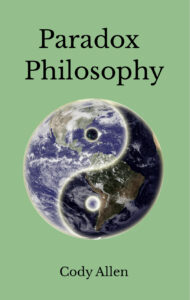 |
Paradox PhilosophyAll things are in both harmony and tension with their opposites—we often choose certainty despite our doubts, fear when there is opportunity for hope, and ourselves when we might think of others—and we should always strive to find greater balance between them. We all want to live meaningful lives, hopefully lives of moral goodness, and philosophy is the study of this venture. Paradox Philosophy is a modern, Westernized version of Yin Yang theory that delivers wisdom towards living a more virtuous life. Available at: |
Book Reviews
- No Good Men Among The Living by Anand Gopal August 7, 2024
 The United States had troops in Afghanistan for twenty years. We spent billions of dollars fighting our ‘war on terror’ and attempting to install democracy in a patriarchal country dominated by Islamic sentiments. We wanted revenge on Osama bin Laden for the September 11th attacks on our soil in addition to wiping out Al-Qaeda and the Taliban. With these statistics and goals in mind, the question remains: What actually happened in Afghanistan as a result of our occupation?
In order to answer this question, we need to understand the recent history of the country. Like so many areas of the world, Afghanistan first found its feet in the modern age after defeating its European oppressors. In this case it was the British who finally resigned the fight in 1921, with The United States officially recognizing the country of Afghanistan in 1934. After the Second World War, Afghan King Muhammad Zahir Shah embraced Soviet communism and established friendly ties with the Union to his country’s north. Then, in the 1970’s, he was assassinated, and the country was thrown into turmoil, with the Soviets eventually invading on a mission to help aid the floundering communist government. This of course led the United States to fund and equip the resisting forces and Afghanistan became a proxy war zone in the global Cold War dispute between East and West. When the Soviets eventually left a decade later, the country descended into a horrific civil war with rival warlords fighting for scarce resources. Afghanistan was devastated from decades of war, and it was a religious band of students—the Taliban—that emerged in the mid 1990’s to end the warring factions and establish law and order. This they did, bringing nearly 90 percent of the country under their control, while simultaneously instituting a “draconian purity the likes of which the world had never witnessed.” Then, September 11th, 2001 saw terrorists attack the United States, and war was soon back.
In his book, Gopal follows the lives of three different Afghans directly affected by US involvement in the country: There is the ‘pro-American’ warlord Jan Muhammad Khan, the Taliban commander Akbar Gul, and a rural housewife named Heela Achekzai. Each story is powerful and instructive in its own way, and each reflects the devastation wrought by the superpower that is the United States military.
As American forces began to operate in the Afghan countryside, they needed a way to identify the Taliban. Their solution was to enlist the local leaders, and Jan Muhammad was one such collaborator, a man able to serve them up a multitude of Taliban party members. What Gopal’s reporting reveals, however, is that Jan Muhammad played the American’s for fools, simply branding his ethnic and economic rivals as Taliban and letting the American special forces do his dirty work for him, subtly increasing his power with every American strike on his personal enemies. He was not the only local warlord who figured out this simple game: Washington wanted tangible enemies, and leaders like Jan Muhammad were happy to oblige.
Akbar Gul’s story is also a revealing one. Previously a Taliban fighter, he had turned his back on the organization and been attempting to live a quiet life. After a few years stuck between American raids on anyone fingered as a Taliban sympathizer on one side, and a corrupt and dangerous Afghan police force on the other, his only option was to once again pick up a gun and fight for his survival. His story is mirrored by many: people who simply wanted to live in peace were given no choice but to fight back against both foreign and domestic governments destroying their homeland.
Most women in the Taliban’s Afghanistan are not permitted to leave the four walls of their home without a man. They have no rights, no personal property, and no decision making power within their own family: everything belongs to the men. While many women accept this way of life without protest, Heela’s story highlights the courage a woman put in impossible situations can find within herself. Believed to be a terrorist, her husband was murdered as a result of the American occupation. In addition, two of her sons sustained serious and life-altering injuries as mere toddlers. With nowhere to turn, she picked up a Kalashnikov and dragged her children with her to the American compound, where she was saved by the very nation that caused her family to be torn apart in the first place. She went on to become a Senator in the capital city of Kabul, one of the only women in the country involved in politics.
While these three characters are the main focus of the book, the wider world of Afghan culture shines through its pages. It is a country of long-standing political corruption, one that seems to take two steps back for every one taken forward. “Of the $557 billion that Washington spent in Afghanistan between 2001 and 2011, only 5.4 percent went to development or governance,” Gopal reports, “the rest was mostly military expenditure, a significant chunk of which ended up in the coffers of regional strongmen like Jan Muhammad.” Most Afghans live beyond the reach of any central government and are at the mercy of their local leaders, men like Jan Muhammad, whose only real goal is increasing their own power. In this venture, the United States was a pawn (or, more accurately, an attack dog).
The one truth that seems certain is that the US military’s involvement in Afghanistan made the Taliban into what it is today. Every innocent man that was killed, or taken to Guantanamo Bay and tortured, left broken family members behind, people who were ripe to join the anti-American cause. “With Afghan schools destroyed, millions of boys were instead educated across the border in Pakistani madrassas, or religious seminaries, where they were fed an extreme, violence-laden version of Islam,” Gopal writes. “Looking to keep the war fueled, Washington financed textbooks for schoolchildren in refugee camps that were festooned with illustrations of Kalashnikovs, swords, and overturned tanks.”
We wanted to fight terror, but in a twisted fate of irony we became that very terror, dropping bombs from the sky on rural villagers herding goats. We are directly responsible for creating the terror that we professed wanting to root out and eliminate. The Taliban are now stronger than ever, and we only have ourselves and our incompetence to thank for it.
- Debt by David Graeber July 10, 2024
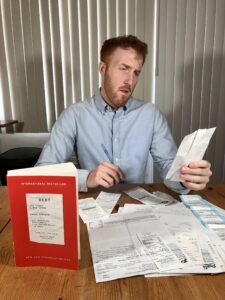
One of the first myths debunked by Graeber in this book is the myth of barter. Most of us educated in western school systems are taught that before there was physical money, people of the ancient world traded goods and services in a simple economy dominated by bartering with others. This couldn’t be farther from the truth. Caroline Humphrey, a professor and anthropologist from Cambridge, wrote in her book Barter, Exchange, and Value that “No example of a barter economy, pure and simple, has ever been described, let alone the emergence from it of money; all available ethnography suggests that there never has been such a thing.” So why are we taught this myth in schools? Because on its face, it makes sense. Only when we study history with a closer lens does it fall apart.
Let’s say we are members of an ancient society (pre-coinage) and I need a new pair of shoes. You, the shoemaker, have plenty of shoes to barter with. Perhaps I have a few chickens with which to trade, but what if you don’t want chickens? Or perhaps you already have some and are in need of corn instead? How do we trade? We can try to find a third person who has corn (and hope that they need chickens) and make a three way trade, but this could prove difficult and time consuming, with no guarantee of success. Or, you could give me the shoes on credit, and I’ll promise to pay you back at some point in the future. This second strategy is how people from throughout history have completed economic transactions: through credits and debts.
Say you give me the shoes, but because you have no use for chickens, we agree to sign an IOU and each take home our respective half of the contract. That IOU is now worth a pair of shoes whether it remains in your hands or not. Perhaps you then take that IOU and trade it with another neighbor for the corn you want, and my debt now transfers from you to them. This is, in effect, how money came into being; at its core, money is a promise.
This only takes us so far though, because we must then determine the value of the pair of shoes you have given me. Are they worth one chicken, two, or three? Does it even make sense to measure the value of shoes next to the value of chickens in the first place? Here we are at another impasse. The solution, then, is to find a third thing that everything can be measured against. This third thing is what we call ‘money.’ Different societies throughout history have used many different things as money, like beads, shells, barley, salt, silver, and gold. It’s less important what this third thing is, and more important that everyone in society agrees upon its value. So, let’s apply this to our theoretical example: you give me the pair of shoes that I desire, and we mutually agree that they are worth 5 bushels of barley. I am now in debt to you for the equivalent of this amount. While I can certainly pay you back with 5 bushels of barley, if I don’t have it, then the equivalent number of chickens will suffice. This is only doable because all of these goods have a recognizable and agreed upon value in barley, which in this instance is our ‘money.’ Oftentimes nobody actually had barley (or whatever was considered money in their society), it was simply used as a way to measure the value of shoes and chicken and everything else. IOU’s were passed around as money and most people were both creditors and debtors to most others.
When societies were small, simple IOUs etched out on bark or bamboo sufficed as a token of debt. As societies grew larger, and people became more anonymous to one another, it became harder and harder to trust your neighbor. What would you do if you made a trade, received an IOU, and then that person left town never to return? The need for actual money grew as societies did, which leads us to another important question: Who are the biggest financiers of history? The answer is governments. Eventually, governments became the enforcers of debt, the minters of money, and the regulators of the market because “historically, war, states, and markets all tend to feed off one another.”
In previous centuries throughout human history, societies grew by conquest. This conquest was done via armies, composed of men who wanted something in return. They couldn’t take an IOU (or a chicken or a bushel of barley) because they were often on the march and might be in a different part of the world tomorrow. This drove governments to mint coins with which to pay them, money that could be redeemed anywhere throughout the empire. This minting of coins then catalyzed the creation of markets because the soldiers needed a place to spend their money. As armies and empires grew, so did the demand for coins, and governments became the only organizations large enough to keep up with the demand. More conquest meant larger armies which fueled more coins which enlarged the markets, a cycle that perpetuated itself (until the empire eventually collapsed).
Debt is not just a monetary and economic phenomenon, but also a political and philosophical one. Think about the feeling we get when someone does us an unexpected favor: we feel like we owe them a similar favor in return—we’re in debt to them. Or, think about how we behave with family and close friends: often times we give our money (and time) freely without expecting to be reimbursed, a system that’s closest definition is communism. This is the relationship I have with my mother: I fix the fence and she prepares dinner. While we are communists in our immediate family, we exist within a larger capitalist system, one that has simultaneously brought our modern world into being while also weaponizing debt against the poorest among us. Capitalism is the story of how “an economy of credit was converted into an economy of interest; of the gradual transformation of moral networks by the intrusion of the impersonal—and often vindictive—power of the state.”
Let’s revisit our earlier example: I want to buy a pair of shoes from you but I don’t have the necessary 5 bushels of barley. This time, instead of a fixed amount, you declare that for every week I do not pay my debt back to you, it will increase by another bushel. You do not intend to trade my IOU to anyone else; you plan to collect. What happens if my debt becomes more than I can pay? For many people throughout history, this resulted in debt peonage—selling themselves (or their family members) to cover their expenses. This is how farmers became slaves on their own land: they borrowed from a wealthy lender, perhaps had a poor harvest year, defaulted on their loans, and become so deeply indebted to their financier that they sold themselves and became slaves (in addition to their wives and children, if they had not already been sold). This is the basis for why many believe capitalism to be such a predatory system: the interest.
At its most fundamental level, a lot of social life is based on the principle of reciprocity; if I scratch your back, you scratch mine. Therefore, “all human interaction can best be understood as a kind of exchange.” If so, then debt is at the root of all morality, because debt is what happens when some balance has not yet been restored. “The criminalization of debt, then, was the criminalization of the very basis of human society.” When humans lived in small, tight-nit communities, asking for interest on a loan was seen as immoral (I would never ask my mother for two dinners). As societies grew and times changed, usury slowly became more and more acceptable, to the point where now it is common practice. There is a problem with always asking for interest on a loan, however, which is that it requires growth—I need more money than I am borrowing in order to pay it back. Herein lies the fatal flaw in capitalism: it is a system based upon growth. However, something that only grows cannot exist forever; at some point it must end. On the one hand, our debts give us a sense of purpose towards one another, as it is the fundamental way in which we exchange and relate, and yet, on the other, the debts of capitalism are simultaneously slowly strangling us.
“For thousands of years, the struggle between rich and poor has largely taken the form of conflicts between creditors and debtors” and our current day and age is no different. The United States has been the global empire for the past century, but our power is slowly slipping as we remain engaged in foreign wars and watch the purchasing power of our dollar shrink. The gap between rich and poor in this country (and indeed in most western countries) has never been larger, a trend that is continuing. As Graeber details in his book, for the last five thousand years of recorded history, with remarkable regularity, population insurrections have begun with “the ritual destruction of the debt records—tablets, papyri, ledgers, whatever form they might have taken in any particular time and place.” In the ancient world, all revolutionary movements had a single program: Cancel the debts and redistribute the land.
What does this truth about history reveal for us today, as Americans (and Westerners as a whole) are more in debt than ever before? What does it say about governments that are more in debt than ever, printing money to pay for their own bills? Might we see a revolution of poor debtors against rich creditors?
- Beyond Order: 12 More Rules for Life by Jordan Peterson June 5, 2024

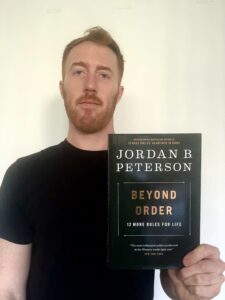 We all have our own rules that we make up and follow in order to lead a meaningful life. Always eat a hearty breakfast to start the day, for example, or never go to sleep angry with our partner. In this book (his second in the series) Peterson shares 12 of his rules for living a life of purpose. They center around doing—embracing—difficult things, like assuming responsibility where it has been abdicated, not allowing old memories to continue to haunt us, and remaining grateful for the positive things we have despite the suffering that accompanies life.
Why do difficult things? He asks his readers to imagine the following conversation: “‘Do you want difficulty?’ ‘No, I want ease.’ ‘In your experience, has doing something easy been worthwhile?’ ‘Well, no, not very often.’ ‘Then perhaps you really want something difficult.’” He reasonably concludes that doing difficult things is necessary in order to understand “the reason for Being itself.” While this not only improves society for those around us, it is also the key to improving ourselves as individuals. “What is a truly reliable source of positive emotion?” he once again asks his readers. The answer is that “people experience positive emotion in relationship to the pursuit of a valuable goal.” Psychologically, it’s the journey, not the destination, that brings us the most positive emotion. And, the more grandiose the goal, the more grandiose the feelings we experience as we make strides towards its completion.
Examining the state of society today, Peterson openly ponders a theory of responsibility, writing about how it is not only “appropriate to grant power to competent authorities, if they are solving necessary problems,” but that “it is equally appropriate to be one of those competent authorities, if possible, when there is a perplexing problem at hand.” Sometimes it is not enough to stand on the metaphorical sidelines and observe the problems of the world; sometimes we must be the ones to actively take on the role of problem-solver. If we won’t, who will?
There is an entire chapter on conquering our past so as to stop it from dominating our present, and while that is certainly on the list of difficult things we should all pursue, it is of lower importance than doing difficult things here and now. “It has been known for decades, explicitly (and forever, implicitly) that self-initiated confrontation with what is frightening or unknown is frequently curative.” Acknowledging and voluntarily confronting our fears is an act of courage that is “deeply reassuring at the most fundamental levels of psychological being.” Not only should we confront scary things in order to overcome our fears, we should do them to improve our psychological health!
In a few places in his book, Peterson examines the need for both conservative and liberal types of people to work together to produce a functioning society. Conservatives carefully implement processes of tried-and-true value, and the creative, liberal types “determine how what is old and out of date might be replaced by something new and more valuable.” By coming together to work in harmony, conservatives and liberals can bring a healthy balance to the regulation of society. Conservatives bring security of place, order, and predictability to life’s chaos, while liberals rightly caution against the destruction of the living planet by pollution and climate change. No matter how beautiful the natural world, it is the job of conservatives to remind us that it is always conspiring to starve, sicken, and kill us. Likewise, it is the job of liberals to continue to push for change in the areas where society is lacking because without constant change and innovation we will succumb to entropy.
As he offers his advice on self-improvement and pursuing difficult goals, Peterson reminds his readers to assume that our biggest enemy is ourselves. “Consider the characters fabricated by second-rate crafters of fiction,” he writes: “they are simply divided into those who are good and those who are evil. By contrast, sophisticated writers put the divide inside the characters they create, so that each person becomes the locus of the eternal struggle between light and darkness.” It is much more psychologically appropriate (and much less dangerous socially) to assume that “it is your weaknesses and insufficiencies that are damaging the world” than to assume “saintlike goodness on the part of you and your party.” This is also sound advice, for it is easy to see the faults of others and always more difficult to diagnose our own. Once again, we should do the difficult thing and examine ourselves.
The overarching theme of this book is that life is chaos and the best way to bring order to its anarchy and entropy is to voluntarily take on difficult tasks.
- The Psychology of Money by Morgan Housel May 16, 2024
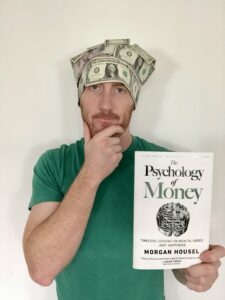 Good investing is not about getting the highest returns. It’s about getting good returns that can be repeated for the longest period of time. “The historical odds of making money in U.S. markets are 50/50 over one-day periods, 68% in one-year periods, 88% in 10-year periods, and (so far) 100% in 20-year periods.” The reality is that “there are few financial variables more correlated to performance than commitment to a strategy during its lean years—both the amount of performance and the odds of capturing it over a given period of time.” With this in mind, the question remains: Why do so many of us buy and sell our stocks when it may in fact be best to do the opposite?
The answer is our emotions. Our emotions are what compel us to get married, to root for our favorite sports teams, and to buy our favorite foods. It would be difficult to choose a bag of chips at the supermarket without our emotions—with so many options, all boasting different flavors and styles, pure rationality gets us stuck; we need our emotions to kick in and grab the bag that ‘looks’ the best. In his book, our author has abundant examples of how we behave just the same when it comes to our money and investments, ultimately leading us to buy and sell when we shouldn’t.
One of Housel’s most important financial observations is recognizing what our time horizon is. Are we investing for a three-month period, a three-year period, or a thirty-year period? The answer to this question will determine what kinds of investments we should make. “Your personal experiences with money make up maybe 0.00000001% of what’s happened in the world, but maybe 80% of how you think the world works,” Housel writes, “so equally smart people can disagree about how and why recessions happen, how you should invest your money, what you should prioritize, how much risk you should take, and so on.” There is rarely, if ever, a single answer to a financial question, and it is incumbent upon each of us to keep our time horizon in mind when making investment decisions.
We are only able to do this, however, if we have some money. Despite our desire to invest and grow our money, it is important to remember to keep some savings, or a “margin of safety,” in case of an emergency. Housel encourages his readers to save money for the unpredictable events that life will surely throw at us. A sudden medical illness or broken car part, for example. How many of us were financially prepared for Covid-19?
We invest to get wealthy, and while becoming wealthy may entail some risky bets on the stock market, the key to staying wealthy is not spending. “Wealth is the nice cars not purchased. The diamonds not bought. The watches not worn, the clothes forgone and the first-class upgrade declined.” Real wealth is having control over our time, and getting to do what we want, when we want, with who we want, for as long as we want. The great philosopher Aristotle himself once wrote that “wealth is evidently not the good we are seeking; for it is merely useful and for the sake of something else.” That something else is the freedom to do what we want with our time, and, by extension, our lives.
In sum, we should all save a little more than we think we should, invest our money for the long term, and expect the unexpected. Ups and downs in the market happen all the time for reasons we often cannot predict, and buying and selling in an effort to beat the market will rarely lead to large returns. The best investing is done over a long period of time when our money is able to compound and grow. This only works if we don’t let our emotions highjack our brains and we stick to our time horizon. Our goal is not wealth; our goal is control over how we spend our time.
- The Power of Now by Eckhart Tolle May 1, 2024
 As its name suggests, this book is all about living in the present moment. “You are in the here and now, while your mind is in the future,” Tolle writes, “this creates an anxiety gap.” When we experience anxiety and fear, we are imagining events that might happen in the future. Similarly, when we experience guilt and shame, we are remembering things that have happened in the past. It is impossible to feel these (or other) stressful emotions, however, when we are experiencing the present moment. When we are here and now, our author argues, the only thing we can experience is joy.
There are plenty of strategies for living more presently; it’s the reason why “some people love to engage in dangerous actives, such as mountain climbing, car racing, and so on,” because it forces them into the Now. For other people, meditation does the trick. The Now is what our author describes as “that intensely alive state that is free of time, free of problems, free of thinking, free of the burden of the personality.” It’s what people are referring to when they comment that “time flies when you’re having fun.” Of course, keeping our minds present can be a difficult task—the mind loves to wander, to think about people and events from our past and potential future. To this, our author posits that we are not our thoughts, that “when you listen to a thought, you are aware not only of the thought but also of yourself as the witness of the thought,” and while some thoughts might arrest us, some we can calmly let pass. Recognizing that we are not our thoughts enables us to start “watching the thinker,” a route to a higher level of consciousness, for, if we are not our thoughts, and can observe ourselves as thinkers, then we must be one with a higher level of Being. Some people believe this is what it means to be one with God.
While Tolle offers some Biblical sentiments throughout his writing, he also embraces those of Buddhism, including a quote from a Buddhist monk: “All I have learned in the twenty years that I have been a monk I can sum up in one sentence: All that arises passes away. This I know.” The truth of this profound statement makes us each consider the question for ourselves: what is time? Tolle’s answer is simple: nothing to be concerned about. Envisioning ourselves somewhere in time leads us to contemplate the past and the future. But, if we are living in the Now, there is no time, there is only presence.
So, what is the path to enlightenment? Living in the present moment and recognizing that we are not our thoughts. Our minds conjured up the idea of time in order to help organize our lives, but time is ultimately an illusion. The sooner we accept this reality in our hearts, the sooner we can start living our lives in the present and experiencing the joy of Being.