




I’m a writer and author with a passion for exploring ideas.
Since 2020, I’ve published monthly book reviews as a way to reflect on what I’ve read. I do my best to challenge my own thinking and remember the lessons worth keeping. Here you’ll find my books, my reviews, and my reflections on the ideas that have shaped my perspective along the way.
My Book
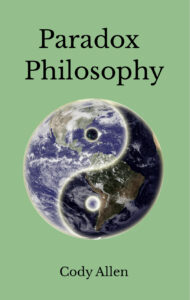 |
Paradox PhilosophyAll things are in both harmony and tension with their opposites—we often choose certainty despite our doubts, fear when there is opportunity for hope, and ourselves when we might think of others—and we should always strive to find greater balance between them. We all want to live meaningful lives, hopefully lives of moral goodness, and philosophy is the study of this venture. Paradox Philosophy is a modern, Westernized version of Yin Yang theory that delivers wisdom towards living a more virtuous life. Available at: |
Book Reviews
- Anxiously Ever After by Clint Edwards April 22, 2025
 Clint Edwards grew up in rural Utah with two Mormon parents and despite the church placing emphasis on the importance of the family unit, his father was married four times throughout his life and his mother was married three times. His father was the one who first initiated a break-up with his mother, and his lack of financial support for Clint and his brother when they were kids led his mother to work three jobs just to keep food on the table. Working all the time wore her down to the point where Clint couldn’t handle her emotional volatility and he moved out when he was fourteen. He finished high school living with his grandmother who was the only person in his life who offered stability.
His father had an incurable dependence on opioid painkillers that left him going from doctor to doctor just to get his (often fake) prescriptions filled. His father’s life was a sad slide deeper and deeper into drug addiction until he reached the point of no return and died before reaching his 60s. He spent many years gaunt and blurry-eyed and altogether absent from Clint’s life. His father’s addiction was very painful for Clint to experience, a heartbreaking sentiment he expresses through his writing.
Ultimately, this is a story about mental illness, as Edwards has spent his life learning to cope with his severe anxiety and his obsessive compulsive disorder. As a kid, he struggled with making friends and had difficulty in school when taking tests or participating in group activities. He had physical symptoms like headaches and sudden bouts of diarrhea that often left him both socially and emotionally paralyzed. His ever-present sense of worry never let him feel comfortable in his own skin even when he was alone.
Through it all, he developed a variety of strategies for coping with his anxiety and in a brief passage at the end of the book is able to share these strategies with his son. He also comes to realize that his parents each suffered from similar mental illnesses as himself and is able to find a sense of compassion for them as two individuals simply doing their best with the tools they had. It’s a beautiful, full-circle moment of him being able to offer the parental stability to his son that his father and mother never could for him.
Anxiety is something we can all relate to, and while we might not experience such severe symptoms, there are many elements of his story that offer us opportunities for connection and empathy. His writing is eminently engaging and offers countless truthful moments of joy and sadness that leave his readers wanting more. He is an honest and relatable narrator and his stories are poignantly relatable.
- Enough Already by Scott Horton April 7, 2025

 While many Americans believe war in the Middle East was catalyzed by the attacks of September 11th, 2001, the true origin of this story is the same as every other story concerning the American Empire: it began with the closure of the Second World War. America declared the dollar the reserve currency of the world, eventually beat the Soviets (while they beat themselves) in the Cold War, and established a global hegemony. In the Middle East, this has meant various partnerships with various leaderships over time, our most prominent being Israel, a country our own government helped to bring into existence in 1948. We have been sending money and weapons to Middle Eastern political groups ever since.
While the latter half of the 20th century is indeed important for laying the groundwork (we armed anti-Soviet Afghans in the 1980s, for example, and bombed Iraq an average of three to four times a week during Bill Clinton’s Presidency), this book focuses mainly on the years after September 11th. There is no doubt that it was President George W. Bush’s War on Terror that escalated our presence: at its height, the U.S. had more than 100,000 troops in Afghanistan and 160,000 in Iraq. So, why did we go to war? What exactly was our mission in the Middle East? Were we successful? How do we measure?
The obvious reason we went to war in Afghanistan was to get Osama bin Laden, the man who organized the 9/11 attacks against us. However, it turns out this wasn’t quite true: Delta forces and the CIA had bin Laden cornered in Tora Bora, an eastern province of Afghanistan, in December of 2001. Then-Marine General James Mattis (later the secretary of defense under President Donald Trump) was among the various military leaders who were all denied permission by Washington to take bin Laden out. Why would American politicians let him escape to Pakistan? Because they needed a target, a bad guy, to keep up American support for the war. Additionally, what was the reason given for sending troops to Iraq? Because, according to the Bush administration, Saddam Hussein had weapons of mass destruction. It turns out this was also a lie: the truth was that our government wanted him dead for other reasons, and likewise used him as a bad guy to gin up further support for military actions in the region. Once Saddam Hussein and Osama bin Laden were killed, the U.S. needed a different reason to remain in the area, and the political talking point became squashing al Qaeda wherever they sprang up. This wasn’t true either, evidenced by the fact that the U.S. funded al Qaeda groups in Syria (and other countries) when they were fighting against regimes they wanted to topple.
These facts and stories have since been brought to light in the media— they are the known wars, the known fights, the known bombing campaigns. What our author reveals, to the reader’s horror, is that Afghanistan and Iraq barely scratch the surface of American meddling in the Middle East. Since 2001, America has dropped a bomb or placed a boot in every country in the region including Iraq, Afghanistan, Pakistan, Saudi Arabia, Syria, Kuwait, Jordan, Yemen, Lebanon, Qatar, Egypt, Libya, Tunisia, Algeria, Somalia, Ethiopia, Eritrea, Djibouti, Sudan, Niger, and Mali, and the list almost certainly goes on.
“The drone program is probably the most potent recruiting tool that foreign terrorist groups have,” former CIA officer John Kiriakou explains in the book: “I can tell you that I interrogated dozens of al Qaeda fighters in my CIA years, and to a man they all said that they had no beef with the United States, they had no personal problem with the United States, until we rocketed their villages with drones, and we killed their cousin or their parents or their brother and sister or whatever it was—and they were compelled to take up arms against the United States.” When the Bush administration started the war on terror, there were around 400 al Qaeda fighters hiding in rural Afghanistan. Now, there are thousands spread throughout the entire Middle East.
Not only has al Qaeda grown stronger, but the terrorist organization ISIS has come into existence as a result of U.S. military actions in the area. In 2014, led by Abu Bakr al-Baghdadi, ISIS rolled from Syria into Iraq (with American weapons given to Syrian fighters to fight their government) and sacked every city west of Baghdad. Al-Baghdadi then declared himself ruler of the new Islamic Caliphate, a landmass encompassing provinces of eastern Syria and western Iraq, an area larger than Great Britain. He could never have gained this level of power without the assistance of the United States in the hands of George W. Bush and Barack Obama.
According to his secretary of defense Robert M. Gates, “President Obama said that his decision to start the war in Libya was ’51 to 49’ percent, with Secretary Clinton pushing him over the line.” Basically, he went to war with a foreign nation (killing thousands of innocent people) because his ‘friends’ told him to. Obama also authorized support for the Saudi bombing campaign in Yemen, a coalition that has “launched 18,000 strikes by the fall of 2018, ‘one-third of which have hit non-military targets,’ according to Frank McManus of the International Rescue Committee.” Hundreds of thousands have died, with millions still in dire need of help, a humanitarian crisis that rivals some of the largest in history. While George W. Bush started three new wars, Barack Obama started six. Trump may not have started any, but he also didn’t end any either.
With the advent and advancement of these wars and bombing campaigns, America now has more enemies around the globe than ever before. Democracy and freedom are shrinking from the face of the planet with no foreseeable end to the violence and authoritarianism. We have also greatly weakened ourselves, for war necessitates funding, funding requires taxing the populace, taxes mean debt, and debt is fundamentally antithetical to liberty (war is one of the main cause of the dollar’s inflation). As James Madison, the principal author of the Constitution, once wrote: “No nation could preserve its freedom in the midst of continual warfare.”
The real assault on our freedom began when Congress passed the Patriot Act right after the September 11th attacks, a bill authorizing the National Security Agency to illegally spy on American citizens. Bush also created CIA ‘ghost prisons’ and ‘black sites’ in countries like Poland, Romania, Morocco, and most famously Guantanamo Bay, Cuba, where countless ‘terrorists’ have been tortured and held indefinitely. His government, led by Vice President Dick Cheney along with his lawyer and advisor David Addington, made it deliberate policy to “push against the Constitution’s constraints on the president’s powers until ‘some larger force makes us stop,’ as Addington told White House lawyer Jack Goldsmith.” Cheney and his lawyers introduced the ‘unitary executive’ theory of power which holds that in wartime, the ‘commander-in-chief’ clause of Article II grants the president ‘inherent’ and ‘plenary’ power which allows him to override any law, treaty or even other parts of the Constitution in order to wage war in any way he sees fit, even without an official declaration of war made by Congress. Ostensibly, Congress represents the will of the people, so this move by Bush and Cheney took power away from the people and gave it to the President. Again, this is antithetical to liberty.
As America (and the West) has become more and more involved in the scattered politics of the Middle East, we have become weak at home. Our returning soldiers are wrecked, our treasury is depleted, and the target on our backs is larger than ever. While our politicians continue to propagandize the populace with words about the fight for freedom and democracy, we have in actuality become the bad guy, the evil empire hellbent on global domination and absolute power. George Lucas, the creator of Star Wars, once mentioned this in an interview, equating his Hollywood heroes with the rag-tag Vietnamese people fighting off the American empire on their own soil in the 60s and 70s (the first Star Wars film premiered in 1977). This story has played out in analogous fashion in the Middle East. Osama bin Laden once warned that “The U.S. government will lead the American people—and the West in general—into an unbearable hell and a choking life,” and he was absolutely right. He opened the door to hell, and our power hungry politicians and members of the military industrial complex walked right in, thanking him as they did. We have not yet received the bill, but the future of this country, and the Western world in general, will be a story of regular people paying the price for the war crimes of our political and elite class.
Enough already, it’s time to stop the War on Terror.
- The Great Leveler by Walter Scheidel March 24, 2025

Screenshot Ever since human beings have domesticated plants and animals we have experienced inequality. It was around 10,000 years ago in the region known as the Fertile Crescent (including parts of numerous modern day Middle Eastern countries like Iraq, Syria, Israel, Lebanon, Turkey, and Egypt) where the agricultural revolution first began and humans became a sedentary species. It was the advent of private property, (this is “my stuff” and that is “your stuff”) that allowed people to begin accumulating personal assets, which, obviously, led some to acquire more than others. Ever since then, inequality has been off to the races.
All of us humans who have lived in any society since this transitional period have experienced inequality to some degree, whether we are the wealthy elite at the top or the working poor at the bottom. Unless we are members of a hunter-gatherer tribe, we exist somewhere in the hierarchy of our given society. It is a natural part of the organization of people—someone must be at the top and someone must be at the bottom. What history shows is that over time, those at the top slowly accumulate more and more while those at the bottom retain less and less. It is a universal truth that wealth accumulates at the top and it makes sense: those with power use their power to keep their power and increase it.
In his book, Scheidel tackles the project of understanding how and why inequality is reigned in and leveled out in the rare instances that is it. The short answer is violence and mass death. He describes what he calls “the four horsemen of economic leveling” (decreasing wealth inequality) which are mass-mobilization warfare, transformative revolutions, state collapse, and plagues. What all these events have in common is mass suffering and loss—what causes them to decrease overall inequality is that the wealthy simply have more to lose. Never in history have the lower classes achieved more wealth to become more equal; it has always been the fall of the wealthy that has leveled the playing field.
Two of the greatest economic leveling events in history are the two world wars. Everybody in society was expected to chip in and do their part on behalf of the war effort, and the wealthy gave more because they had more to give. Overall, it was through a combination of “low savings rates and depressed asset prices, physical destruction and the loss of foreign assets, inflation and progressive taxation, rent and price controls, and nationalization” that accounted for the scale and timing of the compression of income and wealth inequality. The end of the First World War saw first a boom in the 1920s, followed by a depression in the 1930s, which led to the creation of the ‘welfare state’ in the United States, as President Roosevelt’s New Deal sought to take care of the poorest Americans. Despite this, the global depression made way for the Nazi Party to take control in Germany, and the Second World War was soon upon us, leveling inequality even more. Thankfully, the Allied powers did a better job of cleaning things up in the wake of this second global catastrophe. Here in the United States, union membership was at its height in the 1950s, a direct result of the lower classes banding together and advocating for better working conditions. It was economic leveling in the wake of the war that led to the boom of the middle class in America.
Increased wages for the working class was also the result of the Black Death of the 13th century, a plague that killed somewhere between a third and half of the population of Europe and Eurasia. The shortage in supply of laborers in England and Western Europe gave them the upper hand and they were able to bargain for better wagers and increase their living standards. Sadly, this was not the case for workers in Eastern Europe and Eurasia, as the elites in these regions used violence to keep the poor institutionalized at the bottom of the social hierarchy. “If microbial assaults were met with sufficient human force to suppress bargaining,” our author writes, “elites were able to maintain or quickly restore high levels of inequality” using violence. Ultimately, the leveling effects of plagues were constrained in two ways: over time, as population numbers recovered and the increased supply of workers lowered their market value, and by the social and political environment in which they unfolded. It was thus only in some cases and for some time that epidemic disease substantially reduced inequality.
The Communist revolutions are another example of a great leveler, one that follows the same pattern of initial leveling, followed by a sustained period of rising inequality. They did the initial leveling via expropriation, collectivization, and price-setting. Yet, “even when society was deeply penetrated by ruthless revolutionaries, enforced equality lasted only as long as these regimes were in power and stayed the course. The moment they fell, as in the Soviet Union and its satellites or in Cambodia, or changed track, as in China or Vietnam, inequality of income and wealth rapidly returned.”
The biggest driver of wealth creation and inequality is economic growth. While humanity first saw this growth with the agricultural revolution, the biggest leaps occurred during the industrial revolution and the technological revolution. Capitalists will argue that a rising tide lifts all boats, and this is true. It is also true, however, that it lifts the largest boats the highest. One of the realities of economic inequality is that the longer it persists, the greater it becomes. In the United States today, for example, the top .01% of the population possesses more wealth than the bottom 80%. “Thousands of years of history boil down to a simple truth: ever since the dawn of civilization, ongoing advances in economic capacity and state building favored growing inequality.”
To summarize, the only known mechanism for decreasing wealth inequality is widespread violence and mass death, historically caused be one of Scheidel’s four ascribed horsemen: mass-mobilization warfare, transformative revolutions, state collapse, and plagues. “Even though this is not an iron law—not all communist revolutions were particularly violent, for example, and not all mass warfare leveled—it may be as close as we can hope to get to a general premise.”
As we find ourselves in a time of unprecedented inequality, both in the United States and globally, and the labor classes of the world are clamoring for their fair share, will one of these violent horsemen rear it’s head?
- Read Write Own by Chris Dixon February 19, 2025
 When the internet first blossomed, it was mostly a place for people to read and consume information. This was Web 1.0 (referred to as the ‘read’ era of the internet) and “was defined by the website, which encapsulated information.” Next came Web 2.0, or the ‘read-write’ era, which was defined by “the post, which encapsulated publishing, making it easy for anyone, not just web developers, to reach broad audiences.” Dixon suggests that we are now entering the ‘read-write-own’ era of the internet (Web 3.0) which will be defined by ownership.
In order to fully understand the progression of the internet and how we got to where we are today, we must take a closer look at how networks have evolved. The first era of the internet, for example, was defined by what our author terms ‘protocol networks.’ Protocol networks emerged organically as early adopters embraced the fledgling internet and software was written by volunteers of the burgeoning online community. As Web 2.0 got underway, and the internet became more and more integrated into our daily lives, corporations (in the form of social media companies) began building their own networks, aptly labeled ‘corporate networks.’ Facebook and Twitter (now X) are examples of these corporate networks, where the growth has been both exponential and also captured. By captured, I mean that these companies own their networks, which gives them ultimate power over who uses their service and what they are allowed to do on it. If protocol networks are analogous to communities spontaneously popping up as digital settlers explored this new frontier, corporate networks are like kingdoms that centralize their power and make all their decisions from the top-down.
While corporate networks have their advantages, like someone at the top who can purposely direct the company’s resources, our author envisions a different future for the internet: one that is bottom-up and community based (and more organized than the wild west of the internet’s initial protocol network era). The secret to unlocking this, Dixon believes, is blockchains. “The corporate model is like a highly managed theme park that builds the whole experience end to end,” he writes, using a helpful analogy, “the blockchain network is like a city that starts with core building blocks and encourages bottom-up entrepreneurship.” Put simply, corporate networks are centralized and authoritarian; blockchain networks are decentralized and democratic.
Both protocol networks and blockchain networks are community oriented, but what makes blockchain networks stronger is their commitment to ownership. Protocol networks allowed everyone to have their own email address, but that was back when the web was mostly used for communication. Now, a huge part of the economy has become digital, and a new network is needed for the task of buying and selling. A blockchain network is ideal for this assignment because it allows for digital private ownership. Think of our theme park/city analogy—if we want to open a hot dog stand in a theme park (corporate network), we have to follow all of their regulations. If we want to open a hot dog stand in the city (blockchain network) we have to follow the regulations set up by the consensus of the community. (In addition to this, corporate networks take a lot more of the profits for themselves; blockchain networks would allocate a majority of profits to the creators and developers.) This leads us to another one of blockchain’s pros: the complete history of their code is publicly available for anyone to inspect. Every transaction is encoded in the software and traceable. This encourages an honest market.
How do we buy and sell on this digital open market? The answer is tokens. “Tokens can represent the ownership of anything digital, including money, art, photos, music, text, code, game items, voting power, access, or whatever people come up with next. Using some additional building blocks, they can also represent real-world things, like physical goods, real estate, or dollars in a bank account. Anything that can be represented in code can be wrapped inside a token to be bought, sold, used, stored, embedded, transferred, or whatever else a person might want to do with it.” As our lives become more and more online, token will become more and more ubiquitous.
Blockchains are not a certain future, especially if the corporate networks of the world have their say. Facebook, X, YouTube, and the rest of them aren’t going to give up their power willingly. Just like a real democracy, a digital democracy requires the will of the people. We must all come together to build the future we want, lest we let it be dominated by those with the wrong incentives. We must take control of the reins, especially as artificial intelligence quickly thrusts us into the future (sometimes referred to as Web 4.0).
While space may be mankind’s final frontier, the internet is certainly our current one—its horizon seems to expand farther every day. Wikipedia has dropped a near-limitless encyclopedia of mankind’s collective knowledge in our digital laps, Amazon has allowed us to shop for anything we might need or want online, and email and social media have given us the ability to exchange messages with anyone in the world instantaneously. If this is where the landscape exists today, it is reasonable to ask, where are we headed tomorrow? If we don’t decide for ourselves, someone else will decide for us.
- The White Pill by Michael Malice January 23, 2025
 This book is a history of the Soviet Union and the manifestations of its Communist ideology. Our author walks us through the rise and fall of the empire starting with Vladimir Lenin assuming power via the Bolshevik victory in the 1917 Russian civil war and ending with the Belovezha Accords of 1991 dissolving the Soviet Union and Mikhail Gorbachev resigning as it’s President.
While the narrative of this book is messy (some chapters follow individuals, some follow ideas, some follow periods of history) it does a good job of providing information about the Soviet Union from a variety of perspectives. How did Americans and other Europeans view Russia and the Soviet Union throughout the 1900s? How were these perspectives shaped by the communication technology of the time? Why were some people duped while others were not, while still others felt compelled to turn the other cheek? These questions and many more are explored in the pages of this book.
The major point that Malice gets across in his writing is the destructive nature of Communism: it is an ideology built upon lies and secrecy. Centralization of control is synonymous with the centralization of information, which is how totalitarian regimes operate. It is democracy that thrives on the dissemination of information. In order to squash this dissemination of information and keep all things centralized, Stalin and his chief advisors founded the Stasi, the Soviet secret police in charge of spying on its citizens. At one point in East Germany, the Stasi employed 102,000 members to control a population of 17 million, a heavy-handed move when compared with the Italian Gestapo, who at its height had 40,000 officials watching a country of 80 million. This statistic goes to show that surveillance was universal and obedience strictly enforced.
The secret police went by different names at different times in the empire, but their destructive techniques remained the same: arrests without evidence, torture without cause, imprisonment without verdicts, and execution without mercy. They rounded up everybody: the elites, the intellectuals, the foreign-born, the soldiers returning from war in Europe, and, most importantly, anybody suspected of political crimes against the regime. Tens of millions perished, and what comes across in these pages is the true inhumanity. The starvation of the Ukrainian people is one particularly brutal example because there was no way to hide the evidence of food: if there was too much color in a peasant’s cheeks, the Soviet authorities would know they were hiding food and would beat them until it was handed over. While many horrors of the Gulag archipelago are revealed, this dark turn of human nature is most famously recorded by Aleksandr Solzhenitsyn in his autobiographical books The Gulag Archipelago.
I was particularly amazed at the Soviet’s ability to deceive the rest of the world. During the Second World War, Stalin fought on the side of the Allies and was viewed by many in Britain and America as a good guy. Despite the Soviet’s victory over Hitler’s regime, their own regime back home was arguably worse. Hitler came to power and was defeated within a decade; the Soviet Union abused its citizens for over 70 years (with Stalin personally in charge for 30 of them). Perhaps the West’s inability to discern the truth was due to the technology of the time: back then, messages had to travel with a person or over a cable, something easily stopped or damaged, whereas these days satellites can bounce giant quantities of information across the globe in seconds.
Having a monopoly on the media and information is what gave the regime its power and legitimacy in the eyes of the world and also how the cracks began to form as the truth eventually got out. (This is also how Nelson Mandela was eventually released from prison in South Africa—international news media broadcasting his story to the world and the world responding with pressure on the South African government.) Malice titles his book The White Pill, because ultimately this book is a message of hope and optimism. The people of the Soviet Union persevered against the greatest of odds, and while many lost their lives in tragic ways, eventually the system collapsed upon itself. Lies can only fester in the shade for so long before the antiseptic sunlight of truth reveals them. This is a pertinent message for us all to comprehend as we find ourselves in a world with totalitarian regimes on the rise again.