




I’m a writer and author with a passion for exploring ideas.
Since 2020, I’ve published monthly book reviews as a way to reflect on what I’ve read. I do my best to challenge my own thinking and remember the lessons worth keeping. Here you’ll find my books, my reviews, and my reflections on the ideas that have shaped my perspective along the way.
My Book
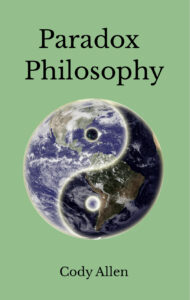 |
Paradox PhilosophyAll things are in both harmony and tension with their opposites—we often choose certainty despite our doubts, fear when there is opportunity for hope, and ourselves when we might think of others—and we should always strive to find greater balance between them. We all want to live meaningful lives, hopefully lives of moral goodness, and philosophy is the study of this venture. Paradox Philosophy is a modern, Westernized version of Yin Yang theory that delivers wisdom towards living a more virtuous life. Available at: |
Book Reviews
- The Monarchy of Fear by Martha C. Nussbaum October 6, 2020
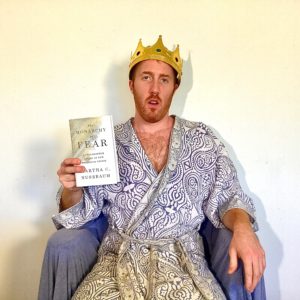 When we humans are first born, our very first emotion is fear. As newborn babies we have no control over any aspect of our lives, and we are inherently scared that our needs will not be met. Out of this fear, babies are thusly born into a monarchical role, making everyone else bend to their wants and desires. Only with time, growth, and the understanding that they are loved can little ones eventually move towards hope and a democratic reciprocity with their caretakers.
In her book, Nussbaum posits that fear is on one end of a spectrum, while its opposite (and in essence its antidote) is hope. She exemplifies the difference between hope and fear with the analogy of looking at a glass of water and seeing it as either half full or half empty. In hope, you focus on the potentially good outcomes of an uncertain scenario, whereas in fear, you focus on the bad.
Nussbaum delivers apt contemporary analysis throughout her book by examining ancient Roman and Greek thinkers. A quote that she, and now I, find worth sharing goes: “Aristotle tells political speakers that they will be able to whip up fear only if (a) they portray the impending event as highly significant for survival or well-being, if (b) they make people think it is close at hand, and if, further (c) they make people feel that things are out of control — they can’t ward off the bad thing easily on their own.” If that sounds familiar, it is because that is essentially the backbone of current political strategy. The news cycle is filled with stories invoking fear about any number of controversial topics. Fear that immigrants will take our jobs. Fear that corrupt business practices are irreparably damaging our planet. Fear that terrorist groups from overseas are planning attacks on American soil. Fear that Democrats will take away our guns and squander our tax dollars. Fear that Republicans will build walls and restrict our labor unions. This year marks a Presidential election decision and each side stokes the fear of what the opposition’s win would mean for the country. A win for Joe Biden would give power back to the crooked democratic elite. A win for Donald Trump would further instill divisiveness and chaos within the populace. Where are the messages of hope?
We are also a very angry country, with resentment at injustices (both perceived and very real) boiling on high. Anger comes in two parts; outrage at wrongful acts and a desire for payback for those acts. In her book, Nussbaum shows how figures like Martin Luther King Jr., Mahatma Gandhi, and Nelson Mandela understood this, and preached a need for people to dissociate one from the other. The indignation at unjust deeds is necessary in order to come together and seek change and justice. The desire for payback, especially in violent terms, is counter-productive. Basically, productive anger is good and destructive anger is bad. The ancient Romans and Greeks knew this, and culturally condemned such outburst of anger and intense emotions, seeing them as ultimately destructive to democracy. Gandhi said it best when he stated quite simply that “an eye for an eye will leave the whole world blind.”
The obvious antidote is love and compassion for others, again something preached by King, Gandhi, and Mandela. Personally, I know far too many people who will spend a day marching against the current administration, holding signs reading “Love Trumps Hate” and will meanwhile proclaim “I hate President Trump!” That is in itself a contradiction, and makes me discredit such people’s opinions across all subjects. Nussbaum further adds that “we can unequivocally condemn racism without viewing racists as irremediably evil.” On this, I fervently agree. The same goes for homophobes, misogynists, xenophobes, and anyone who would stigmatize a specific group of people. The way to confront an individual who dislikes gay people, for example, is to give them an opportunity to meet some. Hopefully they come to see their fellow human as just that, a fellow. And if they don’t, we must accept that too, and continually challenge the grounds for their reasoning. Exposure to unfounded fears such as this require bringing a light to the darkness. Not, as some would have it, to condemn the darkness for being so frustratingly dark!
This same analogy applied to fear and hate can also be expanded to most things covered by similarly negative emotions like disgust and envy. During the Jim Crow era, for example, black people were thought of with disgust, and things like water fountains, swimming pools, and hotel beds could not be shared due to a belief that they would be contaminated. Only with the further desegregation of our country (and bringing a light to this dark ideology) did people come to realize these ideals were completely false, based on a foundation of fear.
It always seems to come back to fear, which makes sense, seeing as it is our first prescribed emotion. For a stark contrast between good and evil, look at Star Wars. Yoda hits it on the head when he says: “Fear is the path to the dark side…fear leads to anger…anger leads to hate…hate leads to suffering.” Yoda says this to a young Anakin Skywalker. Unfortunately for the good guys, Skywalker progressively gives in to his fear of losing his loved ones and eventually becomes Darth Vader, one of our most culturally well known antagonists.
What does all this mean for us? It means that whenever we feel the pull of negative emotions, we should remember that all emotions exist in balance with another. Whether it be fear, anger, disgust, envy, or another, we can always look at the glass half full and find hope, tranquility, compassion, and love. Fear is absolute, even monarchical, as the title of the book suggests. But love can be so as well if we take it upon ourselves to make it so.
- Fortitude by Dan Crenshaw October 1, 2020
 On the surface, and as the subtitle suggests, this is a book about standing firm to our current outrage culture. Within the pages, however, there are many more lessons offered for living a life of meaning and, obviously, fortitude. Not just fortitude in the face of our cultural weaknesses, but our own personal ones as well. These things are of course interrelated—society is made up of individuals who collectively set cultural trends. But it can be of supreme use to examine each separately, so that we may be better able to understand how they work in conjunction. With chapters like “Who Is Your Hero?” and “Do Something Hard” Crenshaw does exactly that.
Once upon a time, life was inherently hard. Suffering was the default, as human beings were perpetually struggling with providing themselves and their loved ones with the base essentials: food, clean water, and shelter and safety from all things perilous. Once we nailed those down, and delivered them en masse, we began to ratchet up our comforts. What we lost along the way was the connection between suffering, the hard work needed to alleviate that suffering, and the sense of purpose that comes from that hard work. We have, in essence, lost our ability to get a sense of meaning out of life. Crenshaw argues that this is a direct cause of our shift in cultural focus towards comfort, both in material things and cultural ideas. The reality is that comfort makes you weak (not inherently, but without an opposing force it reigns supreme) and a mentally weak person is prone to extreme emotional reactions to stimuli. Factor in a media machine that is specifically designed to deliver that stimuli, and outrage is the result. Crenshaw writes: “If you are triggered, it is because you allowed someone else to dictate your emotional state. If you are outraged, it is because you lack discipline and self-control.” He postulates, and I fervently agree, that we must take responsibility for ourselves if we are to constructively contribute to public discourse and society as a whole.
He further instill this in a chapter titled: “The Stories We Tell Ourselves.” In the face of failure, Crenshaw brings some important questions to light. Do we ask ourselves: “what could I have done differently?” or “how was I wronged?” Do we ask: “which actions of mine caused this?” or “whose fault was it?” The first set examines self, while the second investigates others. The way in which we frame ourselves in the face of hardship is important because it is the difference between being a victim or a potential victor.
Now, no one person is solely a victim or a victor, we are all both; one or the other depending on the context. I’m a victor when I miss a shot on goal, spend focused time practicing to get better, and make the shot the next time. I’m a victim when someone else fouls me before I attempt the shot. This is a simple example for the sake of understanding, but where it gets muddy is when the context is an inherent grey area filled with many opinions, such as cultural ideals or political efforts. The dynamic is even more complex when you factor in group identity. What if, in the face of a political controversy, you don’t feel personally slighted, but your party does? If you contend that the collective should also not feel slighted, you may be expelled. If you assimilate and accept the popular opinion, you sacrifice your own individuality. Both options are hard to choose from. In the United States, where less than half the country participates in voting for our elected officials, is it truly any wonder that the majority is silent? What do we do about our seemingly inability to tolerate others?
We practice fortitude.
- The Real Crash by Peter Schiff September 23, 2020
 I turned 30 at the beginning of this year and with this new decade decided it was time to start investing my money for the future. I once had it described to me that lower-class people ‘spend’ their money, middle-class people ‘manage’ their money, and upper-class people ‘invest’ their money. The more you think about it, the more it seems to ring true. So, although I am somewhere in the lower middle-class, I liked the idea of someday having wealth, so I decided to start investing.
I had seen Peter Schiff’s videos of himself talking to people at the Occupy Wall Street rally in 2011 and figured he would be a good place to start my economic education. In the videos, he is holding a microphone and standing next to a large sign saying “I am the 1%. Let’s talk.” A millionaire who is willing to spend a day humbling himself to an emotional group of middle-to-lower-class protesters seems like a person who’s opinions should be heard.
Schiff has studied economics for a long time and from that point of view, The Real Crash is excellent. He has done his homework diligently and clearly shows that the numbers don’t lie; America is flat broke. Our federal government has been going into the red for decades and currently holds debt in the tens of trillions of dollars. He reveals how Social Security is basically a Ponzi scheme who’s only safety net is the printing press inside the Federal Reserve that is perpetually producing new money. He shed’s light on the nonsense that is estate and gift taxes. Basically, when you die and pass your assets along to your children, the government has decided that it gets a piece. That is simply tyrannical! Same with the outlaw on prostitution. If two consenting adults want to transact money for sex, the government should keep its nose out of their business. Why is it that if you set up a camera and call it pornography, it’s legal? This is hypocrisy at it’s finest.
The problem, I find, is that Schiff is strictly an economist, and as soon as you open your moral compass, a lot of the “issues” become more complex. Social Security feeds, clothes, and provides roofs for millions of retired people. Schiff argues that essentially all governmental regulations of the economy should be abolished, but the fact remains that some are in place for reasons of morality – like measures taken by the EPA to ensure the longevity of our shared ecosystems despite not being cost-effective. Clearly we must find compromise, but the journey to doing so will be rough.
Something I took away from this book was the importance of saving. We live in a culture that is spend, spend, spend, as the media and economic news consistently encourage us to do. Schiff contends: “Consumption is the ultimate goal of all economic activity. You work or invest so that later on, you can consume more. Consumption is not the means, it’s the end.” Schiff argues that the opposite strategy should be employed and people should save, save, save. On this he writes: “Savings is the key to economic growth, as it finances capital investment, which leads to job creation and increased output of goods and services.” Obviously, both must be employed simultaneously for the economy to function, but the dichotomy is far too tilted towards spending and must be weighted back towards saving, so that a truer balance can be found. The overwhelming evidence for this, I believe, is clear. American’s have been increasingly living paycheck to paycheck, barely making ends meet, yet how many of those same people have multiple televisions in their house, season tickets to their favorite sports teams, and take lavish vacations to far off destinations? We are quick to spend money on lifestyle accessories and slow to save for a rainy day. How many people knowingly rack up exorbitant credit card debt and then simply walk away? Sure, their credit rating will take a hit, but their 72” plasma tv and memories of spending Oktoberfest in Germany are worth it. (It’s not quite as simple as this, especially once debt collectors get involved, but people are consistently able to get away from large portions of their debt with a little negotiation.) The government, in effect, is doing the same thing except it cannot walk away. Eventually, sooner or later, someone is going to have to pay.
While Schiff boldly contends that nearly all governmental regulations should be abolished and their bodies closed down, there are some truly grey areas that need careful consideration. For one example, the creation and implementation of the Equal Employment Opportunity Commission. This commission was set up to ensure that traditionally marginalized groups (black, female, disabled, gay, muslim, etc.) were considered equally on the basis of employment. This is a noble cause. When employers are not truthful in their reasoning for hiring or firing an employee of a marginalized group, they are not living up to our American standard of ethics and equality. The EEOC is meant to hold them accountable. But let’s consider the actual effects of this implementation. If you’re a large company, your HR and legal departments can handle disgruntled employees regardless of whether they are represented by the EEOC or not. If the employee’s complaints are legitimate, the company can afford to make amends. If the complaints are not legitimate, they can afford the legal trials. If, however, you’re a small, perhaps family run business, the risks are much higher. Every employee hired may potentially be an employee you must fire (or promote, for that matter.) What happens if you hire a black person, but then you must fire them because they are a bad worker? That person could then sue you for wrongful termination based on discrimination of skin color. It would inevitably be a hard fought battle in court, with the small business having to pay their way in time and money that they may not have. Perhaps this disgruntled employee wins their case, and the sum of money demanded by the court for reparations is large enough to force the family to close their business. The same way that firing an individual for being black is wrong, so is someone bankrupting a private business because they feel aggrieved (and in this case, was fired for being a bad employee.) So, you’re a small business owner and you’re faced with the inherent risk of hiring a new employee. You never truly know how someone will perform until they actually have the job. You have two applicants, and, all else being equal, one is a white guy and one is represented by the EEOC. Whom do you pick? It’s a tough choice to be presented with, with no clear answer. Should we then dissolve the EEOC? What about all those racist business owners? What if we continue to keep the EEOC active. How can we differentiate between legitimate profiling of marginalized people and those who are bad employees taking advantage of a system that will in a majority of cases reward them? Unfortunately, this is not the only space where dignified policy has led to moral grey area.
It is interesting how a book about the economy has led me to a moral predicament. In reflection, however, it seems to make some sense. If human beings made all their decisions from strictly an economic perspective, things would probably be running pretty smoothly. But we don’t. We are arguably more concerned with what is deemed right and wrong than we are with whether our budgets add up. And so they don’t add up at all. And that’s a big problem.
As the Fed continues to print more and more money to keep up with our nation’s expenses, the value of the dollar continues to go down. This book is titled The Real Crash because Schiff foresees an economic crash the likes of which we have never seen. He called the 2008 housing crash a warm up, and, after reading this book, I am afraid to admit that he might be right. The main event could be just around the corner.
- Fahrenheit 451 by Ray Bradbury September 17, 2020
 This book is set in a future society (through the lens of the American 1950’s) where a fireman’s job is not to stop fires, but to start them. We follow our protagonist, Guy Montag, as he contentedly goes to work everyday and burns books. Sometimes, if there are many books, he and his fellow fireman burn the entire house down, and they do it without question. One day, that question is posed by an eccentric young girl named Clarisse, who challenges Guy’s notions of why he lives the way that he does. He begins to realize that everything in his life is censored to keep him from thinking. The reasoning is ostensibly that hard and difficult thoughts and ideas (like those held in books) make people unhappy, as it forces them to think. As an added example, his wife spends all day at home with her “family,” which is really just a wall of televisions that keep her entertained and thus unthinking. I found it poignant that even in the early 50’s, television had been identified as a tool for media barons to spread mass influence, especially when you consider the addiction that television and media has become in today’s age. So, Guy pushes back against the system in control (by reading a book) and he is subsequently pursued as an outsider. His life is turned upside down, he flees, and by the end of our story, he finds himself amongst the rebels. These “rebels” are former college professors and intellectual thinkers who have been cast out of the system and now live in the forest as homeless men. Their mission in life, and how they show their resistance, is by remembering. They remember the knowledge of old, things that used to be held in books, and their hope is to someday bring humanity’s collective intelligence back to the forefront of society.
What I really liked about this book was the thought put into the characters. Sure, Guy is your average guy, as his name suggests, and his wife is cast as the sucker of the system, refusing to be enlightened and instead choosing to live in blissful ignorance (at one point in the book, Guy is raising his concerns about not being happy in their shallow lives, and his wife responds “I’m tired of listening to this junk” and promptly turns from Guy back to her television program.) But I found it impressively accurate that the initial crack in the facade came from youth. At a certain age, people seem to come to a form of societal acceptance, and I loved that it was essentially a child who came along and finally asked the all important question: “Why?” It made me wonder, what do we adults lose by forgoing our ability to continually ask this question, both of ourselves and the world around us?
Another character I liked was the fire captain Beatty. Every dystopian novel needs an antagonist and this is Beatty’s role. However, while it makes sense that the haggard professors comprise the resistance, Beatty is also an educated man having read many pieces of literature and views the information in books in an opposing light. He has found them to be endlessly contradictory, and thusly tools of unhappiness, and has found comfort in his mission to destroy them. I found it fascinating that the author showed learned characters who, when presented with the same world-choices, made opposing decisions. I think it really goes to show the differing wisdoms of individual people. Two people can read the same book, and while one can love it and the other hate it, both can be correct, because it is (in most cases) a subjective medium.
Now, framed as the antagonist, some might say that Beatty took the ‘easy’ way out. But would it also be appropriate to suggest that in a world overflowing with chaos, he accepted the path of least resistance? Would there be merit in a condemnation of his choice, or should we opt for mercy? Or neither, and should we, as both readers of fiction and also members of our current society, accept his decision and the reasons behind it? I don’t have answers to these questions, and I think it wise not to try and decide. Instead, I think we should all periodically ponder them, especially as we find ourselves making similar decisions in our own lives, and watch others close to us do the same. Society doesn’t move forward when we force our opinions onto other. True merit is born of the perpetual quest for understanding and always asking why?
- Washington: A Life by Ron Chernow September 2, 2020
 At 817 pages, this is the longest book I have ever read and I enjoyed it thoroughly from start to finish. Although I have read many books in my life, I decided George Washington would be my inaugural book for my book review page, because, well, he was an inaugural guy. We all know him as the first President of the United States of America and also the first Commander in Chief that fought for those states, but he was so much more. He was a frontiersman, a plantation owner, a statesman, a husband, a warrior, a Freemason, a founding father, and a legend. And that’s just scratching the surface.
Washington appeals to me specifically because I was raised in a family without a father. Not to fret, I had two loving mothers who reared me well, and I wouldn’t change my family or my upbringing for anything (it’s why I am the person I am today.) I have, however, occasionally thought about the person I might have been had I been raised with a male presence. Coincidentally, Washington is often described as the Father of his Country due to his various leadership roles at the onset of the United States. Washington himself had no direct children, and being as the United States were succeeding from a monarchy, many people were encouraged by this fact. It meant there was nobody for Washington to potentially pass the seat of power onto. Their future republic felt safe from the ever present terrors of authoritarianism, which were present all over the world (and most imposingly Western Europe) in the late 1700’s.
I give Ron Chernow’s biography of our first president 5/5 stars. It is THE comprehensive book about Washington’s life, both public and private. Chernow leaves no stone unturned, from his tumultuous relationships with Alexander Hamilton and Thomas Jefferson, to his oddly dispassionate yet remarkably enduring and warm relationship with Martha, his wife of 40 years. He chronicles Washington’s life with valorous depth and gives the reader a real feeling for who George was and who he aspired to be.
I learned that Washington struggled with the inherent depravity of slavery for many years of his life, and only released his personal slaves via his will. He also spent a life grappling with decaying teeth, and I can only imagine how crude dentures were back then (probably pretty terrible.) The most important thing I learned, and something I will take away from my reading and carry with me, was Washington’s sense of humility. Although he was ambitious, he was never outwardly so. This I find admirable. We are all inherently ambitious, it is against human nature not to be, but to openly pine for things we believe we deserve is gross, especially in the public sphere. While Washington was chosen by his constituents to occupy his roles, and he accepted them with grace, his private letters reveal his ever increasing desires to retire from the public eye and enjoy a quiet life at Mount Vernon. Unfortunately for him there was no escape from publicity. He was too great a man to the people of those fledgling thirteen colonies and they (mostly) adored him for his civil services.
Although there are many things worth mentioning, the only other one I will touch upon is Washington’s stately manner. From childhood, he displayed an upright and stolid appearance. As a general, he was honorable in battle and always lead the charge atop his white steed. As a politician, he was known for his excellent judgement in when to weigh in and when to remain silent. As a man, he was known for his dispassionate nature and his desire to consider all sides. This, I think, is something we can learn from. There is far too much rash emotional reaction in today’s political scene and I think it only detrimental. Where are our humble leaders? Who in today’s market can comfortably reach all sides and make decisions for the benefit of all the people? What public persona do we all agree is someone of true merit and worth renown praise?
Being on a lifelong quest for inspirational men both past and present, George Washington has earned his seat in my imaginary assembly of father figures. I will carry him with me wherever I go.