




I’m a writer and author with a passion for exploring ideas.
Since 2020, I’ve published monthly book reviews as a way to reflect on what I’ve read. I do my best to challenge my own thinking and remember the lessons worth keeping. Here you’ll find my books, my reviews, and my reflections on the ideas that have shaped my perspective along the way.
My Book
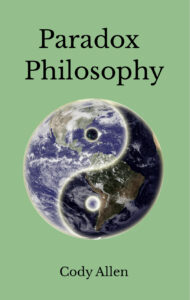 |
Paradox PhilosophyAll things are in both harmony and tension with their opposites—we often choose certainty despite our doubts, fear when there is opportunity for hope, and ourselves when we might think of others—and we should always strive to find greater balance between them. We all want to live meaningful lives, hopefully lives of moral goodness, and philosophy is the study of this venture. Paradox Philosophy is a modern, Westernized version of Yin Yang theory that delivers wisdom towards living a more virtuous life. Available at: |
Book Reviews
- The Populist’s Guide to 2020 by Krystal Ball & Saagar Enjeti February 3, 2021
 There is a tremendous problem going on in America: There is almost no representation of working class people in government. We thought it was going to be Obama, then we thought it was going to be Trump, then we thought it was going to be Bernie Sanders. Turns out we were wrong every time—the establishment has a much firmer grip on things than we ever thought.
Middle America is suffering from an opioid crisis that has reached epidemic proportions. The jobs have been shipped overseas, the people have moved to the cities in search of work, and the rest has been left to decay. People are so distracted with consumerism lifestyles that they hardly notice. We’re in so much collective debt it’s honestly laughable that we’ll ever get out of it. Why can’t congress find a way to bring jobs back and give people a reason to live? “As a nation, we’ve been chasing the metrics of topline economic growth, while forgetting that human beings need meaning, worth, and community.” Ball and Enjeti continue: “a country with a few prosperous super cities and a vast wasteland of hollowed out towns and small cities is not a success.”
Part of the problem is that the media is no help. The media’s job used to be to report what was important. They are supposed to investigate powerful people and hold them accountable. “Story selection is the most pernicious form of media bias” our authors write. “What they choose to ignore often matters more than what they choose to show you.” The media is supposed to inform the populace of things like, for example, 67,000 people dying from an opioid overdose (2018 CDC numbers.) How are they supposed to do that when they’re too busy yelling at the opposing political party? How can we expect The Washington Post to report honestly when its owned by Jeff Bezos?
The only way out of this mess is a populist movement that actually works. Obama and Trump both made promises, but upon entering the White House they effectively handed the reins over to the career politicians in their respective political parties and let Wall Street continue to run the show. Obama had his chance with the housing crisis of 2008, but ultimately failed, as he ‘bailed out’ the banks, putting millions of dollars into the pockets of corporate bankers. Trump had his chance, but ended up doing the same thing via his Coronavirus relief packages. Bernie came close, but the Democratic elites used Mayor Pete and Amy Klobuchar as pawns on the political chess board in order to stuff him and propel Joe Biden to victory. They did the same in 2016 when they rigged the game against him in favor of Hillary Clinton. All the while, everyone at the tops of the political and economic structures in this country have continued to grow rich and wealthy while the rest of the people suffer. Is there anybody out there who can break though the oligarchical stranglehold of the powerful people in Washington and Wall Street and fight back? Who will come along next and give the populace of this once great nation a real shot at change?
- Griftopia by Matt Taibbi January 29, 2021
 We live in a divided America and it is not the one you think. It is not Republican or Democrat, Black Lives or Blue. Yes, there are some people divided on these lines, as there will always be people divided on any political issue, but The Great Divide is between the rich and the poor. There is “one [set of rules] for the grifter class, and one for everybody else,” Taibbi writes. For us ordinary citizens, the government is a scary beast that cracks down when we don’t follow the rules. For the elite grifter class, the government is a collaborator in extracting money from the lower rungs of society and distributing it to the ruling class.
If you want to understand how this happened, a good place to start is with Alan Greenspan. He is the human embodiment of a political and economic hypocrite; the trends he set during his twenty-year tenure as President of the Federal Reserve have left us with a broken system. On the one hand, he preached free market economics, while on the other hand he gave massive governmental bailouts to the banks on Wall Street. These two ideas cannot co-exist, as the definition of a free market is one with no financial safety net. It is a contradiction of dire consequences, and if you match it with his deregulatory approach to macroeconomics, you have the perfect template for what we have today: a system that rewards the rich elite politicians and bankers and punishes the rest of us. The founders of this country ultimately decided against setting up a Federal Bank for this exact reason—they understood human nature well enough to know that if the wrong people were put in charge of a Federal Bank, corruption would inevitably ensue.
Bankers, like everyone in a capitalist society, want to make as much money as possible. The more you give them the ability to do this, without holding them accountable for screwing people over, the more they will take advantage of whatever amount of leeway you give them. This is the same human nature the founding fathers intrinsically understood, but that has now been backed up by psychological studies showing how people will cheat at games more egregiously if they believe nobody is paying attention and that they will get away with it. This is how we came to live in a ‘bubble economy.’ First it was the dot com bubble, then the commodities bubble, then the famous housing bubble of 2007-08. What these all have in common is a foundation of Wall Street corruption. They put a mask on the economy. To any regular investor, things looked safe and reliable. Behind the scenes, however, they knew they were selling shit packaged with a pretty bow. They propped up stocks in websites and businesses that were going nowhere and invested their client’s money in houses that were bought with no money down. Make no mistake, this is fraud. It is the literal definition of fraud. And yet, none of them have seen a minute of jail time.
The worst of these players is Goldman Sachs. During the commodities bubble of the 2000s, when prices on food, oil, metals, and most notably gas rose significantly, Goldman Sachs had an exclusive contract with the Federal Reserve on trading rights. Historically, commodities were restricted from outside trading because, well, they’re essentials. If food prices spike and all of a sudden people can’t afford to eat, society collapses. So, the government separated commodities from regular business stocks and passed into law the 1936 Commodity Exchange Act in order to keep a watchful eye on them. What happened next? You guessed it, the higher ups at Goldman Sachs wanted a piece of the action. There was money to be made! And Alan Greenspan and the rest of the executives at The Federal Reserve were happy to grant them exclusive rights to do so. While you and I saw gas prices rising and thought there was a shortage of natural gas in the Middle East, or whatever other lie the media fed the public on that particular day, the truth is that Goldman Sachs was intentionally raising the prices so that they could line their own pockets.
The culture of Wall Street and high ranking politicians has become one in favor of short term gain over long term prosperity. It has trickled down to state and city levels. For example, “Mayor Richard Daley had struck a deal with Morgan Stanley to lease all of Chicago’s parking meters” Taibbi writes, “The final amount of the bid was $1,156,500,000, a lump sum to be paid to the city of Chicago for seventy-five years’ worth of parking meter revenue.” This is an absolutely ludicrous business deal and when I looked it up, Wikipedia informed me that the money was spent and gone within 3 years. My jaw literally dropped. Any jackass with half a brain knows you don’t sell out your future to put a band-aid on your present. The potential revenue from the meters is $3-5 billion dollars. What’s crazier is that this was only a template, quickly followed by many cities leasing the future revenue rights to everything from their parking meters to their public highways and airports. A majority of our major cities have condemned themselves to decades of financial hardship and the citizens don’t even know it.
By this point in history, this repeating trend has grown tiresome. Every single time ordinary citizens get fucked over, the banks on Wall Street walk away richer. Whereas we once had bubbles, now we have Coronavirus. The CARES act that was passed in congress in March of 2020 gave the people one single $1,200 check. How much did Wall Street get? $500 billion. While 30 million people filed for unemployment, the stock market was saved! It’s almost as if the people in this country don’t matter, so long as Wall Street is being taken care of. Taibbi writes: “This dynamic allows the bank[s] to suck wealth out of the economy and vitality out of the democracy at the same time, resulting in a snowballingly regressive phenomenon that pushes us closer to penury and oligarchy at the same time.”
The recent Reddit mobilization and use of Wall Street’s crooked tactics against them is a glimmer of hope, although the reality is that the fight against this type of historic corruption will be a long and ugly one. The truth is obvious, and there is no other way to summarize this book, and ultimately our political and economic situation, then this: If we do not hold these people accountable and begin to undo what they have done, our country will fall into ruins.
- Capitalism and Freedom by Milton Friedman January 17, 2021
 Here in the United States (and to a larger extent the modernized western world) we are fortunate to exercise a variety of freedoms. The freedoms of speech, press, and religion are the obvious ones, but also others like the freedom to send our children to the schools of our choosing or the freedom to relocate to another state if we so desire. In addition to these, we also value our freedom to spend our own money where and how we choose.
The central principle to this book is that free market capitalism is the surest way to achieve maximum freedom for the people. While this is true in theory, Friedman shows how this has become less and less an actual reality. Governmental policies and interventions have gradually eroded our economic freedoms and we have largely been blind to this truth because these freedoms are lost incrementally slowly over long periods of time and are thus hard to recognize.
The first major governmental move into the economy came with the establishment of the Federal Reserve. When it was first established (1913) the global economy was backed by a gold standard. However, within only a few short years, the First World War occurred and that standard was quickly abandoned. With these developments, the Fed was given the unfettered ability to print money and put it into circulation. As the quantity of dollars has increased, the relative value of each dollar has decreased. Unless your income has also gone up, this means that you are poorer.
Ever since then, the government has gotten its sticky fingers farther and farther into the pocketbooks of its citizens. This is evidenced by implementations such as tariffs, fair-trade laws, import quotas, production requirements, and trade union restrictions on employment. Things like registration, certification, and licensing requirements across a spectrum of viable potential occupations and job opportunities hinder people from pursuing them (Think about qualified doctors who emigrate to a new country and are unable to practice medicine because their new home-country requires renewed certification, something that can take years and lots of money.) Governmental approval of new taxes and hikes in existing taxes all to pay for publicly funded programs have often been endorsed with little to no forethought as to the potential negative ramifications (for example, if you set welfare benefits at a particular income level, does it incentivize people to remain just below that level so as to continue getting governmental monetary assistance, thus further motivating people to remain unmotivated towards improving their economic standing in society?) And when the time comes for unnecessary programs to be eliminated, how often are they kept well past their expiration date?
One of the more well-known programs that gets the most scrutiny is Social Security, and depending on the lens with which you view it, determines its importance to you. Friedman makes two such arguments. On the one hand, it seems to be an imposition on our financial freedom to make Social Security payments mandatory. If an individual prefers to live for today and not save for later in life, shouldn’t that be their prerogative? We can suggest that they don’t make such choices, but ultimately it should be up to them. It is wrong for the government to decide on our collective behalves, and to subsequently take money out of our pockets to enact the program. For the other side of this argument, Friedman writes: “The man who does not provide for his old age will become a public charge. Compelling him to buy an annuity is justified not for his own good, but for the good of the rest of us.” Through this lens, the government has a well founded argument for its implementation of Social Security, because its aim is to take care of society as a whole.
Friedman suggests, and I agree, that there are only two areas in which the government should impose itself economically. The first is in setting up the rules of the ‘game’ and regulating them. Even a free market economy can become victim to cheaters and swindlers, and the government should act as the enforcer of the rules. The second is to limit the monopolization of any one industry. If a single entity has control over a particular segment of the market, they can unfairly exercise control over it. Historical examples include Andrew Carnegie’s Steel Company and John D. Rockefeller’s Standard Oil. Today, monopolies are even more prevalent and predatory than ever. Wal-Mart, Amazon, and Target own our commercial goods business. Google, Facebook and Twitter own our information and communications. The Walt Disney Company alone owns ABC, ESPN, FX, Hulu, the entire Marvel universe (including toys, movies, and theme park rides,) Star Wars, Pixar, and more. Friedman equates monopoly and government when he writes: “Our minds tell us, and history confirms, that the great threat to freedom is the concentration of power.”
We all know that we need the government because without it we would have anarchy, but what is the right amount? It seems clear that as it currently stands, governmental intervention is too broad and needs to be scaled back. This is exemplified by a quote close to the end of the book: “state help kills self-help.” The more we ask the government to do for us, the less we do for ourselves (and the more we take for granted.) Let us not forget another old adage: “Give a man a fish and you feed him for a day; teach a man to fish and you feed him for a lifetime.” With the implementation of Social Security, the government has decided to give us all fish. In order for our society to survive longer and prosper into the future, we the people must learn to fish for ourselves.
- Why Nations Fail by Daron Acemoglu and James A. Robinson January 11, 2021
 Why do nations fail? Is it war or famine or simply bad leadership? Is it cultural or geographical or something else entirely? In their book Why Nations Fail, Daron Acemoglu and James A. Robinson posit that it is due to a certain kind of political and economic structuring of a country. There are essentially two different ways to do it: inclusively and extractively. They write that “inclusive economic institutions are those that allow and encourage participation by the great mass of people in economic activities that make best use of their talents and skills and that enable individuals to make the choices they wish.” This is best characterized by free market capitalism, which is what we have in the United States and the western industrialized world. It is also defined by democracy, a system in which every citizen casts a vote and has a say in who runs things and how they do so. On the other hand, “extractive political institutions concentrate power in the hands of a narrow elite and place few constraints on the exercise of this power.” Think old school monarchy, with a king or queen exercising absolute power, or new school communism which consistently has been shown to operate in dictatorial ways (ie. The Soviet Union under Stalin or modern day China under Xi Jinping.)
The prosperity of any modern country can be traced back through its history to find the places where critical junctures shaped its institutions. There is a reason why the industrial revolution happened in England, which was one of the first societies to become a politically and economically inclusive one. That reason is the Black Death, which decimated the global population as it swept through Europe and much of the world in the mid 1300’s. In its aftermath, Europe embraced feudalism, which was a system in which the king ruled the land. He granted it to the nobility in exchange for military service, and the peasantry, who’s job it was to work the land, was subject to their will. The peasantry, or serfs, as they were called, were tied to their land, subjected to heavy taxes, and had no say in the matter. All of the wealth flowed up to the nobility and king who were the judge, jury, and police force, and dissenters were harshly punished and often killed. The Black Death changed this because it brought a scarcity of labor, and all of a sudden the serfs at the bottom of the totem pole found themselves in higher demand. In England, (and parts of Western Europe) this allowed them to make demands of their own, and they slowly began to fight for and win small freedoms like increases to their wages and more personal liberties. Fast forward a few hundred years, and the differences between Eastern and Western Europe were vast. While Western Europe had been making incremental changes in favor of their lower classes of people, Eastern Europe had been doing the opposite and increasingly oppressing its peasantry.
Another critical juncture for Europe was the colonization of the new world and the prosperity of the Atlantic trade routes. While the monarchies of Spain and France profited greatly due to their monopoly of the sea trade, the merchant class of England was not tied to the Crown and was able to profit independently. This independent accumulation of wealth then lead to the spread of economic opportunities to more and more people. Once people gained the ability to enrich themselves, they saw reason to work harder and began to innovate. It is here where such inventions as the steam engine, spinning Jenny, and power loom were conceived and the Industrial Revolution took off.
So, nations that give their people economic incentives and include their citizenry in politics are prosperous, and those that don’t aren’t (or at least are considerably less so.) The biggest problem is that once a society is structured into one of these two ways (inclusive or extractive) it is nearly impossible to break out of the cycle. Sub-Saharan Africa is still overwhelmingly characterized by poverty because of their vicious cycle of extractive political and economic policies. When European settlers colonized the continent, they set up systems of oppression where they were in control and the African people were forced into slavery. Then, as European nations departed—ostensibly to grant these numerous African nations their freedom—their own local chiefs took over the same institutions that had been set up by the colonists and continued their extractive nature. This is also evident in the relative poverty of Latin America compared to the United States. When Spanish conquistadors came across the Incan people of modern day Ecuador, Peru, Western Brazil, and Bolivia, they found a giant populace of people at their disposal. They proceeded to set up a system of abject slavery, where the local people worked and died in the gold and silver mines of the area and the proceeds were shipped back to enrich Spain. Contrast this with the colonization of North America by the English, and you get a different picture. When early settlers first arrived and founded Jamestown in 1607, they were faced with an entirely different landscape; there simply were not enough natives to force into labor. When the English crown then attempted to force the settlers themselves to do the backbreaking work, they fought for and eventually won a different social order. This order gave ownership of the land to the people, and not to the elite. They gained a modicum of economic freedom which paved the way for the foundation of our modern democracy. (Keep in mind that these changes took hundreds of years to accomplish with hardships all along the way.) You can still see it, however, in the prosperity of the United States today compared with the penury of Latin America.
Once you understand the workings of these two differing societal structures, you begin to see them everywhere. These two philosophies were the foundation of the Cold War, in which westernized free market capitalism and democracy opposed communism. Why do you think South Korea is prosperous and North Korea is desolate? These two philosophies were also at odds in our American Civil War, in which the north believed in inclusive social practices, industrialization, and urbanization, while the south believed in an economy built upon the backs of slaves. Even though the north won, the southern elite remained in power and continued their extractive political practices via the Jim Crow era, and more recently through continued mass incarceration under the guise of the war on drugs.
Here in the United States, our governmental and corporate elites have long been busy trying to keep more for themselves and give less to the rest (why do you think Amazon paid zero dollars in taxes in 2019?) The only difference is that they do it with pens instead of swords. Take, for a current example, the debate about minimum wage. Democrats say we need a $15 dollar minimum wage because anything less isn’t enough to live on. They also want things like government sponsored healthcare, which means an increase in taxes taken from that $15. Republicans, on the other hand, want a lower minimum wage, while they also want to take less taxes out of your paycheck—their argument being more money in your pocket and therefore more financial freedom. Both of these parties are trying to solve the same problem in different ways, that problem being not enough money for the worker. The real problem is that people earning any minimum wage cannot afford to live in our society. That is because the elites at the top of the pyramid have structured society in such a way as to extract the wealth created by the working class at the bottom and deliver it to top. They enjoy their yachts and private planes while the laborers bicker over a measly minimum wage. The truth is that there is more than enough money to go around for everyone to live comfortably, it is just not allocated in the right place.
Similar to how the Black Death of the 1300’s was a major global turning point that led to inclusive policies in England and extractive ones in Eastern Europe, I believe that Covid-19 is ours. We have already seen how some countries are continually providing for their people while ours is ‘bailing out’ big businesses. The gap between rich and poor in this country has never been more evident. In their book, our authors write that: “inclusive institutions are based on constraints on the exercise of power and on a pluralistic distribution of political power in society, enshrined in the rule of law.” While our founding fathers were well aware of this, and set up a society in which power was broadly distributed, the last 250 years have seen the elites of this country slowly but surely accumulate that power while the rest of us are kept exhausted with longer and longer work hours. From the slave traders of the 1700’s, to the robber barons of the late 1800’s, to the media proprietors of today, the people at the top have continually been working towards enriching themselves at the expensive of everyone else.
Acemoglu and Robinson write that “the fact [is] that the main obstacle to the adoption of policies that would reduce market failures and encourage economic growth is not the ignorance of politicians but the incentives and constraints they face from the political and economic institutions in their societies.” Essentially, what they are saying is that we should not blame the politicians themselves, for they are just acting within the system as it exists. (Don’t hate the player, hate the game.) It is human nature to hold on to what you’ve got and try to get more. Greed is the norm, generosity and compassion the exception. What we need to do is stand up against any system that exploits its people and extracts its resources and labor, and continually fight for an inclusive one in which people’s voices are heard and their freedoms are respected. This change will only happen gradually and painfully, but the alternative is literally the failure of our nation.
- The New Confessions of an Economic Hitman by John Perkins December 17, 2020
 John Perkins is an economic hitman. He spent over a decade pressuring the presidents of poor countries into signing exorbitant contracts with major US construction companies (think Halliburton and Bechtel) that were financed by major international banks (think Goldman Sachs and JP Morgan.) In theory, these agreements were supposed help underdeveloped countries export their natural resources and create wealth for their economy. This wealth would then ostensibly go towards building schools, hospitals, and other important social projects for the people and thus raise them out of poverty. What these countries didn’t realize was that they had been sold a lie. The money they made was never enough to pay back the massive loans they had agreed to and they were left helpless as they watched the interest continue to rise and the money continue to leave. Time and time again the profits went back to the big American banks and companies while the indigenous people got screwed both financially and environmentally.
If this scheme sounds familiar, it is because it is exactly the same formula endorsed by our federal student loan program. A large bank, on behalf the government, gets a naive 18-year-old to sign a contract. The forecast is a set amount of years of school followed by a good job and a few years of paying it back. Yet how many Americans are well into their adult lives and still paying down their debts, feeling shackled to their monetary commitments? I myself graduated from a four year college with around $37,000 worth of federal student loans. It has been eight years since I graduated and I currently owe over $41,000 due to the accruing interest. Part of the problem is that I graduated with degrees in Theatre and Creative Writing and have been unable to earn any income in my desired fields. I work at a restaurant, similar to many creative types of people, and my annual take home after taxes is somewhere in the ballpark of $25,000. (Of course, what I actually make is closer to $36,000 a year, but the government makes sure to take it’s one-third of my paycheck in taxes.) The point I’m trying to make is not about fairness. I signed the contract and I am doing my best to pay it off, even if it takes me the rest of my life. The point I want to make is that it simply doesn’t have to be this way. At the end of 2019, the federal debt was just under twenty-three trillion dollars. The entirety of student loan debt is around one and a half trillion. If the Fed can print three trillion dollars in stimulus money in response to Covid-19, then they can take on the student loan debt as well and free us all from this burden. Or think about all of the biggest corporations in the country, like Amazon, Apple, and Walmart. None of these companies pay taxes to our government. If they did, that money would be more than enough to cover the cost of college for everyone, in addition to probably funding health care for all. Or that money could go towards social projects for underserved communities. But the government and Big Business have made their deals and they continue to get richer while the rest of us simply try to remove the boot of debt from our financial necks.
All of these nefarious practices started in the aftermath of the Second World War. With Europe in ruins, the United States and the Soviet Union emerged as the two big powers on the planet and the Cold War was under way. All of a sudden it was capitalism vs. communism in every facet of life, in every corner of the globe, and thus our economic hit men were born. The United States used its propaganda machine to instill a fear of communism in its people and to justify its capitalistic pressures on the rest of the developing world. In Ecuador, for example, they wanted to exploit the people for their oil supply. They got the contracts signed, the power plants built, the oil exported, and all the while kept the country in debt and its people in poverty. That is just one of dozens of examples.
If a country’s leader refused to sign these contracts, they were forcibly removed. This happened in Panama when the CIA assassinated their democratically elected president Omar Torrijos in 1981 so they could take control of the Panama Canal and profit off the shipping shortcut. They put a dictator in charge, and when that guy didn’t work out, the US Air Force bombed Panama City, kidnapped the new president, and the CIA imprisoned him in America. They put yet another guy in charge, and have continually gone to drastic measures in order to keep control of the canal and profit off the shipping route. Meanwhile the people of Panama remain in penury. This same tactic was most recently seen with the execution of Saddam Hussein. The governmental propaganda machine targeted Muslims and stoked people’s fear of Islamic terrorism emanating from the Middle East. However, the real truth is that Hussein was not cooperating with the political demands of the United States. So we had him removed from power.
For further examples, in 1954 the CIA assassinated Guatemala’s democratically elected president Jacobo Arbenz. In 1973 they assassinated Chile’s democratically elected president Salvador Allende. They got Jaime Roldòs, president of Ecuador, in 1981. The list goes on and on, including Haiti, Argentina, Brazil, Nicaragua, El Salvador, Colombia, and Honduras in the Western Hemisphere. It also includes Egypt, Iraq, Iran, Saudi Arabia, Indonesia and more. The Presidents who managed to keep their lives became pawns on the global economic chessboard, the kings of which are the aforementioned conglomerate of international corporations, international banks, and governmental organizations.
While all of these forces used to predominantly be at play internationally, they have more recently come home to infect the United States. The poorest amongst us are oppressed by any and all forms of debt, including student loans, medical bills, credit cards and more. Whereas once upon a time communism used to be our common “enemy,” that has now been shifted to terrorist groups in the Middle East. The most powerful people in the country rotate through different positions in government, business, and banking. Robert McNamara is the perfect example. He started his career at Ford Motor Company in the 1940s and eventually rose to become its president in 1960. From there he transitioned to Secretary of Defense under John F. Kennedy and played a major role in the US involvement in the Vietnam War. He then transitioned again and served as the president of the World Bank for thirteen years. You can clearly see that he was able to convince his friends in the government to give his friends in business tax breaks. You can see how he would be inclined to give his friends low interest rates on loans from the World Bank. He is one small example of a system that rewards those on the inside track and ignores those on the outside.
What we are left with is what Perkins describes as a death economy and he ends his book by advocating for a global change of consciousness. We need to move away from the practices of corporate greed and towards a new philosophy of compassion, humility, and generosity. He writes: “It isn’t about changing the mechanics of economics. It is about changing the ideas, the dogmas that have driven economics for centuries: debt and fear, insufficiency, divide and conquer. It is about moving from ideas about merely being sustainable to ones that include regenerating areas devastated by agriculture, mining, and other destructive activities. It is about revolution. The transition from a death economy to a life economy is truly about a change in consciousness—a consciousness revolution.”