




I’m a writer and author with a passion for exploring ideas.
Since 2020, I’ve published monthly book reviews as a way to reflect on what I’ve read. I do my best to challenge my own thinking and remember the lessons worth keeping. Here you’ll find my books, my reviews, and my reflections on the ideas that have shaped my perspective along the way.
My Book
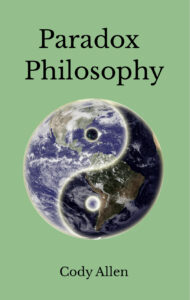 |
Paradox PhilosophyAll things are in both harmony and tension with their opposites—we often choose certainty despite our doubts, fear when there is opportunity for hope, and ourselves when we might think of others—and we should always strive to find greater balance between them. We all want to live meaningful lives, hopefully lives of moral goodness, and philosophy is the study of this venture. Paradox Philosophy is a modern, Westernized version of Yin Yang theory that delivers wisdom towards living a more virtuous life. Available at: |
Book Reviews
- Sherman by B. H. Liddell Hart May 21, 2021
 When you think about the men behind the Civil War, who comes to mind? The average American would probably say Lincoln, Grant, and General Lee. Two were presidents, and one is posthumously famous for leading the Confederacy and for the orange car from the television show. What about William Sherman? Who is he and why has his name been obscured by the passage of time? William Tecumseh Sherman was the General directly subordinate to General Grant and is the orchestrator behind some of the most impressive victories from the war including the campaign against Atlanta, the march through Georgia, and the final sweep through the Carolinas which effectively won the war for the North.
It is curious that those great figures of history most worth remembering are often forgotten, while those we do remember are frequently less deserving of our posthumous praise and attention. For William Sherman, this was as much to his own personal desires as it was to history’s course of remembrance. In his book, Hart records Sherman’s preference to remain anonymous: “I deeply regret that I am threatened with that curse to all peace and comfort—popularity.” This sentiment remained, despite his continuous rise in the military, culminating with the prestigious rank of Major General—with a 14-year post-war stint as Commander General of the entire U.S. Army. Despite these lofty laurels, Sherman is one of the few historical figures that can be found to have actively abstained from letting his ego carry him into unwanted territories. After the conclusion of the war, he was pressured for years to enter the world of politics, and maybe even run for the office of president, but he steadfastly refused. “Why should I at sixty-five years of age, with a reasonable provision of life, not a dollar of debt, and with the universal respect of my neighbors and countrymen, embark in the questionable game of politics?” He was recorded as saying.
Why is he worth remembering? Because he was unrivaled at mobile warfare. He perfected the ‘indirect approach’ on the battlefield and would often confuse his enemies by approaching multiple objectives simultaneously. Sherman is most famous for his march through Georgia—a campaign in which he decidedly abandoned his lines of supply and communication and stormed through the heartland of the Confederacy on foot and horseback, effectively living off the land. He did the same in the Carolinas, leading over sixty thousand men across open land and into hostile territory. He struck directly at the hearts and minds of the southern people along the way and smashed their hopes (and a few of their barns) to bits. General George Patton himself spent time in Georgia prior to the Second World War studying Sherman’s tactics, including how he ‘stripped’ his soldiers of all essentials in order to increase mobility. He had an excellent mind for war and tactics and his resume proves it outright.
One aspect of this book that really hit me in the gut was Sherman’s diagnosis of the press and media of the times. They distorted events to devastating degree and seemed to create more anxiety and anger in the populace than was ever necessary. Sherman’s words, written in 1862, still ring with the hollow tones of truth. He describes members of the media as “the chief cause of this unhappy war. They fan the flame of local hatred and keep alive the prejudices which have forced friends into opposing hostile ranks.” Despite being on one side of the war, he was objective enough to clearly see how both the “North and South [keep] each radical class [of] its votaries filled with the most outrageous lies of the other.” I found this sentiment alarmingly true, as it could very easily have been written about the disconnect I see in my own country (the United States) today. Sherman was supremely aware of the media and politician’s ability to divide people’s hearts and minds. Hart echos Sherman when he writes that “prejudice governs. You and all who derive power from the people do not look for pure, unalloyed truth, but to that kind of truth which jumps with the prejudice of the day.” His prophetical words struck a major chord in my mind and it really made me ‘zoom out’ and try to view current events through the larger scope of one that examines history as a fluid whole. Past events have all the lessons to teach us about how to solve our current quandaries, if only we were more desirous to learn.
What I grew to admire most about Sherman was his astuteness of mind. He never bit off more than he could chew. He always keep his objectives in clear view and routed all available resources to its achievement. He was supremely accurate in his diagnosis of battle tactics including the physical movement of his troops and the psychology of his army as a whole. He had an incredible ability to think inside the mind of his opposition and discern his movements. He was always the first to reject a promotion if he felt himself unworthy, and was conscious of the ever-present need to sideline his ego in support of whatever he deemed best for the Union forces overall. Even after the world acclaimed him for his success, his humility still shined brightly, exemplified by quoted lines from his personal letters such as: “Like one who has walked a narrow plank, I look back and wonder if I really did it.” Although he was describing his march through the South, I think it more accurately describes his life overall, and I think it noble that he had the courage to walk.
- Sophie’s World by Jostein Gaarder May 11, 2021
 This book is a fun, fantastical hybrid of fiction and non-fiction reading, primarily geared towards younger adults. The fiction part of it centers around a 14-year-old Norwegian girl named Sophie and her philosophy teacher Alberto. The non-fiction elements (Alberto’s lessons to his younger pupil, a proxy for the reader) are a lovely journey through the history of philosophy.
Before reading this book, I had only a layman’s understanding of philosophy. Now, I have a general framework for the evolution of ideas from Socrates to Freud. I can confidently say I understand the difference between rationalism and empiricism, and who came to which conclusion about how human beings process the world around them. (Rationalism is the belief that human reason is the primary source of our knowledge of the world, first developed by Plato. Empiricism posits that the world is primarily derived from what we perceive via our senses, most famously written about by the English philosopher John Locke.) I now also understand why Immanuel Kant’s work was so groundbreaking, because he was the first renowned philosopher to argue that both of these ideas are true and need to be considered together. He subsequently pushed humanity’s collective understanding of the world around us one step further forward, as all great philosophers have done.
I learned that Socrates’ mother was a midwife, which helped him to metaphorically give birth to the Socratic Method. “Socrates saw his task as helping people to ‘give birth’ to the correct insight, since real understanding must come from within. It cannot be imparted by someone else. And only the understanding that comes from within can lead to true insight.” If you’ve ever been in a heated argument with someone, especially about issues of real importance to one or both of you, then you know how futile it is to beg, bribe, or force the other person to accept your reasoning. It does happen occasionally, but more often than not arguments end with both parties leaving with a reenforced belief in their own ideas. The reason the Socratic Method has been around for so long is because it derives its usefulness from asking questions and searching for the truth together. Truth and compromise are collective endeavors. (And by truth in this sense, I don’t mean empirical truths like 2+2=4. I mean theoretical truths. For example, if I said life is short, you might agree, but you certainly couldn’t disagree. Likewise, if I said that life is long, again you might agree, but again you couldn’t disagree.) Theoretical truths are slippery things because they are subjective, which make them prime rib for a hungry philosophical discussion.
The most important lesson in this book is that philosophy is a product of its time. Older philosophers had more theological based ideas in addition to stunted opinions about the roles women played in society. As science gave us answers to the mechanics of the universe, and the Age of Enlightenment spread through Europe and the western world, newer philosophers had less to say about the Gods and more to say about the individual—not to mention more favorable opinions about women. Philosophy mirrors any specified field of study (ie. science, law, or medicine) in that our modern day knowledge stands upon the foundations laid by history. As the collective knowledge of humanity progresses, so must our relationship to the ideas proposed by each new generation. For example, Friedrich Nietzsche (a German philosopher who lived from 1844-1900) was the first philosopher to pronounce that “God is dead.” He was not the first to think it or say it, but he was the first independent thinker to popularize the idea in his writing and it subsequently took a cultural hold in Europe at the time. If he had tried the same thing a few centuries earlier, however, he most likely would have been exiled or executed for heresy. His philosophy was the next step in the evolution of popular thinking. Today, western countries inhabit a culture of abundant secularism. This is the realm from which history will record its next great philosopher(s).
Philosophy as a genre concerns itself with the big existential questions; Why are we here? What is the purpose of life? What can we know for certain about our existence? “There are two kinds of philosophers.” Gaarder writes, “One is a person who seeks his own answers to philosophical questions. The other is someone who is an expert on the history of philosophy but does not necessarily construct his own philosophy.” If you’ve gotten to this point in my review, you clearly have an interest in the subject. So, I ask you, which kind of philosopher are you?
- The Power of a Humble Life by Richard E. Simmons III April 30, 2021
 Life exists in balance. This is epitomized by ancient Chinese yin and yang philosophy. Day needs night, cold needs hot, silence needs noise, so on and so forth. In his book, Simmons puts the dichotomy between humility and arrogance under a microscope and the results are mostly unsurprising.
Anybody who lives in the modern western world is well aware of the impact of the internet and more specifically social media on our society. We have become a culture obsessed with image, and as a result the actual substance of our lives has decreased. Deeds are no longer done for altruistic reasons, but are rather performed for the recognition and approval of our “audience.” In his book, Simmons writes that “Many people are no longer concerned with lives of excellence. Instead, no matter how much a person accomplishes, he does not believe he is successful unless others know about it. We now regard success as achievement plus proper recognition of our achievement.” On this, I couldn’t agree more. You can see it happening ever more pervasively with younger generations as they become more and more transfixed with their social standing amongst their friend groups (and buried in their smartphones as a result.)
We live in a society that has been infected with pride for so long that it has become our lifeblood. Simmons writes: “If you go back 100 years, parents focused on their children’s character development. Today the emphasis is placed on their performance, and look at what it is doing to them. This is what pride can do to us and our families.” This emphasizes a mass cultural shift from a focus on what is internal to a focus on what is external. Bernie Madoff was a greedy crook who took people’s money because he was scared of being caught and branded a failure. Ames department stores followed a similar pattern. Whereas in the 70s and 80s they were comparable to Walmart, Ames expanded too quickly, overreached out of fear of failure, and eventually went bankrupt (twice.) The hubris of Ames corporate leaders lead directly to the company’s demise. Walmart, on the other hand, has grown slowly and successfully over time due to the patient and humble business strategies of its long time CEO Sam Walton. (Many of you may protest and point to Walmart’s destructive strategy of moving into rural areas and outcompeting local independent businesses. While this may be true, it doesn’t discount the fact that Walmart has continually expanded over 60+ years and has become the worlds largest company.)
This same analogy even extends to consumer products. Beats by Dre headphones aren’t a very good quality product—mine began buzzing in the left ear within the first month of owning them—when compared with longtime industry champions like Sony, Bose, Sennheiser, and Audio-Technica. As someone who has spent over a decade producing music, believe me when I say this. Yet why do Dr. Dre’s headphones continue to sell? Not because of the engineering on the inside, but because of the way it looks to people on the outside. Are Gucci and Versace actually better brands of clothing than Levi’s and Kirkland? Structurally probably not, but boy do people look at you more.
“Pride gets no pleasure out of having something, only out of having more than the next man” is a quote by the famed author C.S. Lewis, and this is where we have arrived. Teens don’t dance on Instagram and TikTok because they like dancing. They dance because it gets them more views than the next person. Larry Ellison, founder of Oracle, has a net worth of around 80 billion dollars. But is it enough? Of course not. His company is still playing second fiddle to Bill Gates and Microsoft. The fact that everybody has heard of Microsoft, and so many less of Oracle, tells you all you need to know.
What can be done about these troubling trends is an excellent question. In his book, Simmons suggests we turn towards faith, and for him that faith is in Christianity. He writes that “God provides a key perspective on the humble life when He says, ‘But you shall remember the Lord your God, for it is He who is giving you the power to make wealth…’” Seems contradictory to me. It’s like God is saying “Be humble, praise me!” Perhaps it is simply that I am not a believer. But I think Simmons is heading in the right direction, that direction being a focus on others and not the self. What he is grasping at is the idea of not allowing oneself to become the center of one’s own universe. Less me, more we. It shouldn’t matter if you have more than your neighbor. The question of most importance is, do we both have enough?
It is plain and obvious that the scale has tipped much too far in the direction of ego and we must right the ship. If we don’t lean back towards humility and even ourself out, we are destined to crash. Don’t take my word for it. Go ask Bernie Madoff.
- Ego is the Enemy by Ryan Holiday April 29, 2021
 Everyone has an ego. If you don’t think you do, that’s your ego telling you that you don’t. It’s the voice inside that processes the world and tells you everything you want to hear. Ignore it at your own peril. “Perhaps you’ve always thought of yourself as a pretty balanced person. But for people with ambitions, talents, drives, and potential to fulfill, ego comes with the territory.” This quote is taken from page one, as Holiday introduces us to his framing of the ego. He continues: “Precisely what makes us so promising as thinkers, doers, creatives, and entrepreneurs, what drives us to the top of those fields, makes us vulnerable to this darker side of the psyche.” It needs to be kept in constant check.
This book is not the type of book that is best read cover to cover, but rather one to pick up whenever you need a hit of inspiration. It’s like a mini-bible, specifically about the ego, aimed at shedding light on the ego’s tactics. Maintaining a healthy relationship to our own ego requires continual effort, and the longer we ignore it, the more it collects dust. Picking up this book when you need it is equivalent to cleaning that dust from the corners of your mind. If you own anything that you value, then you understand the importance of keeping your things clean and in good working condition. The mind, and within this context the ego, is no different.
One of the most important ways to keep the ego in check is education. More specifically, acknowledging when there is something you don’t know and taking the steps required to learn it. This is the act of putting the ego and ambition into someone else’s hands. The best time to learn is in the aftermath of failure, for every great failure comes packaged together with the opportunity to learn from it.
In 1963, after her husband committed suicide, Katherine Graham was left alone at the helm of The Washington Post. She had led a comfortable, well-off life up until that point, when she was unceremoniously thrown into the lions den of the competitive business world (not only was she a novice, but she was also a woman in a male-dominated industry in the 1960’s.) She readily acknowledged her lack of ability and ignorance of common business practices and knew the road ahead would be a tough one. While outsiders were convinced the company would fold, she proved them all wrong, publishing the now infamous Pentagon Papers, forming a lasting friendship with Warren Buffet, and bringing the stock price of the company from $1 a share in 1971 to an astounding $89 a share in 1993. Did she screw up along the way? Of course she did. But despite her naïvety, she remained conscious of her ego as she took over as president and publisher of the company. Graham saw every misstep as an opportunity to learn and improve, which she did in leaps and bounds. Her humility towards knowledge was her greatest strength.
I was recently a victim to my own ego and the recovery has been arduous. Last fall I dated a woman (we’ll call her Rebecca) for about six weeks, from the end of September to the beginning of November, and really liked her a lot. She liked me too, but not to the same extent that I liked her. I saw the red flags at the time, like her ignoring my texts and calls while I was always quick to respond, but I thought that if I kept being awesome she would come around and decide to date me. Turns out I had the opposite effect and I smothered her and she pushed me away further. My ego and my desire to date her blinded me to the reality of our mismatched feelings and I naively continued on, assuming everything would work out the way I wanted. Then, when she broke it off, I was crushed. I thought about her every day for weeks. It was a real gut check, from the first girl I’d met in about two years that I had true genuine interest in.
Similar to how I crashed and burned, egotism has pushed megalomaniac figures like Howard Hughes and John DeLorean to drive their companies into the ground as well (Hughes also literally crashed one of his first prototype airplanes, his ego refusing to let anybody but himself test-fly it.) DeLorean, likewise, drove his company into the ground by flaunting proven business tactics and never taking responsibility for his actions. Their egos only allowed them to hear what they wanted, and everyone else could take a hike. Conversely to these two men, the military genius William Sherman has a name that has mostly been lost to history. Sherman is the Union commander who stormed his troops through the heart of the south and effectively won the war for the north. Yet, Ulysses S. Grant is the name we are taught in schools. William Sherman was repeatedly offered a place in politics, but he declined, having done his soldierly duty, his ego craving nothing more than a peaceful retirement. Similarly, a man named George Marshall was chief of staff of the United States Army during the Second World War. He was so successful as a military strategist and organizer that when the war was over, the plan to rebuild Western Europe was literally named after him (The Marshall Plan, which sent 12 billion dollars in foreign aid abroad to help the decimated countries and communities of post-war Europe.) Yet again, it is names like Eisenhower, Patton, and Roosevelt that are remembered in the history books. When we examine the Howard Hughes’ and William Shermans of the past, we can see how the ego is often on display in extremes. Some men have too much, some not enough. We must find each of these extremes within ourselves. Too much ego, and we’ll never learn from our mistakes and improve. Not enough, and we’ll never receive recognition when we achieve a great and hard-fought goal. It is important to appreciate the delicate balance that must be struck.
For example, I produce hip-hop music, and there is a part of me that desperately wants people to listen to my music, and to love it the way that I love my favorite artist’s music. The part of me that needs that validation is definitely ego-driven, but I think it is a healthy egoism because it drives me to be the best musical artist I can be. Compare that to the way I ignored Rebecca’s signals that she didn’t like me as much as I liked her. That was definitely an unhealthy egoism, because I thought I was going to get the relationship I wanted. So there are different scenarios that one encounters in life that require different levels and/or applications of ego. With my music, my ego pushes me to keep writing and producing and being the best artist I can be. With Rebecca, I let my emotions hop into the drivers seat at the wrong time and they carried me away until I crashed! “Many significant life changes come from moments in which we are thoroughly demolished” Holiday writes, and I couldn’t agree more. That crash was what inspired me to pick up this book.
While the title of this book may present the ego as an enemy, it is one we all must live with, and I personally don’t believe ‘enemy’ is a very good term for it. Our egos are our life-long companions, and we must learn to coexist with them the way we would with a significant other. Ask anyone who’s been married longer than five minutes and they will tell you that relationships take work. This applies to all relationships, especially our relationship to our own ego because it is one we can never escape. Of course, escape it is not the goal. Working together in harmony is the goal, and while we will inevitably falter through the successes and failures of a lifetime, our ego can either be the tyrannical one in the driver’s seat or the helpful guide in the passenger seat. The choice is up to you.
- Glittering Vices by Rebecca Konyndyk DeYoung April 12, 2021
 There are no human beings immune to the seven deadly sins. We are all subject to their encompassing natures at times, and while we can do our best not to fall victim to them, from time to time they will inevitably get the better of us. Our task, therefore, is to be aware of these vices, how they manifest in ourselves and others, and develop strategies for overcoming them in healthy and productive ways.
In her book, DeYoung proffers that “we can think of pride as the root and trunk of a tree, which extends upward into seven main branches, each of which represents one capital vice.” These branches on the pride tree are envy, vainglory, sloth, avarice, anger, gluttony, and lust. So, in essence, there are eight vices, but pride is found in all of them and is in fact the root (and trunk) of each.
Some of the insights in this book were surprising to me and some were not. Lust, for example, is pretty straight forward; we all have the human desire for sexual satisfaction. But, when we choose a sexual partner for the sole purpose of self-gratification, we are lustful. Typically this vice fades as one grows older in life and the desire for sex gets overshadowed by the desire for a deeper emotional connection. That’s what has been happening to me, anyhow, and has been confirmed by my peers and also a handful of older relatives.
Sloth, on the other hand, was considerably more surprising to me. Whereas I had always thought of it in terms of physical laziness (watching tv all day and eating junk food), DeYoung writes about how “this discipline is about not running away from what you’re called to be and do—whether through busyness at work or through imaginative diversions—but rather accepting and staying committed to your true spiritual vocation and identity and whatever it requires.” This definition struck me as interesting, because it goes a layer deeper, examining the inner workings of a slothful person. Sloth, it turns out, is about spiritual laziness and a lack of motivation towards meaning in one’s life. It is a laziness that emanates from the inside, and while it often manifests itself as physical laziness, it can also be found in any of the numerous ways human beings knowingly avoid their responsibilities. When we ignore the little voice in the back of our minds telling us what we know we need to hear, and choose to do other activities instead, whether they be channel surfing or real surfing, we are giving in to our slothful nature.
Anger (wrath) is another interesting one to touch on. It comes in two parts, (if you’ve read my review of Martha Nussbaum’s The Monarchy of Fear then you already know this) and must be carefully parsed out. Anger the emotion is important, as it is paramount to identifying and exposing injustices in the world. Anger for the sake of revenge is equally important to identify, specifically so as not to act on. We all should desire to live in a just and equal society and we would do well to remember that an eye for an eye leaves the whole world blind.
The connective tissue of these sins is their growth from the inside out. When we plant our pride front and center and it is the only thing we water, these vices will rule us. Pride always puts ourselves above others. In Envy, we want what others have and we want them not to have it. In Vainglory, we want the recognition and applause of others without doing the work to earn it. In Anger, we want to exact revenge on those who have wronged us and assert what we see as just punishment. In Avarice, Gluttony, and Lust, we want what we want and screw everybody else. But “both our independence and our need to define and create a false happiness for ourselves are telltale hallmarks of pride.” DeYoung writes, and later continues: “We most readily recognize pride in its arrogant forms: the person who…thinks he can handle things just fine on his own, who snubs advice and counsel because he knows best what is good for himself, and who shuns dependence on anyone else as unnecessary weakness.” And therein lies the antidote to when we find ourselves subjected to our prideful impulses: taking our attention off of ourselves. For some people, that means getting closer to God. For others, it manifests itself in meaningful connections with peers, neighbors, and loved ones. Life was not meant to be lived alone in a selfish, prideful manner. It is meant to be shared and celebrated together with others. This is how we can conquer wrath with forgiveness (love your enemy like you love yourself), avarice with magnanimity (love hard work), and lust with love for a significant other. You’ve heard it a thousand times before, and here you’ll hear it again: love conquers all—just make sure to balance the love of self with all those other types of love too.