




I’m a writer and author with a passion for exploring ideas.
Since 2020, I’ve published monthly book reviews as a way to reflect on what I’ve read. I do my best to challenge my own thinking and remember the lessons worth keeping. Here you’ll find my books, my reviews, and my reflections on the ideas that have shaped my perspective along the way.
My Book
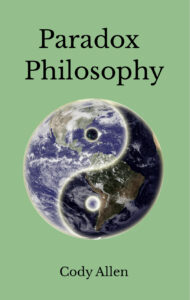 |
Paradox PhilosophyAll things are in both harmony and tension with their opposites—we often choose certainty despite our doubts, fear when there is opportunity for hope, and ourselves when we might think of others—and we should always strive to find greater balance between them. We all want to live meaningful lives, hopefully lives of moral goodness, and philosophy is the study of this venture. Paradox Philosophy is a modern, Westernized version of Yin Yang theory that delivers wisdom towards living a more virtuous life. Available at: |
Book Reviews
- Think a Second Time by Dennis Prager August 27, 2021
 While Rush Limbaugh shouted his way to the depths of conservatism’s moral bowels, Dennis Prager has spent his life holding those same values up in a warm and shining light. He wrote this book in the mid-90’s, but I still found tremendous value in his thoughts, many of which are still applicable today. It is described as 44 essays on 44 subjects and is essentially his thoughts on American culture and society after having hosted multiple national radio shows since the early 80’s.
The premise of the book is a simple one; don’t take things for their face value. Think twice about them. For example, Prager makes an excellent case for offering money as a reward for kids to do well in school, something I had always thought was crazy. Kids should learn because it builds good character, and when they find a field of study that they genuinely enjoy, they make a career and a life out of it, right? He exemplifies how most households that produce good students do so with a reward system, whether that reward is a parent’s love, more social freedom to spend with peers, or a spot on the Dean’s list. So why not money? Additionally, he compares this system to modern adulthood. How many adults in this country work a job they dislike for the simple reward of money? I would argue a majority. Is it that crazy of an idea to prepare kids for this lifestyle at a younger age? “It is very difficult for anyone, even the most motivated adult, let alone a hormone-driven, attention-wandering teenager, to love learning algebra or grammar.” Prager writes, “we should not care so much why young people learn math, history, foreign languages, and how to write properly. We should be concerned that they do learn these things.” Personally, I think he has a point. We live in a society that is motivated by money, and I imagine that a great many aimless school children would become dedicated students if there were monetary rewards attached to good grades. Of course, I am not a parent, and will not be involved in any educational decision making for any young people anytime soon. The point is that thinking twice about this subject changed my perspective.
While the chapters of this book differ widely, they all tend to touch on different aspects of our societal norms. One of the recurring themes is the focus on goodness and evil. Prager notes how most parents want their kids to be good people, but “few parents actually make their child’s goodness their primary concern. Most parents are more concerned with their child’s being a brilliant student or a good athlete or a successful professional.” Our esteemed author is a practicing Jewish man, and he attributes a lot of society’s current problems between good and evil to the rise in secular ideologies and the subsequent decline of religiosity. While religion teaches people to be good in accordance with God, “more evil has been committed, i.e., more innocent people have been slaughtered, tortured, and enslaved, by secular ideologies in this century—Nazism and Communism—than by all religions in the history of the world combined.” On this point he is factually correct. “It has been the societies influenced by Judaism and Christianity that first outlawed human sacrifice and slavery, raised the status of women to its present unprecedentedly high level, and created democracy. And in these societies, literature and the arts thrived as nowhere else.” Again, he is factually correct. Makes you think twice, doesn’t it?
In another essay, Prager makes a good case for capital punishment (the death penalty) for convicted murderers. It A) gives the family of the victim a sense of closure and relief; B) gives the community and society a sense of justice; and C) would discourage others from committing murder. Personally, I think a 25-to-life prison sentence would be worse anyways. Living a life in a cage is no life at all and I feel great sorrow for all the men and women spending their days behind bars, in this country and in others.
In April of this year I was in Hawaii for a week to celebrate my mother’s birthday and take a much needed vacation after a year of Covid lockdowns. While we were there, we went out to dinner with some of her friends who were also on the island visiting, and I found myself at a six-person table in the middle of five chatty older women. The evening of our dinner party was the same day that Derek Chauvin was declared guilty of the murder of George Floyd—and he will most likely spend the rest of his life in prison. The other five women, my mother included, were jovial and celebratory of the verdict, and when they heard the news they high-fived each other and cheers their drinks. I participated in physical form, but on the inside I felt very uncomfortable about it. I felt like they were not celebrating the justice brought to a community and nation and were more excited about the fact that he was being punished. I don’t care what crimes a guilty individual has committed, I will never celebrate when a human being is sentenced to spend the rest of their life in a cage. It seems wrong and inhumane to me. Was he guilty? The jury says yes. Did he deserve his sentence? Again, yes. But I don’t think celebration is the correct response and it made me feel dirty inside. Had they been celebrating an accurate appraisal of the justice system, that would be acceptable, but they were not. I pity Derek Chauvin and whatever remains of the rest of his gloomy life behind bars. I truly believe that a humane death sentence would be preferable to life in prison. Why not give the convicted person a choice as to their punishment?
Again, Prager has more to say on good and evil when he writes that “A great deal of evil emanates not from selfish or cruel motives, but from good motives. This is particularly true regarding extremism.” We have all seen the rise of political and ideological extremism in our country these past few years, and for those of us moderates in the middle, it has been an increasingly confusing time. Whether you are an extremist on the Right or the Left, we all want the same things: to live in a happy, healthy, safe, and prosperous society. It is surprising how many of us have forgotten the simple fact that we all have far more in common than we do different. We would do wise to remember it, and take some advice from Prager: be good people, because good people with strong moral values make a good society. So think twice about some of your ideas and beliefs. Think twice about why other people think the things they do, and consider their point of view before reaching for judgment. Think twice about your own decisions and their potential affects on others.
- Focus by Daniel Goleman August 17, 2021
 We live in a world where focus is difficult. With so many different things and people constantly vying for our attention, the ability to shut it all out and concentrate on whatever the task at hand is is increasingly more valuable. We now live in an attention economy, defined by Wikipedia as “the management of information that treats human attention as a scarce commodity.” We must all recognize that our time is our most valuable individual resource, and in a society that is resource hungry, we must allocate it wisely. Fortunately, “attention works much like a muscle—use it poorly and it can wither; work it well and it grows.”
In his book, Goleman tells us how attention comes from two places: top-down, or conscious attention, and bottom-up, or subconscious attention. “Voluntary attention, willpower, and intentional choice are top-down; reflexive attention, impulse, and rote habit are bottom-up.” The wrestling match that happens between these two systems is often referred to as willpower—and is also a facet of ego. “Willpower keeps us focused on our goals despite the tug of our impulses, passions, habits, and cravings.” This is the struggle between finishing that last term-paper, or finishing responding to all your work emails, while your friends are hanging out at the bar or watching The Walking Dead finale without you. Do you have the focus and discipline to finish your work, or do you indulge in the distraction of friends and leisure time activities?
There are three areas where our attention must be honed in order to be a well rounded human: inner, other, and outer. Goleman breaks these three categories down by examining how “inner focus attunes us to our intuitions, guiding values, and better decisions. Other focus smooths our connections to the people in our lives. And outer focus lets us navigate in the larger world.” The first two, inner and other focus, are both naturally developed in the brain. We have been developing these mental systems since the dawn of Homo Sapiens so as to better understand ourselves and to better live as a human in a society with other humans. Our brains have grown and adapted to modern society and our internal mental circuitry has the hardware to complement these focuses. Indeed, there are people who have trouble with self-focus (alexithymia) and other-focus (aspergers), but people with trouble in one or both of these areas can improve them with mindfulness techniques and social recognition training (with obvious exceptions for people with abnormal brain chemistry.) Interestingly, outer focus, described as an ability to recognize and operate within the larger macro-systems of society, is not organically developed in the brain. This aspect of focus is one that must be cultivated and honed with purpose and specificity. Again, we can trace this back to our evolutionary heritage. The larger systems of modern society incorporating millions of people are a relatively recent phenomenon in human history and have not been transferred over to the naturally developing human brain (yet).
For many years, psychology has “put academic skills in a separate category from social and emotional ones.” But the reality is that “the neural scaffolding for executive control underlies both academic and social/emotional skills.” Basically, the same way that mind and body are one, so are IQ and EQ. “In the design of the brain they are highly interactive, not fully independent.” Goleman says, and exemplifies how “kids who can’t pay attention can’t learn; they also can’t manage themselves well.” He goes on to write how the one true determining factor of the future success of children is willpower, and how “for financial success, self-control in childhood proved a stronger predictor than either IQ or social class of the family of origin.” The Stanford marshmallow experiment is the perfect example of this. In 1972, Stanford psychologist Walter Mischel did a study where he gave children a choice between one marshmallow now, or two marshmallows later. The child was left alone in a room with a marshmallow for about 15 minutes and told to wait. Some gobbled it up immediately, but the ones who were able to delay the desire for the treat until the researcher returned received double the marshmallows. In follow up studies, the children who were able to wait the 15 minutes and delay the gratification of a tasty snack were more likely to have more favorable life outcomes including better SAT test scores and educational achievements, more healthy bodies as measured by body mass index calculations, and were reportedly happier later in their lives. Goleman echos these findings in his book, and traces it back to awareness and attention. Children (and people) who are aware of themselves and have the willpower to direct their attention and focus with purpose are better able to navigate society.
So, do you want to have better focus during these days of constant distraction? You can, you just have to work at it. “Memorization works that muscle, as does concentration. The mental analog of lifting a free weight over and over is noticing when our mind wanders and bringing it back to target.” Being aware of yourself, others, and the world at large, and being able to cycle through each at the appropriate time is also important, and is a technique that can also be practiced and honed. Maintaining focus has become a skill of paramount importance as our time has become our most valuable commodity. Spend it wisely.
- Sissy by Jacob Tobia August 7, 2021
 This book is about a young person’s journey to discover their own gender identity in a world with only two choices: man and woman. The overall theme, however, is broader then that; Everyone deserves to feel comfortable in their own skin. Too often we sacrifice pieces of ourselves in order to fit in and if we’re not careful, those pieces can be lost. This is clear and obvious for someone like Jacob Tobia, who spent their adolescent years trying to figure out which gender box they belonged in. Ultimately, they decided to make their own, and they express this by wearing whatever clothing they want, depending on whether they are feeling more feminine or more masculine on that particular day and occasion.
“I was perched on my homework couch—reading Walden by Thoreau and studying the transcendentalist movement—when I found myself brainstorming in the margins of my book: Gender Transcendentalism?” Tobia writes of their journey towards their own gender identity. They continue: “I chewed on those words. Wasn’t that what I wanted? To go into the woods, into a world of my own, build a gender of my own design, and set my own rules, free from the influence of the outside world? Didn’t I want to transcend the binary?” This idea, of creating your own world, was a sentiment I connected with strongly via my own personal political journey. I was raised in a family of Democrats and it was simply assumed that I would be a Democrat as well, but I never felt like one on the inside. There are some positions that Democrats stand for that I agree with, like legalized abortion, but there are also some Republican ideas that make sense to me, like the importance of a free market in a capitalist system. Tobia has found the courage to wear lipstick with their five o’clock shadow. Can I find the courage to support both gay rights and gun rights?
Coming out as transgender lost Tobia friends and opportunities in life, but it also created new ones in the ensuing absence. When I told my mother and sister that I was not voting for the Democratic ticket in the 2020 election, they were so upset that they walked away and literally left me alone at a Diary Queen. It was my equivalent to ‘coming out’ of the (political) closet, and it was not a positive experience. My family members and I have since come back together and are on good terms, but things are not, and never will be, the same. I feel more politically lost at sea now than I ever have before, but I also feel more confident in myself and my beliefs as well. Ever since I have started telling friends and relatives about my ideas openly and honestly, a majority of them have accepted me, even if they disagree.
This book is great for the simple lesson it teaches between the lines: we must all find a way to be our authentic selves in society. For Tobia, they will continually be shaping and honing their gender identity throughout their life. For me, it is my political and cultural identity. The price of not pursuing our true identities is our happiness.
- The Right Side of History by Ben Shapiro July 28, 2021
 This book is a diagnosis of the decline of the modern western world. We live in the greatest civilization that has ever existed; it is the safest, healthiest, and most prosperous society in history. Yet, we’re throwing it away. Depression, drug use, and conspiracy theories are rampant while marriage rates, community cohesion, and overall religiosity are fast declining. So, what happened?
Here’s an appropriate metaphor: If a frog is put into a pot of boiling water, it will jump out immediately. If, however, a frog is put into a pot of room temperature water which is then slowly heated to a boil over time, the frog will cook to death. This is the argument for how we got to where we are today (and also for why global warming is such a threat, but that’s a different topic.) It has happened slowly, over the course of generations, and now it feels as though the water is suddenly boiling! Shapiro posits that when The United States was first founded, it was on the twin pillars of Judeo-Christian ethics and an Aristotelian belief in the use of human reason to understand the world around us. “The Bible and the Philosopher come to the same conclusion” he writes, “the Bible commands us to serve God with happiness and identifies that moral purpose with happiness; Aristotle suggests that it is impossible to achieve happiness without virtue, which means acting in accordance with a moral purpose that rational human beings can discern from the nature of the universe.”
The definition of the word virtue, similar to most words, has changed over the course of time. Whereas virtue was once associated with individual character development, it is now defined as “conformity of one’s life and conduct to moral and ethical principles” (taken from dictionary.com). This new definition is tricky, because who decides what is morally correct and ethical is important. Conforming to that which has been dictated as morally correct is often a recipe for disaster. This is exactly how the atrocities of communism and nazism happened, as the individual was sacrificed in service to the greater good of the nation.
Shapiro says that a happy and prosperous society requires “four elements: individual moral purpose, individual capacity, collective moral purpose, and collective capacity.” I also believe this to be true. Human beings need to feel happy with themselves and their individual work towards the betterment of their own lives. They also need to feel content within their communities and to feel as though their contributions to the collective matter. Human beings exist on both planes, the individual and the communal, and must nurture both. In his book, Shapiro takes us on a ride through history, stopping along the way to visit the different philosophers and thinkers who got us to where we are today. It started in Athens, around 2500 years ago with Aristotle and the birth of human reason. This is where humanity first tried to understand the world through an objective lens. Then came Judaism, closely followed by Christianity, and the belief that human beings served a larger moral purpose. While these two pillars of thought were honed and redefined throughout the ages, the next biggest break was the Enlightenment (occurring in 17th and 18th century Europe) which placed the focus on the individual. Up until this point in history, societies had all been mostly constructed around the greater good of the whole. Now, all of a sudden, people began to value themselves. It is no coincidence that this is also around the same time that the industrial revolution occurred and capitalism began. Capitalism is focused on the individual and what that individual can produce. If you can make more than your neighbor, or make something better, than the quality of your life improves. That is how the United States, and by association the western world, grew to become to most advanced and prosperous country in the history of humanity, lifting billions of people out of poverty along the way.
If you didn’t know, Ben Shapiro is a conservative political pundit here in the United States and spends a considerable amount of time and energy diagnosing the present political scene. Considering his biases towards the left, he makes a good point about the foundations of their current destructive nature. The Democrats, as they stand today, seem to be throwing away the importance of the individual for the importance of the whole. We can see this in the relentless ‘cancelling’ of people on social media, or how they don’t seem to have a good answer to the question of why there are gay and black people in the Republican Party. The damaging philosophy, as posited by Shapiro, is their dependance on their own subjectivity in relation to the world around them, as opposed to the objectivity of days long gone. “By focusing on self-esteem” he writes, “the New Left could kill three birds with one stone: they could overturn reliance on Judeo-Christian religion, Greek teleology, and capitalism.” When Shapiro says facts don’t care about your feelings, a sentiment often repeated by pundits on the right, this is what he means. He goes on to say how “Religion suggests that ‘your bliss’ does not exist; only God’s bliss does. Greek teleology is utterly unconcerned with your personal definition of self-realization; the only thing that counts is whether you are acting virtuously in accordance with right reason. And capitalism cares far less about how you’re feeling than about your ability to create products and services someone else wants.” This, according to Shapiro, is how the left is destroying the America we all know. Meanwhile, modern Democrats assert that they are intent on dismantling the patriarchal hierarchy of the current system, fighting for justice for marginalized people, and doing away with a system that is unequal. The problem is that they are also correct in their beliefs. Is Shapiro right when he says that the Left is doing tremendous damage to the collective psyche of the country when they ignore the individual in preference of the community, and when they focus on subjectivity over objectivity? Yes. Is the Left right when they say the reason for this is because the community has been racist, sexist, and homophobic since the founding of the country? Also yes.
Anyways, whether we like it or not, here we are, boiling. And whether we choose to accept it or not, the warning signs were there. We, as a society, have stopped focusing on individual character development as a route to a more harmonious society. Instead, we have everything we want at our fingertips and it will never be enough, because without virtue, without individual meaning to our lives, no amount of material stuff can make us happy. The same goes for collective meaning, which is equally important. The great Russian writer and thinker Fyodor Dostoyevsky (1821-1881) once remarked that “materialist man is far more of a threat than religious man.” Regardless of whether you are on the political left or right, whether you live in the modern western world or not, the lessons here still apply. Society needs people who use their reason and their objectivity to be both virtuous individuals and valuable members of their communities. Whether we return to Judeo-Christian ethics and Aristotelian virtue remains to be seen. Without these things, however, society will surely continue to crumble.
- The Intelligence Trap by David Robson July 18, 2021
 There is no singular, sure-fire way to measure or determine the intelligence of a human being. For many years in the western world we have used IQ tests, but the reality is that analytical intelligence is only one kind of intelligence. There is also creative intelligence, for example, which “examines our abilities to invent, imagine, and suppose.” There is practical intelligence, which Robson defines as “the ability to plan and execute an idea, and to overcome life’s messy, ill-defined problems in the most pragmatic way possible.” There is emotional intelligence (EQ), social intelligence (SQ), and plenty more divisions and subdivisions depending on which clinical psychologist you subscribe to.
Where intelligence becomes a trap, and one of the most important pieces of information that Robson brings to light in his book, is when an individual’s intelligence leads them to intellectual certainty. People who are masters of their craft are convinced of the correct way to do a certain task, and they are most often correct. If you are a carpenter, for example, you probably know the best way to sand, stain, and polish a handcrafted table, and that would be fine. Where this becomes dangerous, however, is in the realm of social ideas. The longer you hold what you believe to be an objective truth as true in your mind, the more attached to it you will become. If you’re a carpenter, the stakes are low, but if you’re trying to determine the best way to organize a society of differing cultures, the stakes are high. “One problem is flexibility” Robson writes, “where experts rely on previous experience and lose their eye for changing ideas.” As the Zen monk Shunryu Suzuki put it in the 1970s: “In the beginner’s mind there are many possibilities, in the expert’s, there are few.” This is what made Socrates the wisest man of ancient Athens; his acknowledgment of his own ignorance of all things and his perpetual quest to understand other people’s points of view better. This is also why the socratic method is based around asking questions; because questions are the ultimate form of intellectual humility.
One of the most important elements of research done in this book is on curiosity. Recent brain scans have revealed that curiosity triggers dopamine, which is “usually implicated in [the] desire [for] food, drugs, or sex—suggesting that, at a neural level, curiosity really is a form of hunger or lust.” What this means is that curiosity is its own reward, and if applied to something that deeply interests a person, can even go so far as to become an addiction. Curiosity is also one of the most important antidotes to certainty. Its link to mental elasticity and empathy is crucial for remaining wise, especially in the high-stakes realm of macro-ideas. Benjamin Franklin is an example of the perfect embodiment of these ideas, detesting anything resembling dogma and always remaining curious and intellectually humble about ideas. It was this curiosity about all things that led him to his many inventions and discoveries, and which also aided him in his exemplary political career. If not for him, there is a strong possibility that the Founding Fathers may never have signed and ratified the Constitution of the United States.
Curiosity is also important when considering our emotional compass. Our emotions are a vital source for information gathering and processing and staying closely attuned to them is important for growth and understanding, both of the self and of others. In a business meeting, for example, empathizing with colleagues can better help individuals to reach decisions and navigate negotiations. In group settings as well, having a higher social awareness (both empathetically and empirically) can help with overall group cohesion.
While the thesis of this book is about the blind spots that come with intelligence (like our tendency to see others’ flaws while being oblivious to our own), I found it to actually be more about the ways in which people can achieve wisdom. We have touched on intellectual humility, curiosity, and one’s emotional compass in my review, but there are many more ideas within these pages that deserve attention. Having a growth mind-set, for example, which is the “belief that talents can be developed and trained” over time, as opposed to a fixed mind-set where an individual believes they’ve got what they’ve got and thats it. Or the idea of a pre-mortem, where an individual or a team considers the best-and-worst-case scenarios of a decision before making it. And of course, on the flip side, the dangers of motivated reasoning, which Robson observes as the “tendency to apply our brainpower only when the conclusions will suit our predetermined goal.” How many people (journalists come to mind) operate under this principle, where they decide what angle they want to take on a topic first, and then find supporting evidence second? Is that really a wise way to study and shed light on a pressing topic or public individual?
So, when is intelligence a trap? When you believe in your own intellectual superiority. Robson calls this earned dogmatism, and it is a sure-fire way close yourself off from other people in intellectual, emotional, and social ways. Regardless of your field of employment or study, we should all be mindful of our prejudices surrounding our preferred areas of expertise. We should always do our best to remain open-minded and curious if we have a desire for wisdom.