




I’m a writer and author with a passion for exploring ideas.
Since 2020, I’ve published monthly book reviews as a way to reflect on what I’ve read. I do my best to challenge my own thinking and remember the lessons worth keeping. Here you’ll find my books, my reviews, and my reflections on the ideas that have shaped my perspective along the way.
My Book
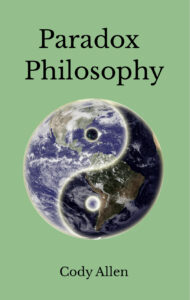 |
Paradox PhilosophyAll things are in both harmony and tension with their opposites—we often choose certainty despite our doubts, fear when there is opportunity for hope, and ourselves when we might think of others—and we should always strive to find greater balance between them. We all want to live meaningful lives, hopefully lives of moral goodness, and philosophy is the study of this venture. Paradox Philosophy is a modern, Westernized version of Yin Yang theory that delivers wisdom towards living a more virtuous life. Available at: |
Book Reviews
- Doubt by Jennifer Michael Hecht December 3, 2021
 The history of doubt is as long as the history of thought itself, beginning with the birth of philosophy. As long as human beings have questioned their surroundings they have had doubt in their minds. One of the first was Socrates. He believed that “there is truth to be found, but that human beings may best approach it through doubt rather than conviction.” The ‘socratic method’ is the search for truth via the process of questioning. Questioning something means that you are skeptical of it, or that you doubt some element of it, and this questioning (hopefully) leads to understanding and wisdom.
Along for the historical ride with philosophical doubt is also religious doubt, the two eternally and conceptually intertwined. People have always questioned the existence of a god or gods and have done so in fantastically myriad ways over the millennia. Xenophanes (born 570 BC) was one of the earliest Skeptics, writing that if cattle and horses and lions could paint, “they would depict the gods in their own image.” He noted that Ethiopians described the gods as black and flat-nosed, while the Thracians described them with blue eyes and red hair. Who is correct? Is anybody?
All of the great religions are wracked with doubt in their own ways. With Christianity, managing one’s doubt, that is, husbanding one’s faith, is the central drama. The story of Job is a story of doubt. In the Gospels of both Mark and Matthew, Jesus’ last words were “My God, my God, why have you forsaken me?” Even Jesus doubted.
Jewish and Islamic doubt have also existed throughout the history of mankind. Al-Ghazali (1058-1111) is one of Islam’s greatest philosophers and considered a great religious thinker by many Muslims. He noted that “Christian youths always grew up to be Christians, Jewish youths to be Jews and Muslim youths to be Muslims.” So what is belief? (For a taste of Jewish doubt, answer me this: How could Moses could have written the book of Dueteronomy when it tells of his own death?)
In eastern cultures, Buddhism has been around since Guatama Buddha walked the earth somewhere around the 5th century BC. Buddhism is the search for Enlightenment and the attainment of Nirvana via the transcendence of the self. Doubt in the existence of the self is central. In fact, it is this belief in the self that Buddhism believes leads to suffering. The answer is to let go of all certainty. Buddhist thought has disseminated into a variety of other ideologies, a popular one being Zen, which focuses on self-restraint, meditation, and understanding the nature of the mind. In Zen they have a saying: “Great doubt: great awakening. Little doubt: little awakening. No doubt: no awakening.”
I could go on with more examples of doubt, from east to west, ancient to modern, slightly skeptical to full-blown atheist, but that would be redundant. As long as there have been believers, there have been doubters. What is interesting, however, is that while believers held the power in their societies for most of human history, only recently have the tables turned and doubters come to the forefront. It is no coincidence that here in the United States, the greatest democratic country our modern world has ever seen, we have a separation of church and state. Any person can practice whichever religion they desire, but matters of social governing are done in a secular manner, the goal of which is the prosperity of everyone. This change in history, now seeing doubters and atheists in power, has come about due to scientific discoveries and technological advances. Once upon a time people thought the gods were responsible for rain. Now we know that rain is a part of nature’s natural cycles, and we don’t need a god to help us understand it. Science and technology have brought the United States virtual reality and electric cars, while other countries (still dominated by religious certainty) still fail to educate their women and treat them equally.
Cicero (born 106 BC) wrote “by doubting we come at truth.” Freud (born 1856 AD) wrote that “the healthy psyche needs doubt, indeed should embrace disbelief as a part of maturity.” From the earliest thinkers to the most recent, doubt has always been a recurring theme, and while humanity has undoubtedly come a long way, we still face the persecution of certainty. This is because certainty is comfortable, and people desire comfort. Doubt is intrinsically unstable and chaotic, feelings we naturally want to assuage.
In conclusion, if you harbor doubts about your life, you are not alone. In fact, you are in good company, perhaps some of the greatest. Buddha, Socrates, Cicero, Epicurus, Aristotle, Jesus, Marcus Aurelius, Spinoza, Montaigne, Nietzsche, Locke, Hume, Hobbes, Sartre, Newton, Galileo, Jefferson, Franklin, Edison, Einstein, and Freud were all doubters. Personally, I believe that when feeling doubt one should also feel pride, for doubt is the seed of truth, and the search for truth is always good.
- Yin and Yang of Life by Joseph K. Kim and David S. Lee November 20, 2021
 Yin and Yang is a theory of everything that comes to us from ancient Chinese philosophy. It sees all things as comprised of opposites that must exist simultaneously and in conjunction with each other. Day and night, for example, exist together; if all you had was daytime and never nighttime, then day would not be called day, it would simple be. Same goes for wet and dry, or dark and light. If there was no term, concept, or idea behind things being ‘wet,’ then nothing could ever be ‘dry.’ Things that would be considered dry, would simply be.
This concept of the duality of all things also applies to people. “While a person may seem hard on the outside, in general those people are covering up a very soft internal personality.” Our authors continue: “Conversely, people who may appear soft by nature may carry a great deal of strength inside.” This is the epitome of the stereotypical high school student, i.e. the quiet kids show resilience to an uncomfortable youth and go on to be brainiacs and win Nobel prizes in physics and the loudmouths and classroom disrupters often have far less career prospects and less success in life. (This is a broad stroke and not a hard and fast rule, just something I have found to be relatively true in my own personal experience.)
The catch with yin and yang is that while all things are typically classified as either yin or yang, they in fact always reside together. You will never find one without the other. “On one hand, yin and yang oppose one another, creating conflict, tension, friction, and discord. On the other hand, they complement one another, creating dynamic harmony, balance, equilibrium, and stability.” It all depends on what lens you look through. When viewed through an economic lens, “work and labor (yang) are converted into money (yin) when people are financially compensated for their work. Money can then be converted back into work and labor when it is used to pay people for their efforts.” In science, “matter (yin) has a tendency to transform into energy (yang), while energy has a tendency to turn into matter.” In music, “the lower the pitch an instrument produces, the more yin it is; the higher the pitch, the more yang.” Feminine energy is yin, masculine is yang, and so on.
One of the most interesting takeaways from this book was how the eastern approach to medicine differs from ours in the west. While western medicine is exceptional at diagnosing and treating injury and illness, it falters when treatment disregards the function of the whole being. “According to eastern medicine, disease results when there is an imbalance of yin and yang in the body,” and eastern medicinal remedies typically focus on repairing this imbalance, usually through diet and more natural (and herbal) ways. You can see this in the extensive list of side effects accompanying medicines prescribed in western countries. Comparatively, I challenge you to find a negative side effect from drinking green tea.
I think the idea behind yin and yang really gets interesting in exactly that realm—the realm of ideas. For example, ego and humility. I posit that you cannot have one without the other, and that like yin and yang, they always exist together. Same with the traditionally converse ideas of freedom and discipline, and also hope and fear. “This paradox is the very nature of yin and yang, either positive or negative depending on the perspective of an observer. Both positive and negative actions result from this dynamic and harmonious alliance. The bonding and interaction of yin and yang are absolutely essential for existence and the sustenance of all life and universal activity.”
All things exist in harmony with their opposite. We must recognize and appreciate both.
- The Radical King by Martin Luther King Jr. November 11, 2021
 Reading Martin Luther King Jr.’s personal essays and speeches is inspiring. He was certain that nonviolent resistance is the only way to win true justice in the face of adversity, and he has convinced me of this sentiment. He writes how nonviolent resistance is not just the willingness to accept suffering without retaliation, but that it “does not seek to defeat or humiliate the opponent, but to win his friendship and understanding.” Resistance “is directed against forces of evil rather than against persons who happen to be doing the evil.” This is what he meant when he said that we are all brothers and sisters in humanity (and in the eyes of God). Remember the words of Jesus: “He who lives by the sword will perish by the sword,” which is synonymous with another mighty believer in nonviolence, Ghandi, who observed that “an eye for an eye makes the whole world blind.”
Despite what you may believe, nonviolent resistance is not passive, but it is in fact quite active. While not active in physical retaliation, it is active emotionally, spiritually and economically, always trying to convince oppressive forces of their unjust ways. Justice is never given willingly by an oppressor, but must be demanded by the oppressed, over and over again, until their cries for justice are heard.
The fight for racial justice is intertwined with the fight for economic justice like two fibers comprising the same rope. King understood that this rope was being used to tie the poor and poverty stricken people of the world down to the bottom rungs of society. In the months preceding his assassination on April 4th, 1968, King and the SCLC (Southern Christian Leadership Conference) were putting tremendous time and effort into organizing The Poor People’s Campaign, which was a march on Washington to demand economic rights for the poorest of the nation. On March 10th, 1968, less than a month before his final breath was taken in Memphis Tennessee, King gave a speech in New York City in which he asserted that The Poor People’s Campaign would not just include black people, but would “also have Puerto Ricans because Puerto Ricans are poor in the United States of America.” They would also include “Mexican and Indian Americans because they are mistreated. And for those who will not allow their prejudice to cause them to blindly support their oppressor, we’re going to have Appalachian whites with us in Washington.” His ultimate dream was for all poor and working class people to live lives of decency and dignity.
King often spoke about how the means to an end are just as important as the end itself, writing that “constructive ends can never give absolute moral justification to destructive means, because in the final analysis the end is preexistent in the mean.” How many dictators throughout history have had the vision of a peaceful society, yet only used violence to achieve it? Napoleon Bonaparte, looking back over his years of conquest, is reported to have said: “Alexander, Caesar, Charlemagne and I have built great empires. But upon what did they depend? They depended on force. But centuries ago Jesus started an empire built on love, and even to this day millions will die for him.” History may remember great users of force, but people alive today will still die for great champions of love.
So, if we are to achieve peaceful ends, then we must work to achieve that goal by peaceful means. “The problem with a riot is that it can always be halted by superior force,” writes King, and he is correct, especially in a country like the United States which possesses the largest military force the world has ever seen. But this is not just in reference to violent actions taken, but “also internal violence of spirit,” King contends, “The nonviolent resister not only refuses to shoot his opponent but he also refuses to hate him.” Forgiveness of one’s oppressors is paramount, for forgiveness is a precursor to love.
I am writing this in the autumn of 2021 and feel as though we need King’s messages now more than ever. At least in the United States, we are more divided than ever, with groups hating other groups with which they have so much in common. I believe the divide in this country is not between white and black, republican and democrat, urban city dwellers and rural townsfolk. The true divide is between the rich and the poor, the haves and the have-nots. Politicians and the media have kept us divided for their own benefit, and the longer we focus on our differences, the longer racial and economic struggles continue. Only by uniting can the poor, disenfranchised, and unjustly treated in this country (and world) win the freedoms that this great nation promises to all men and women.
If you are reading this, please stop hating people. We are all kin. Focus your attention on commonalities and how to be uplifting and constructive within your groups and communities. Add value to your slice of society in positive ways. Do it with love, I implore you.
- The Molecule of More by Daniel Z. Lieberman and Michael E. Long November 5, 2021
 This book review took me a full week to write. Every time I sat down to collect my thoughts my phone would ping with a message from a friend and I would get swept up in whatever their drama was. One of those days I got a message from a young woman on a dating app, and the idea of meeting her for dinner consumed my mind to the point where I wrote nothing at all. Although frustrating, now that I am on day five of attempting to write this review, I have come to find it precisely appropriate that the dopamine mechanism in my brain kept me distracted for a full week. But let’s get to it.
Look at everything in your immediate vicinity. The chair you’re sitting on, the screen you’re reading this off of, the few other things you can smell and touch; this is your here and now. Everything else is inspired and manipulated by dopamine. Even an object that is across the room (one that you can see), the desire to go and pick it up is driven by dopamine, because dopamine is the molecule that allows us to imagine a potential future. It makes you believe that whatever you have at present is not as good as what you could potentially have later. Is the steak you’re eating for dinner right now really that good, or will the pizza you’ve got planned for tomorrow night be better? Have you finally found love, or is there a person even more suitable to you still out there waiting to be met and courted? Is this book review a good one, or will the next book be more interesting?
One of the most intriguing lessons I learned from this book was the connection between dopamine and creativity. Dopamine is the all important chemical for planning things in the future, and creativity is literally the process of imagining something new and creating it, therefore it makes sense that creative people have been found to have larger (or more populous) dopamine receptors in their brains. The world of science is similar. Scientists ask questions, imagine potential futures, and go in search of answers. Scientists have similarly been found to have more dopamine in their brains than the average person. Sometimes this can be a scary thing; how many great artists and scientists from history do we know who have had addictions or compulsions they were perpetually unable to overcome? Picasso and Einstein, both geniuses in their respective fields, are known to have philandered about with a variety of women (despite both being married several times throughout their lives). The line between madness and genius can indeed be a thin one. Nobel Prize winning mathematician John Nash made fundamental contributions to game theory, differential geometry, and economics, and also lived with schizophrenia (he is portrayed by Russell Crowe in the 2001 film A Beautiful Mind based on the book of the same name). There is a story about Nash in which he is asked how he can possibly believe that he is being contacted by aliens, to which he responds: “the ideas I have about supernatural beings come to me the same way that my mathematical ideas do.”
Another interesting anecdote is the idea that almost anything can become addicting if it triggers your dopamine circuits. I experienced this myself one year when I went on four separate multi-day vacations each precisely one month apart. After returning home from the fourth trip, I spent an entire week planning number five until I eventually talked myself out of it. I have personally found it true that any repeated behavior that gives me a positive hit of dopamine can become something that I crave again and again. For some people it’s an injection of heroin, for others it’s getting on an airplane to a vacation destination.
Here’s a question: Does Steven King still enjoy writing scary books? Or is he just chasing another dopamine hit? Do you think Meryl Streep and Tom Hanks still enjoy making movies, or are they simply looking for the rush of excitement they get from the next great script to be sent their way? Does Bob Dylan still get the same satisfaction from performing that he used to? Or is his dopamine drip firmly in control, always pushing him to play another show?
Our authors mirror all of this research with a study done on happiness, in which they found that people were less happy when their mind was wandering. “It didn’t matter what the activity was. Whether they were eating, working, watching TV, or socializing, they were happier if they were paying attention to what they were doing.” Especially with the rise of social media platforms, a lot of time spent mentally wandering is time spent comparing yourself to others who probably have more of what you want (or what you think you want). These platforms, and our cell phones in general, are the most addicting things ever invented—every ping triggers our dopamine receptors. The researchers concluded that “a human mind is a wandering mind, and a wandering mind is an unhappy mind.” Living in the moment makes a human happy, as does appreciating what you already have and doing your best not to pine for more. Turns out all of those spiritual gurus really are on to something!
On the one hand, dopamine has made us Homo Sapiens the dominate species on the planet by giving our ancestors “the ability to create tools, invent abstract sciences, and plan far into the future.” We have brought into being a world in which buildings scrape the skies, the internet unites communities across the oceans, and 8 billion humans coexist relatively peacefully. We have achieved wondrous accomplishments thanks to our internal desires for a better and more comfortable life. The question on the other hand, however, is where does it end? Our authors cautious us, noting that “in an environment of plenty in which we have mastered our world and developed sophisticated technology—in a time when more is no longer a matter of survival—dopamine continues to drive us forward, perhaps to our own destruction.”
Obviously we cannot renounce all sensual pleasures and plans for the future, we are not Buddha. We want things in life for ourselves and our loved ones and we want to contribute to the betterment and advancement of society. But we can recognize our addictions and find balance. Personally, I have gotten into the habit of leaving my phone on silent. In the past it was only when I was watching a movie or at the Thanksgiving dinner table, but now I leave it silenced almost exclusively. I don’t want my phone to be in charge of telling me when some ‘important’ message comes my way; I check my phone when I want to, not the other way around. It’s one small step towards living in the moment. (Don’t worry Mom, I got all six of your voicemails and I will call you back.) Are there areas of your life that you keep going back to, despite the knowledge that it is unhealthy for your mind or body? Dopamine is the molecule of more, which means the most important question to answer is this: When is more a good thing, and when is it detrimental? That is stability.
- Astrophysics for People in a Hurry by Neil deGrasse Tyson October 26, 2021
 All things are defined via their relations to other things. For example, the reason I believe myself to be a patient person is because I have experienced other people who had little of the stuff. Jeff Bezos isn’t rich because he has a trillion dollars; he is rich because he has a trillion dollars and the rest of us have far less. One hour is a long time when compared to a second, yet it is minuscule when compared to a year.
Reading about the solar system within which we all reside has made me feel truly tiny. We are all generally aware that Earth is small in comparison to the sun and to other galaxies of stars, but the actual numbers are beyond staggering. Not only are there hundreds of billions of stars in a galaxy, and not only are there hundreds of billions of galaxies in a universe, but there are hundreds of billions of universes. Astronomers have concluded that “there are more stars in the universe than grains of sand on any beach, more stars than seconds have passed since Earth was formed, [and] more stars than words and sounds ever uttered by all the humans who ever lived.” Compared to the celestial bodies above, we humans are infinitesimal.
The field of astrophysics is interesting because it not only concerns itself with the biggest of entities, but also with the smallest, because in order to better understand the cosmos within which we reside, we must better understand it’s building blocks. For example, we know that “the element carbon can be found in more kinds of molecules than the sum of all other kinds of molecules combined.” Or we might be interested in knowing the chemical compounds that comprise a drop of water so that we might some day be able to find it (or create it) on another planet. Conversely to the unfathomable expanse of space, “there are more molecules of water in a cup of the stuff than there are cups of water in all the world’s oceans.” Compared to a molecule of water, we humans are gargantuan.
So, for those of us to whom astronomy and astrophysics are interesting yet largely beyond basic comprehension, the take-away is simple: Life is about perspective.