




I’m a writer and author with a passion for exploring ideas.
Since 2020, I’ve published monthly book reviews as a way to reflect on what I’ve read. I do my best to challenge my own thinking and remember the lessons worth keeping. Here you’ll find my books, my reviews, and my reflections on the ideas that have shaped my perspective along the way.
My Book
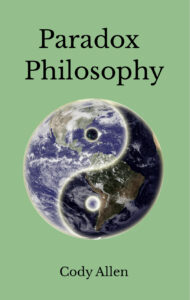 |
Paradox PhilosophyAll things are in both harmony and tension with their opposites—we often choose certainty despite our doubts, fear when there is opportunity for hope, and ourselves when we might think of others—and we should always strive to find greater balance between them. We all want to live meaningful lives, hopefully lives of moral goodness, and philosophy is the study of this venture. Paradox Philosophy is a modern, Westernized version of Yin Yang theory that delivers wisdom towards living a more virtuous life. Available at: |
Book Reviews
- Atomic Habits by James Clear February 21, 2022
 If you imagine the structure of your life as a brick building, your habits are the bricks. They are the foundation that allow you to lead the life you desire, the life of your design. The reason habit formation is so important is because the conscious brain can only focus on one task at a time. Rote habits are carried out by the subconscious (or nonconscious) mind, and the more aspects of your daily life that you can pass off to your subconscious, the more mental bandwidth you have available to concentrate on other problems.
In his book, Clear lays out four laws that influence habit formation: Make it obvious, make it attractive, make it easy, and make it satisfying. Each of these laws govern both our good habits and our bad habits, and they are the roadmap for change. For example, if we want to start exercising first thing in the morning, we can make it obvious by putting our running sneakers next to the bed the night before. For another example, if we are trying to quit a bad habit like smoking, we might make it difficult (the reverse of making it easy) by locking our cigarettes up in a place that is difficult to get to.
The two biggest cues that activate a habit are place and time. If you eat breakfast at the same time every morning, your body will learn to get hungry at that time. Similarly, if you always smoke cigarettes in your garage, when you go in there to do your laundry, your body will crave nicotine. This is because our “environment is the invisible hand that shapes human behavior.” We often think that changing bad habits into good ones requires diligent will-power, and while this internal approach does sometimes work, it is not the only solution: sometimes changing the external environment that we are existing in can be just as impactful. This is because “our behavior is not defined by the objects in the environment but by our relationship to them.” If your relationship with your garage is that it is a quiet place where you go to smoke, then anytime you go there for any other reason, you will be triggered to smoke. You must change your relationship to your garage in order to curb the desire to smoke every time you enter.
The biggest misconception about habits is the difference between setting goals and building systems. “The purpose of setting goals is to win the game,” Clear writes, “the purpose of building systems is to continue playing the game.” You might start a habit because you are motivated to do so, but you’ll stick with it because it becomes a part of your identity. It is the difference between saying to yourself “I am going to lay 100 bricks” and “I am going to be the best brick layer I can be.” Achieving a goal only changes your life momentarily, whereas adjusting your system changes your life forever. This is the purpose of creating strong and healthy habits: to improve your life one small brick at a time.
Reading this book led me to a personal revelation about my writing. When I first started writing book reviews, I set the goal of completing three a month. This inevitably became tiresome. Instead of remaining chained to this goal, I decided to change my mindset: Instead of writing three a month, I simply write as many as I can with the time that I have. I may have some months where I only produce one or two book reviews, but this will not take any wind out of my sails. My goal is no longer to write three reviews a month, but instead it is to be the best writer I can be. Reading and writing book reviews started off as something I was motivated to do because I wanted to share my favorite books with the world. Now it has become a part of my identity. I am a writer.
I humbly thank you for reading!
- Grant by Ron Chernow February 3, 2022
 Ulysses S. Grant’s life was remarkable for the fact that he had almost no choice in any of it. The current of history swept him along at a breakneck pace and yet he managed to carve out a miraculous place for himself in its annals.
As a boy, his father decided to send him to West Point Military Academy. Grant had no desire to go and graduated middle of his class (the one area where he excelled was horse riding). Soon after, he fought as a soldier in the Mexican-American War, and was then assigned to west coast territory as the California gold rush of 1849 saw a flood of settlers traveling west and looking for riches. This two year stint in California and Oregon is where he developed his taste for alcohol, the consumption of which placated his depression at being so far away from his wife and family. (His “abuse” of alcohol would haunt him for the rest of his life.) He resigned from the military in 1854 due to his loneliness and went back to the Midwest, spending the next seven years in relative poverty as he tried to support his growing family, once pawning his gold watch to buy Christmas presents.
Then, with the outbreak of the Civil War in 1861, the rest of Grant’s life took off like a racehorse. Truly brilliant at warfare, he steadily rose in ranks until he achieved the summit position: Commanding General of the United States Army. And, as we all know, he won the war for the Union side. He was then a shoo-in for President, accepting the job without campaigning, and served two terms before stepping down. He completed his life with a two and a half year trip around the world (a well deserved vacation) followed by a mad-dash to finish writing his memoirs as his health steadily declined. He died of throat cancer at the age of 63 due to a lifetime obsession with smoking cigars.
The most notable characteristic that comes across in this book is Grant’s emotional stoicism. Whether in the heat of battle or the turmoil of a Presidential cabinet meeting, his reaction to news of any kind was nondescript. Time and again, he was described by onlookers as unmoved, regardless the intensity of the situation. This is not to say he was unemotional, as there are documented occasions of him expressing joy or sadness (for example, his despair when his daughter Nellie married an Englishman and moved across the Atlantic), but these episodes are few and far between. When surrounded by military or political peers, he was unflinching. This, obviously, is a major contributor to his effectiveness as a general. Commanding an army requires the absence of emotional reactions to events in preference to rational analytical thinking.
Another aspect of Grant’s personality that is illuminated in Chernow’s expansive tome is his trustworthiness. This is also an element of necessity in warfare: a general must trust that his officers will carry out his orders. While this was of paramount importance in the Civil War, it hurt him tremendously in his Presidency and other business ventures as foes took advantage of his generous nature. Grant suffered from a rotating roster of figures in his Presidential cabinet with several departing due to scandals. To be fair, Grant was elected the leader of the United States at a time of tremendous economic growth (exemplified by the booming railroad industry and the expansion of farming and mining out west), and the money that resulted was tremendously tempting to those with the disposition for it. Corruption was rampant, as it always seems to be when money is ubiquitous and oversight is minimal.
The saddest affair of Grant’s Presidency was his perpetual struggle with post-war Reconstruction in the south. Despite his best efforts, blacks in the south were continually terrorized and murdered for decades after the war as they sought equal rights as citizens under the law. It would be another one hundred years after the Civil War before President Lyndon Johnson signed the Civil Rights Act of 1964. Grant did his best, but he was depressingly unable to change the spirits of the racist south. The only remedy for that poison would be the slow and brutal passage of time.
All in all, Ulysses S. Grant lived a remarkable life. He was an honest man in a time of questionable morals. He knew Abraham Lincoln intimately in addition to the famed author Mark Twain (who published Grant’s memoirs to fantastic acclaim). He went from selling firewood on a lonely street corner to presiding over the richest country in the world in the span of a decade. He was a humble man, who never wavered from placing his faith in others despite the numerous times throughout his life this tendency backfired in spectacular fashion. Most importantly, at a time in history when it was scorned, he believed that all men and women should be treated equally in the eyes of God and the law, and he did his best to champion these ideas. Without him, the shape of this country would surely be a different one. We are all indebted to this stoic and trusting man for pushing the world closer to one of equality and harmony.
- Ungluing the Mind by Veronica Gabrielle la Barrie January 12, 2022
 Your thoughts determine how you feel and ultimately who you are. If you think positive thoughts, you will feel good. If you think negative thoughts, you will feel poorly. It’s that simple.
“There’s nothing good or ill, but thinking makes it so” is a line from Hamlet. Buried in his dialogue, Shakespeare is illuminating a universal truth: every event that occurs in life is neutral. It is your perception of the event that determines whether it is ‘good’ or ‘bad’. The thing to understand about your thoughts and perceptions is that they are choices. Every thought you have, no matter how fast it comes to mind or how strongly it strikes you, you ultimately have a choice whether or not you want to accept it. Consequently, the more positive thoughts you choose the more positively you will view your life.
The reason we judge our experiences and divide them into positive and negative is because we are protecting our identity. But this is an identity we’ve made for ourselves, and we must ask ourselves, is this identity really helpful? Is it even really who we want to be? Again, we have choices here. The more often we let external circumstances determine our feelings, the more we make ourselves a victim to life. The less attachment we place on our personally perceived identity the less external circumstances are able to affect us. There is a Zen proverb here that sums it up nicely: Let go or be dragged.
A practical solution to not letting our predetermined ideas about ourselves dominate us is to live in the present moment. “Fear flourishes in a mind that is obsessed with the past and future, but it has no existence in a mind that is present.” Yes, when we are present, we will still experience our emotions, but the key is to not judge ourselves. Whatever our response to a given stimulus is, if it is honest and truthful, is okay. We get into trouble when we judge the experience and our reaction to it because judgement is a sharp weapon, and we only harm ourselves with it. Just like the passing of the present moment, our emotions too will pass, and we must watch them sail away. New ones will come into port soon enough, and we can choose how long they are allowed to dock.
There is a mental discipline that is required to unlock your mind and to let these things go, but the inner freedom that comes with it can be truly revolutionary.
- After the Fall by Ben Rhodes December 27, 2021
 In the aftermath of the Second World War, the Soviet Union and the United States were left as the two sole superpowers on the world’s stage. While they had worked together in order to defeat Hitler and the Nazi’s, once their common enemy was beaten, they set their sights on each other. Their governments believed in differing ideologies, and this became the basis for the ensuing Cold War, which lasted from roughly 1945-1990.
The Soviet Union was a Communist authoritarian country and the United States was a Capitalist democratic country, and these two competing ideologies fought the Cold War via a nuclear arms race, proxy wars, and vicious propaganda. They are responsible for everything from the Cuban Missile Crisis, to the wars in Korea, Vietnam, and Africa, to the race to the moon. Eventually, the late 1980’s brought about the fall of the Berlin Wall and subsequently the fall of the Soviet Union, and the United States found itself victorious, suddenly and brazenly standing atop the world order. Its democratic ideology—embracing market capitalism and social liberalism—reigned supreme. And indeed, in the immediate aftermath of the Cold War, replica democracies sprang up in numerous countries around the world.
With their victory, the aftermath of the Cold War saw the United States exerting it’s global influence, instructing smaller countries in democratic practices and expanding the number of countries signed onto the NATO pact (an agreement by mostly European nations towards their mutual defense in response to an attack by any external member). While Russia was not a member of NATO, many of the smaller Eastern European states, ones that were formally cast within the Soviet Union, joined the alliance. The more countries that embraced democracy and NATO, the more wary the Russians became. A generation of political propaganda had left both nations highly skeptical of each other: The Russians believed that the United States was an imperialist power committed to spreading capitalist ideology with the intention of dominating the world. Likewise, the United States saw the Russians expanding their ‘evil’ empire of Communism and believed them to be after global control.
While ostensibly spreading capitalism and democracy, what the United States really brought to these fledgling democracies was money. And what happens when you give money to a country that has no political oversight? Mass corruption. Political corruption is directly connected to political finance, and this is exactly what happened: the rich got richer while the poor continued to suffer. “The people lost confidence in the entire system of the post-Cold War world: democracy and capitalism, globalization and the American-led order, which now appeared as corrupted as an old neighborhood being wrecked for a dubious real estate deal or a politician admitting to lies in a secret recording, a soulless exercise that created wealth for the wealthy with no anchor in morality.” Obviously, this trend could not continue forever, and thus authoritarian figures began to rise in popularity as they tapped into people’s outrage at the system.
Enter Vladimir Putin.
“Think about it from a Russian perspective. You see your own billionaires and know they get rich because of their ties to Putin. Public resources like oil and gas handed off to a well-connected few. Criminal wealth laundered into real estate interests, shell companies, and dummy corporations. Then you look at America and what do you see? You see American banks that took reckless risks getting bailed out and you see billionaires profiting at every turn. The owners of oil and gas interests pouring money into politics. The wealthy able to avoid taxation by spreading their money around, moving it off-shore, and creating their own shell companies. All over the world, it’s the same rules.”
When the Berlin Wall came down, many western democracies believed that democratic values and norms were here to stay. Instead, the Iraq War “cracked open the façade that elites in the United States knew what they were doing. They had done something so stupid and self-defeating that it called into question why Americans were the stewards of world order in the first place.” The 2008 financial crises only added more fuel to this already raging fire. The United States had flooded the world with money, much of it tied up in its own financial market. Then the market crashed, and all that money disappeared. Who got bailed out? Banks, corporations, and high-ranking government officials. Who suffered? Everyone else. This exact same theme has been playing out beat for beat over the course of the Covid-19 pandemic response.
So, when a politician like Donald Trump comes along and says he intends to “drain the swamp,” in reference to the corrupt politicians in Washington D.C., it is no surprise that he is met with a positive reaction from the people.
The second half of the book reveals the rise of China. Rhodes describes the Chinese Communist Party as “American capitalism and culture devoid of liberal values and democratic politics.” Xi Jinping has not only shored up political power within China, he has made China a major player on the world’s stage, spreading Chinese influence and money with international projects like the Belt and Road Initiative. Rhodes notes how the balance of power has shifted away from the United States: “It is now America that is becoming more like China—a place of growing economic inequality, grievance-based nationalism, vast data collection, and creeping authoritarianism.”
It’s not just abroad, we in the United States have kneecapped ourselves just as badly as we have foreign nations. For example, the Clinton-era repeal of the Glass-Steagall Act, which had regulated commercial banking separately from investment banking, was fueled by $300 million worth of lobbying. Since this decision, we have seen more corporate mergers, more risky bets, and more wealth concentrated among those who could reap the benefits than ever before. For another example, the Patriot Act was signed into law after the September 11th attacks under the guise of antiterrorism. These measures, however, have “set in motion sweeping powers—to conduct surveillance, to restrict immigration, to detain people without trial, to torture people in the custody of the American government, to kill people in other countries.” This is also an example of how propaganda can be used against your own citizens: To name the act the Patriot Act, especially in a time of national unity after the tragedy of September 11th, almost assured its passage into law. Anybody who opposed was framed as being opposed to national patriotism.
Regardless of whether you live in a democracy or under an authoritarian, the reality of how they actually function today is not that different. The people at the top of the political and economic pyramids make the decisions and control all the money and power. The rest of us are subject to their rule.
This bring us to the thesis for Rhodes’ book: that the world is moving towards a singular history, globalization connecting us all whether we are ready or willing or not. Just as the financial and political elite have began to operate via the same playbook, those of us on the bottom rungs of society must also unite globally. The fight for economic and political justice now extends from Hong Kong to Hungary. The secret ingredient to success is bonding together, offering each other the communal support that only the bonds of oppression can know, and advocating for basic human rights.
This is the world that the United States, intentionally or not, has created. And this is the world that we must accept our role in. Not as the leader, but as an active member.
- Development as Freedom by Amartya Sen December 8, 2021
 The ultimate goal of any prosperous society is more freedom for the people. Specifically, the freedom to enjoy the types of lives that they desire. This includes choices in types of careers to pursue, relationships to engage in, and locations to live in and travel too. While this is the goal of a free society, the best way to go about achieving these ends is by giving the people as much freedom as possible to operate with. These freedoms come in the form of political and economic freedoms (which must always go hand in hand), social freedom and transparency (meaning important information must be available to the public), and personal security. Given these freedoms, the people will be able to enjoy more choices in the types of lives they lead. Studies have shown that these freedoms will also lead to higher incomes, better health, higher literacy, and longer lives.
Democracy is a fundamental building block of free societies. It is a central piece of the puzzle because it ensures that the poorest citizens are given a chance to be heard by all the rest. Our author notes how there has never been a famine in a democratic country for exactly this reason: the people affected are also directly involved in the processes of food distribution, and every hungry person gets a share. “Political and civil rights give people the opportunity to draw attention forcefully to general needs, and to demand appropriate public action. Governmental response to the acute suffering of people often depends on the pressure that is put on the government, and this is where the exercise of political rights (voting, criticizing, protesting and so on) can make a real difference.” If we look at the Irish famines of the 1840’s, we see a society controlled by the British, who were themselves removed from the front lines of the hungry Irish and cared little for their lives. The great famine in China from 1959-1961 is another example, where decisions were made by politicians at the top of the power structure and those at the bottom were left unheard when they pleaded for assistance. Neither of these societies gave their citizens political or social freedom and they collectively suffered for it.
What we can learn from this is that freedom is built from the bottom up. The less freedoms that the poorest people in a society enjoy, the less freedom the entire society enjoys. Additionally, while poverty is often thought of as lowness of income, it can also “be seen as the deprivation of basic capabilities.” If an individual has a middle class income, for example, but requires more of that income to take care of basic social necessities due to illness or disability, they have less capability to enjoy their freedoms and could be considered lower class. For an alternative example, perhaps an individual has a high income and is considered wealthy. If they lived in a society that had no political freedom (for example, a dictatorship) they could be considered less free than a poor individual living in a society that gave them a political voice. This is because the rich individual would have less capability to determine the direction of their life compared to the poorer one.
One of the fundamental bulwarks to the progression of human freedom is our modern way of identifying successful economies by the amount of wealth that is generated. In his book, Sen makes the case that freedom should be the ultimate goal of the economic activity of a society. This belief goes as far back as Aristotle, who once wrote that “wealth is evidently not the good we are seeking; for it is merely useful and for the sake of something else.” That something else is happiness, prosperity, and leading good healthy lives of our own volition. In a word: Freedom. On this, I fervently agree.
Sen includes a chapter on women’s agency and social impact, and the findings are essential to the overall freedom of a society. He writes about how “reducing fertility is important not only because of its consequences for economic prosperity, but also because of the impact of high fertility in diminishing the freedom of people—particularly of young women—to live the kind of lives they have reason to value.” Women make up half the population, and giving them more freedom to determine their own lives creates more overall freedom in the society as a whole. When stated like this, it is an obvious fact, yet there are still many measures taken by different societies around the world to curtail the abilities of women to leads the lives they choose.
Examining the population as a whole, there are two big factors that exponentially increase people’s ability to lead free and fulfilling lives: healthcare and literacy. On this, Sen examines the spread of capitalism throughout different Asian countries and societies. In Japan, there has been an importance placed on literacy and the health of the population, and because of these societal values, capitalism (and freedom) have prospered. In Western Africa (Liberia, Guinea, Sierra Leone), as a counter example, things have not progressed the same. While they have made a push towards modernization and capitalism, they have not made the same improvements towards mass education and taking care of the health of their citizens. If both a Japanese citizen and a Liberian citizen are equally qualified members of the general workforce and they both break their leg, one will lose tremendously more freedom than the other due to their differing abilities to recuperate.
On a final note, Sen remarks on the importance of the role of the people in creating and determining their society. “The linkage between freedom and responsibility works both ways. Without the substantive freedom and capability to do something, a person cannot be responsible for doing it. But actually having the freedom and capability to do something does impose on the person the duty to consider whether to do it or not, and this does involve individual responsibility. In this sense, freedom is both necessary and sufficient for responsibility.”
So freedom exists in many balances. Collectively, we all want to live in societies that emphasize freedom, and we need different freedoms in order to create these idealized civilizations; freedom is both the ends and the means. Individually, we all want to feel free in our immediate lives as well, and we need to assume the responsibility and discipline this requires. We must remain active both collectively and individually otherwise atrophy will take a stranglehold and our freedoms will decrease.