




I’m a writer and author with a passion for exploring ideas.
Since 2020, I’ve published monthly book reviews as a way to reflect on what I’ve read. I do my best to challenge my own thinking and remember the lessons worth keeping. Here you’ll find my books, my reviews, and my reflections on the ideas that have shaped my perspective along the way.
My Book
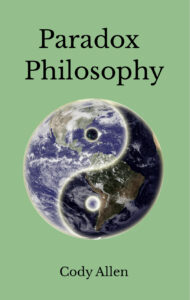 |
Paradox PhilosophyAll things are in both harmony and tension with their opposites—we often choose certainty despite our doubts, fear when there is opportunity for hope, and ourselves when we might think of others—and we should always strive to find greater balance between them. We all want to live meaningful lives, hopefully lives of moral goodness, and philosophy is the study of this venture. Paradox Philosophy is a modern, Westernized version of Yin Yang theory that delivers wisdom towards living a more virtuous life. Available at: |
Book Reviews
- Can’t Hurt Me by David Goggins July 21, 2022
 David Goggins is a hard motherfucker. He went through Navy Seal training three times, has competed in dozens of 100+ mile long ultra marathons, and once completed 4,030 pull-ups in seventeen hours. I might also describe him as a masochist. There are many lessons to be learned from his story, some of them are inspiring and some of them are cautionary.
On the surface, this book is about one man pushing himself to the limits in order to achieve his maximum potential. It’s about developing an ethos of personal discipline despite any and all hardships. This is an inspiring message, one that Goggins instills his readers with; anyone can unlock the same secrets to success that he has. Goggins has indeed proved that the human mind is the key to success – the mind is what makes or breaks us. After a long workout, it’s your mind telling your body that you’re tired long before your muscles are actually tapped out. He calls this his 40% rule, exemplifying the fact that most people only tap into 40% of their true energy and ability. “The human body is like a stock car,” he writes. “We may look different on the outside, but under the hood we all have huge reservoirs of potential.”
Think of it like this: If someone challenged you to run a mile in 6 minutes, you would probably laugh at the impossibility of the task. Unless you are someone who runs and trains regularly, that is a tough run to make in that amount of time. If, however, someone put a gun to your head and challenged you to run a mile in 6 minutes or else they’d kill you, you would undoubtedly find depths of energy you never knew you had and most likely complete the challenge. The difference is not in your body’s ability, the difference is in your mindset. The real trick, then, is to tap into the fight or flight adrenaline within yourself without actually being threatened. Goggins has done this, and he argues that we all have this ability within ourselves. “It’s not the external voice that will break you down. It’s what you tell yourself that matters. The most important conversations you’ll ever have are the ones you’ll have with yourself.”
In my opinion, Goggins has taken it too far, to the point of detriment. He has developed an addiction to pain and suffering, one that has ruined his body many times over. It began with an abusive childhood, one riddled with racism and personal insecurity, which led him to want to harden his sensibilities. This is natural, the equivalent of paving over emotional potholes, but no amount of pull-ups can ever truly erase trauma. This is the story underneath the surface. No matter how far he runs, he will never be able to run away from himself. This is also an important lesson we can take away from his story: there is value in being nice to oneself. David is not nice to himself. As a result, he has achieved amazing feats of physical endurance. As a secondary result, he has been married and divorced several times over. There is not much happiness in this book or seemingly in his life at all.
“A lot of people think that once they reach a certain level of status, respect, or success, that they’ve made it in life. I’m here to tell you that you always have to find more.” Goggins is of the opinion that life is a race, one that you must run from your first day to your last. While there are lessons to be learned from this type of lifestyle, I don’t agree that it’s the most optimal for health and happiness. The two take-aways from his memoir are as follows: Firstly, hardening your mind will allow you to achieve things you never thought possible. We all have tremendous inner wells of energy that if we can harness, can take us to incredible places. Secondly, being the hardest person in every room isn’t always necessary. Sometimes softness and ease are the greatest companions.
- Smarter Faster Better by Charles Duhigg July 6, 2022
 Society these days is marked by hyper productiveness. We all are bound by our schedules and time-frames, constantly choosing between the things we want to do and the things we simply cannot fit into our already jammed calendars. 100 years ago, nobody was using the term work-life balance. Today it is something we all grapple with. Luckily, we live in a society guided by science. Whereas older generations used to simply wonder at the possibilities of their theories, we now have the ability to test those theories, collect the data, and share the results. How can we become smarter, faster, better, and generally more productive? Well, the answers are in.
Want to build a company that is sure to survive the initial stages of uncertainty and make it to an IPO? Focus on company commitment, as opposed to a corporate hierarchy or hiring people with excellent resumes from top universities. You want employees who are emotionally engaged with their work, who feel as though they are a part of a collective culture of growth and support. “Not one of the commitment firms we studied failed,” said James Baron, a Stanford professor of business and one of Duhigg’s interviewees. “They were also the fastest companies to go public, had the highest profitability ratios, and tended to be leaner, with fewer middle managers, because when you choose employees slowly, you have time to find people who excel at self-direction.” This ‘psychological safety’ is also how you build the most cohesive and productive teams. Psychological safety is a “shared belief, held by members of a team, that the group is a safe place for taking risks.” Everyone must feel comfortable pitching ideas and contributing to the group without fear of embarrassment or rejection. The best ideas will bubble to the surface.
What is the best way to manage a large company with many departments? Empowering each individual. A management style described as ‘lean managing,’ which emphasizes “collaboration, frequent testing, rapid iteration, and pushing decision making to whoever [is] closest to a problem.” This manifests itself in car manufacturing plants, where each auto worker has the ability to stop the production line at any time. It costs the company thousands of dollars to have the line stopped, but it is important to give each and every employee the ability to stop and make sure every car is problem-free. In hospitals, the distribution of authority to nurses and others who are not physicians is referred to as ‘lean healthcare.’ It is a management philosophy and a “culture in which anyone can, and indeed must, ‘stop the line,’ or stop the care process if they feel something is not right.”
Want to get better at planning your future? Probabilistic thinking is what you will want to study and practice. This entails considering all of the possible scenarios of a future situation and determining which are most likely. It’s important to think about the future “not as what’s going to happen, but rather as a series of possibilities that might occur.” Tomorrow is an array of potential outcomes, all of which have different odds of becoming true. The trouble we often find ourselves in is when we become attached to one specific future, one that we desire strongly enough to rule out the other, still possible scenarios. “The paradox of learning how to make better decisions is that it requires developing a comfort with doubt.” We must hold contradictory scenarios in our minds simultaneously, updating them as we gain more information along the way.
We all love the satisfaction of crossing something off of our to-do lists. Sometimes, however, those items are simply trivial. I’m even guilty of writing something down that I’ve already done, just so I can cross it off! Of course, this is not a recipe for true productiveness. What we need for proper goal setting are both immediate goals and ‘stretch goals,’ and a proper way to plan how to get there. Immediate goals are the obvious ones: take the kids to school; schedule that extra meeting with the design team; stop at the grocery store on the way home. A stretch goal is something that is just barely within the realm of possibility. Managers at GE once instructed their airplane engine manufacturing team to reduce the number of defects on their finished products. The team announced that they could bring down their mistakes by 25%. The chief executive of the company countered with 70% and gave them three years. Such an audacious goal eventually caused the factory managers to “change nearly everything about (a) how workers were trained, (b) which workers were hired, and (c) how the factory ran.” By the time they were done, the company had gone “thirty-eight months without missing a single delivery,” which was a company-wide record. They did all of this using a system coined as the SMART system, which breaks audacious goals into actionable parts. Each goal must be broken down into a plan that is Specific, Measurable, Achievable, Realistic, and based on a Timeline.
While I have just scratched the surface of some of the ways we can become more productive, the real juice is within the pages of Duhigg’s wondrously informative book. It was an easy read, full of fun and engaging stories as well as useful information. For anybody who wants to become more motivated, better at working in teams, more focused, faster at innovating, better at setting goals, and more productive in your work and in your personal life, this is the book for you.
- McCarthyism: The Great American Red Scare by Albert Fried June 22, 2022
 The Red Scare saw Americans persecute each other based on little more than suspected ties to Communism. This mass fear swept the country for a decade, ending careers and upending lives all along the way. While today we can look back and see the Red Scare for what it was—a mass movement of suppression inspired by the fear of Communism—Fried gives us the documents and insights to further understand how the Red Scare ever came to dominate the American landscape in the 1940s and 1950s in the first place. Being able to empathize with the consciousness of past generations is important, as it can allow us to further understand our own current time of political and social fear.
In the 1930s, Americans embraced Communism “out of solidarity with the Soviet Union in its lonely resistance to Fascist expansion, Hitler’s in particular.” This makes sense, because while Communism was bad, Fascism was worse. This sentiment remained until the end of the Second World War. It was only after an Allied victory that the citizens of the world were able to stop and collectively take a breath. Unfortunately, this lead to the realization of a new enemy to the United States: the Soviet Union. The Cold War was an ideological battle between Democracy on one side and Communism on the other. The United States was on the side of Democracy, and the Soviet Union (and China, under the leadership of Mao Zedong) was for Communism. While the Cold War would play out over the course of four decades, from the 1950s-1990s, the initial spark was the Red Scare, which blossomed immediately after the close of the war.
There were many reasons why and how the Red Scare came to dominate America’s attention. First was the passage of the Smith Act, which criminalized advocating for the overthrow of the U.S. government by force or violence. This was the first step towards legal prosecution of Communists. The Red Scare was also aided by the 1946 elections, which gave Republicans control of both houses of Congress for the first time since 1928.
Then, the movement made a massive step forward on March 22, 1947, when President Truman issued Executive Order 9835, which established ‘loyalty review boards.’ The government became committed to identifying and prosecuting any and all Communists in American society, and the way to do that was the creation of these boards. Over the course of a decade, nearly every public service employee would be dragged before these committees to have their personal lives combed through for ‘subversive’ material and put on public display. “The premise behind the order was that government workers possessed no right to their jobs, that if found disloyal—a term left to review boards alone to define on the basis of a list of organizations the attorney general had arbitrarily drawn up—they could be fired forthwith.” The Truman executive order sought to reassure Americans, but its effect was the opposite: It heightened anxieties and thus invited promises of greater security, which in turn, further heightened the anxiety.
On the one hand, the convictions of people like Julius and Ethel Rosenberg proved the McCarthyists right: There really were Soviet spies living in our country, operating within our government, and sending important information to our enemies. On the other hand, a large majority of the men and women interrogated by the House Un-American Activities Committee were innocent. A tremendous number of people lost their jobs in Hollywood, academia, and government, simply because they could not prove their innocence. Even invoking the Fifth Amendment, and abstaining from answering questions under oath, was viewed as an admission of guilt. This was all backwards; Our judicial system is built on the premise that those suspected of wrongdoing are innocent until proven guilty. The Red Scare turned this system on its head, with the House Un-American Activities Committee viewing its own citizens as guilty until proven innocent. Fear abounded. The trouble was that Communists were universally acknowledged to be devilishly clever at hiding their identities. “They could be anyone, indistinguishable from the neighbor next door. It was therefore necessary to seek information about suspects from any source, however dubious, and lay the burden of proof on them: they had to establish their innocence.” Even the American Civil Liberties Union purged itself of members suspected of ties to Communism (as did the National Association for the Advancement of Colored People). Lives and careers were ruined, all because of fear.
In his dissent to the Smith Act, Supreme Court Justice Hugo Black prophetically wrote the following: “So long as this Court exercises the power of the judicial review of legislation, I cannot agree that the First Amendment permits us to sustain laws suppressing freedom of speech and press on the basis of Congress’ or our own notions of mere ‘reasonableness.’ Such a doctrine waters down the First Amendment so that it amounts to little more than an admonition to Congress. The Amendment as so construed is not likely to protect any but those ‘safe’ or orthodox views which rarely need its protection. Public opinion being what it now is, few will protest the conviction of these Communist petitioners. There is hope, however, that in calmer times, when present pressures, passions, and fears subside, this or some later Court will restore the First Amendment liberties to the high preferred place where they belong in a free society.” He was eventually vindicated by a future Court, one that was able to see the Red Scare for the mass mobilization of fear that it was. We must likewise learn these lessons and be vigilant in our own day in age: fear is never the answer, it is only a momentary reaction to a scary stimulus. Don’t let it guide your choices for how to act.
- The Price of Peace by Zachary D. Carter June 8, 2022
 John Maynard Keynes is the godfather of modern macroeconomics. He was the biggest name in the field for the better part of a century, serving the British government through both world wars and the global depression in between. He was directly entangled with international monetary policy throughout these major events and they shaped him both as an economist and as a human being. He was 31 when the First World War broke out in Europe, and died in 1946 after the close of the second, at the age of 62. Economics, war, and the Great Depression dominated his adult life and influenced a majority of his thinking and writing. His books and ideas went on to inspire generations of (now-called Keynesian) economists from schools around the world. It was the assassination of Archduke Franz Ferdinand in June of 1914 by a young Bosnian freedom fighter that set all of these events in motion, and they followed each other one after another like dominos.
Before the First World War, London was the global financial center, lending money to the rest of developing Europe and the surrounding countries as international trade was mutually beneficial and everyone was on the upswing. During the war, as the years raged on and the bodies piled up, the United States was brought in first as a financier and later as a military contributor. It was J.P. Morgan Jr. himself, operating on behalf of the family banking business, that financed the British and French governments. He negotiated a 1% commission on $3 billion in purchases and investment, bagging himself and his bank a cool $30 million dollars as the shells continued to fall. By mid-1916, Keynes calculated that “40 percent of the £5 million a day the United Kingdom was spending on the war was coming from the United States.” The torch had officially been passed from London to Wall Street—the United States having no plans to ever relinquish this power.
After the war, the US and European powers came together to negotiate what has come to be known as the Treaty of Versailles, an agreement that ultimately proved as disastrous as the bullet that took the Archduke’s life four years prior. France, England, Italy, and America each wanted a piece of the reparations pie, arguing for such high financial compensation from Germany that Georges Clemenceau (the Prime Minister of France) “began calling to simply remove any mention of a final reparations number in the treaty at all.” This, of course, was idiotic, and could only have produced disastrous results. Germany needed capital investment to rebuilt its society, but if it was sending all of its hard earned money and goods away as reparations, the country would be kept in a state of poverty. As Keynes, who was present at the negotiations in Paris later noted: “A farmer who had lost his son and half his acreage would not feel a rush of gratitude at the prospect of diverting a huge portion of his labor to the enrichment of American bankers. The austerity required by debt repayment would breed resentment and invite demagoguery from opportunists looking to blame a country’s problems on outsiders.” Enter Adolf Hitler.
Since the 1800’s, in order to maintain the monetary balance between different country’s currencies, all money was equal to a particular amount of gold. This was called the gold standard. Citizens could walk into a bank with a banknote and walk out with the equivalent amount of gold, both of which could be used for goods and services. This was how money was regulated until the 1930’s, when both England and the United States abandoned the gold standard for what we now call fiat currency. “Under the gold standard, it was possible for a government to run out of money; there was only so much gold in the vaults. But a government that controlled its own currency,” Keynes observed, “could not go bankrupt.” Using a fiat currency, like the British pound or the American dollar, governments could easily print their way out of excessive debt. This was one of the policy decisions that helped everyone crawl out of the Great Depression.
On the one hand, this is a helpful tool for governments that need to stimulate an economy. Printing money and getting it into circulation can help dig people out of financial holes. On the other hand, the more money that is in circulation, the less value each individual dollar has (seen in rising prices during an inflation). A quick google search reveals that the US government is currently around $30 trillion dollars in debt (about a third of which has been printed since the Covid-19 pandemic). Obviously this is a ludicrous number that we can never conceivably hope to pay down. Today, money only possesses value because the government and broader swaths of society all mutually agree that it does. This is why we call it a ‘fiat’ currency.
As a young man living in the early 1900’s, Keynes was a proponent for laissez-faire capitalism. He believed that the free market was best left alone to stabilize itself, and that the government should remain mostly hands-off. However, after the stock market crash of 1929 and the following Great Depression, he came to see the free-market as flawed. He began advocating for government intervention as a means to curb unemployment and support economic growth during hard times, thinking that eventually led him to his foundational theories now referred to as Keynesian Economics. The federal government should spend its way out of recession and depression, he argued, even if it created a budget deficit. And with the abandonment of the gold standard, governments could actually do this, and they did. Keynesian ideology was the foundation for US President Franklin Roosevelt’s New Deal of 1933, a giant spending package that greatly aided many Americans at a time of desperate need.
Indeed, addressing inequality and social progress became one of Keynes’ central themes. The majority of problems of the twentieth century, he argued, were best solved by alleviating inequality both domestically and internationally. He states this clearly in The General Theory of Employment, Interest, and Money—his most influential book. “Enterprise and economic growth were driven not by the unique genius and vast fortunes of the very rich” he believed, “but by the purchasing power of the masses.” To put people to work, governments needed to create systems of support for the poor and the middle class, not new favors for the rich. This is precisely what Roosevelt did—to wondrous success.
While many people see economics as a field of facts and figures, Keynes came to understand his profession as a social phenomena. Economics was “not a hard science bound by iron laws, like physics,” but a flexible field of customs and rules of thumb like politics. The price of a good is not a reliable source of consumer preference. It is, at best, an “approximation, always subject to change based on new attitudes about an uncertain future.” Uncertainty about the future is one of the most important facets of economics to realize and understand. This is because monetary policies are created by humans, none of whom can see the future, all of whom are emotionally driven and susceptible to the winds of change.
As we are currently living through a global pandemic, these winds of change are blowing hard. Inflation is driving up prices and people’s savings are dwindling. What will the governments of the world do to combat these monetary changes and generational hardships?
- Gandhi by Louis Fischer May 23, 2022
 Gandhi was not always the spiritual hero of Indian independence that we know him as. Once upon a time, he was a struggling youngster in the midst of a chaotic world, trying to find his rightful place in it. He was born in 1869 and married his wife and life-long companion at the tender age of 13, before puberty or adulthood had yet to embrace him. His first son was born when he was 18, the same year that he sailed to London in order to study law. While in England, he adopted the local culture as his own, yet ultimately found it empty. He had hoped to establish the foundations of a career as a lawyer, but after several years of study, he returned home the day after passing the bar. Back in India, he took his first lawsuit, but could not bring himself to speak in front of the court due to his nearly crippling shyness and gave the case to a colleague. The disappointment he felt was overwhelming, and he jumped at the chance to leave India once again. When he was 24-years-old, he traveled to South Africa to work for an Indian law firm. Again, he tried to embrace the local culture and act within it—South Africa and India were both English colonies—and again, it didn’t feel right.
Within his the first week, he had what would turn out to be a life changing experience—one that pushed him unceremoniously off a train and into the service of justice. Gandhi had been assigned to a lawsuit that required him to be in Pretoria, the capital of the Transvaal province in South Africa. He bought a first class train ticket from his temporary home in Durban (a days travel south) and rode the first leg of the journey in his compartment in peace. In the remote town of Maritzburg, a white man boarded, saw Gandhi in first class, and brought the railway conductor to his train car, demanding that he remove himself and sit in the baggage car. Gandhi protested and stayed; he had a ticket that rightfully afforded him the first class seat. As a violent result, the police were fetched and he was forcibly removed, left to sit and shiver in the cold outdoor train station throughout the rest of the night. All of this was done because of the color of his skin; Indians and blacks were not equal citizens to whites.
The injustice Gandhi felt at this moment was a major catalyst for his progression into a spiritual leader fighting for Indian rights and independence. It forced him to look beyond his own personal needs and confront the terrible suffering of his impoverished and exploited countrymen and countrywomen. He began to develop his theory of satyagraha, which translates to “holding firmly to truth.” This would become his creed.
In practice, satyagraha is a method for resolving conflict, whether it be personal, communal, political, or other. Typically, conflict between opposing parties can be ‘resolved’ only by the acknowledged dominance of one contender over the other. If there is a winner, there must likewise be a loser. Even compromise rests on this conclusion, since compromises are similarly just attempts to get as much as one can at the other’s expense. Satyagraha challenges this assumption. Satyagraha is not aimed at addressing grievances, but at resolving the underlying sources of conflict, enmity, and distrust between conflicting parties. Its goal is to show one’s adversary the common values both share, and the reality that both have more to gain in harmony than in discord. “I have been convinced” Gandhi once said to a gathered crowd, “that if you approached people with trust and affection, you would have ten-fold trust and thousand-fold affection returned to you.” Satyagraha does not exclude the opponent from the solution, but rather brings them in as a participant in the search for the ultimate truth—the one that exalts both sides.
This is the foundation for all of Gandhi’s work in nonviolent resistance. Whether satyagraha took the form of large scale mass protests against the British imperialists or small scale disagreements between a husband and wife, both are examples of opportunities for finding mutual love and understanding. This is the same example followed by Dr. Martin Luther King Jr. in his campaign for equality in the United States, the same as Nelson Mandela in his quest to end apartheid in South Africa. It is possible to love one’s enemy, even as you condemn their actions against you. Eventually they will find empathy in your experience, for it is impossible to watch others endure suffering without feeling a connection to their humanity. The mirror neurons in our brains are evolutionarily wired to do this—to empathize with our fellow humans. This is what Gandhi taught, once writing that “if you want something really important to be done you must not merely satisfy the reason, you must move the heart also.”
It was around this time (the turn of the 20th century) that Gandhi stopped conforming to English culture and instead adopted non -materialism and celibacy. “In renunciation, it is not the comforts, luxuries and pleasures that are hard to give up. Many could forgo heavy meals, a full wardrobe, a fine house, et cetera; it is the ego that they cannot forgo. The self that is wrapped, suffocated, in material things—which include social position, popularity, and power—is the only self they know and they will not abandon it for an illusory new self.” Gandhi chose this new self, and in place of these material things, he substituted important relationships. In place of his highly-paid position as a lawyer, he instead cultivated his freely-given service to others.
After 20 years in South Africa, Gandhi returned to India in 1915, and his pledge of nonviolent resistance to injustice started a new chapter. By now, he was a man of 45, and ready for the challenges ahead. He began organizing poor farmers and laborers to protest heavy taxes and discrimination, preaching his methods of nonviolence and satyagraha despite pockets of violence springing up all over the country.
One of his biggest problems in liberating India from British rule was the religious division between the Hindus and the Muslims; neither wanted to see the other in power if the English were to abdicate. This was a tremendous problem and one that Gandhi meditated on for years. His solution, and what became the biggest symbolic movement towards Indian independence, was the now infamous Salt March. Salt was heavily taxed by the British, and Gandhi reasoned that boycotting the tax on a stable good like salt was the best way to bring all Indians together. Whether you were Hindu, Muslim, Christian, Jain, or Jewish, you used salt. Salt was a dietary staple for both rich and poor Indians, and much like the Boston Tea Party that ignited the American Revolution (which was in response to a similarly imposed English tax on tea in the American colonies), the Salt March was Gandhi’s way of folding all of his countrymen together into one coalition and sparking the desire for revolution within them. He led tens of thousands of his followers on a 24-day, 240-mile march to the seaside town of Dandi, giving spiritually uplifting speeches at villages all along the way. Upon arrival, he lifted a handful of salt from the sea over his head and exclaimed: “With this, I am shaking the foundations of the British Empire!”
Gandhi craved a psychological metamorphosis for his people, one that would give them inner freedom first and then hopefully outer freedom as well. Once the nation acquired individual dignity, he believed, they would insist on better living conditions and nobody would be able to hold them in bondage. While the result of the Salt March was 60,000 arrests, including Gandhi himself, (he spent a total of 2089 days in Indian jails—almost six years—and 249 days in South African prisons), the ultimate result was promising. The Salt March inspired his people with hope for a better future, one they could collectively attain. British imperial rule was put on the clock, eroding faster and faster with every passing season, until India eventually won their long-sought and well-earned independence in 1947.
By this point in his life, Gandhi owned only a few bowls and spoons, his sandals, a watch, a book of songs, and his glasses. He had given up everything else, including himself, to the causes of his people. First, Mahatma Gandhi changed himself. Then, he changed the world.