




I’m a writer and author with a passion for exploring ideas.
Since 2020, I’ve published monthly book reviews as a way to reflect on what I’ve read. I do my best to challenge my own thinking and remember the lessons worth keeping. Here you’ll find my books, my reviews, and my reflections on the ideas that have shaped my perspective along the way.
My Book
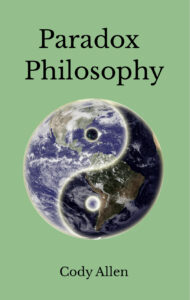 |
Paradox PhilosophyAll things are in both harmony and tension with their opposites—we often choose certainty despite our doubts, fear when there is opportunity for hope, and ourselves when we might think of others—and we should always strive to find greater balance between them. We all want to live meaningful lives, hopefully lives of moral goodness, and philosophy is the study of this venture. Paradox Philosophy is a modern, Westernized version of Yin Yang theory that delivers wisdom towards living a more virtuous life. Available at: |
Book Reviews
- Long Walk to Freedom by Nelson Mandela September 19, 2022
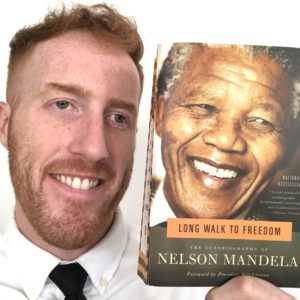 The European global expansion that started in the 15th century brought a destructive and oppressive centuries-long tide of colonization to the rest of the world. From Africa to India to North and South America, the white European travelers saw land and people that were different from themselves, and, in a stunning move of incomprehensible hubris, declared these things their own. Similar to many freedom fighters around the world, Nelson Mandela dedicated his life to breaking these chains of oppression in his home country of South Africa.
From a young age, Mandela was raised to be an advisor to the local African chief in his native Transkei region of South Africa. Because of this, he was allowed the privilege of education. He began studying law at the age of 25 at the University of Witwatersrand and was the only black student. That same year, he joined the African National Congress, a group that would be the centerpiece of the political drama of his life. The ANC was the main political organization opposed to the government’s policies of apartheid, which literally translates to ‘apartness,’ and “represented the codifications in one oppressive system of all the laws and regulations that had kept Africans in an inferior position to whites for centuries.” The ANC’s stated goal was a racially desegregated country with equal voting rights for all citizens. They called for an end to the government’s racist and oppressive laws and practices.
Along with his longtime colleague Oliver Tambo, Mandela opened the first black owned and operated law firm in the capital city of Johannesburg. The two men were swamped with clients from the start, being the main choice for politically oppressed black people looking to challenge the white government’s unfair treatment of them in open court. His years spent arguing cases on behalf of his clients proved to him the realities of the system within which he was operating. “As a student, I had been taught that South Africa was a place where the rule of law was paramount and applied to all persons, regardless of their social status or official position. I sincerely believed this and planned my life based on that assumption.” Sadly, his career as a lawyer showed him a truth he was not prepared for—that there was a wide difference between what was taught in the lecture room and what occurred in the courtroom. “I went from having an idealistic view of the law as a sword of justice to a perception of the law as a tool used by the ruling class to shape society in a way favorable to itself. I never expected justice in court, however much I fought for it, and though I sometimes received it.”
In 1960, the government declared the ANC (and various other defiant organizations) illegal, and Mandela was forced to live underground as an outlaw in his own country. He was eventually caught and arrested in 1963 and sentenced to life in prison.
Famously, he served only 27 of those years, 18 of them in a small cell on Robben Island (located a couple miles off the coast of Cape Town.) “I could walk the length of my cell in three paces” he remembers, and “when I lay down, I could feel the wall with my feet and my head grazed the concrete at the other side.” Still, even within the confines of prison walls, the struggle continued. Mandela fought for and slowly received better prison conditions while continuing to advise the freedom fighters on the outside.
During the decades of his imprisonment, the world slowly began to take notice of the South African struggle. Sanctions by the U.N. and other political pressures mounted, and in February of 1990, Mandela was set free. Within a few years of his release, the ANC (along with several other prominent organizations) successfully campaigned the current government for a new constitution and system of democracy for the people. Huge numbers of blacks, Indians, and other minorities voted for very first time in their lives, and in 1994 Nelson Mandela became the first democratically elected president in South Africa’s history. His election officially ended three and a half centuries of European colonialism and oppression.
The United States fought a bloody and violent war for their independence from Europe in the late 1700’s. Mahatma Gandhi fought a spiritual war of non-violence and gained India’s independence in 1947. These centuries saw many countries achieve independence from their oppressors, from Angola gaining independence from Portugal in 1975 to Venezuela declaring independence from Spain in 1811. While Mandela’s struggle for freedom is a truly inspiring one, it is sadly not a unique one. “Freedom is indivisible,” he wrote towards the end of his autobiography, “the chains on any one of my people were the chains on all of them, the chains on all of my people were the chains on me.”
- The Divide by Matt Taibbi September 8, 2022
 There are many ways to divide people; race, religion, location, gender, age, level of education, and more. What Matt Taibbi explores in his research is the divide in America between our wealthiest and our poorest, because, as he was shocked and saddened to discover, while the original sin of the Orwellian dystopia was thoughtcrime, “in our new corporate dystopia the secret inner crime is need, particularly financial need.” The more you need and the less you have, the fewer rights you also have. And, conversely, the more you have and the less you need, the more rights you are granted, even beyond what is actually written into the laws. “On the extreme ends of this spectrum it is literally a crime to be poor, while a person with enough money literally cannot be prosecuted for certain kinds of crimes.” This is epitomized by the poor black man from the projects who can get picked up and prosecuted for riding his bike on the sidewalk while the CEO’s on Wall Street violate insider trading laws ten times a day and are celebrated for savvy financial strategy.
To most of us average citizens, this reality is very hard to understand, let alone even believe in. But let me ask you this: Have you ever been arrested by the police for standing on the sidewalk out front of your house? Andrew Brown of Bedford-Stuyvesant, Brooklyn has. Another victim of New York City’s notoriously terrible and racist Stop and Frisk policing policy, where the cops arrested first and asked questions later, Brown was standing on the sidewalk in front of his apartment building talking to a friend at one in the morning on a quiet night in November of 2012. The police approached, questioned them, and tossed the men in the back of separate vans to be brought to the station for the standard questioning, strip search, and court summons. His offense? Blocking pedestrian traffic. Blocking whom exactly is the million dollar question, one that cannot be answered, because it was one in the morning and there were no other people present. Brown was simply caught in the massive drag net the NYPD throws over the poor neighborhoods of the city. Thats the strategy anyways: catch all the fish, see who has guns or drugs, and throw the rest back, Amendment rights be damned.
While the lower classes of Americans like Andrew Brown are penalized for ‘committing’ these types of petty crimes, there is an entire upper class of citizen that is above the law. This flip side is embodied by hedge funds and too-big-to-fail Wall Street banks who borrow money from the Federal Reserve at far below market interest rates, through the Fed’s emergency lending program, and turn around and make a profit off loaning it to people for mortgages, businesses, and credit cards. While they have been profiting off of insider trading for decades (revealed in recent Senate testimony), their most egregious behavior exploded in grand fashion in 2008, when the American housing market collapsed and the financial repercussions reverberated around the entire globe. In his book, Taibbi walks us through the backroom deals made at the time, when Lehman Brothers were staring down the barrel of bankruptcy, in addition to Washington Mutual, and others. The British banking behemoth Barclays acquired Lehman Brothers (and all of their assets) for a fraction of their worth. Likewise, Washington Mutual was bought out by Bank of America in a similar shotgun-style wedding.
Why were these banks facing bankruptcy in the first place and forced to sell? Because they were knowingly accepting fraudulent loans for years. Loaning someone money to buy a house when they have no recognized source of income and have put zero money down on the initial purchase is incredibly irresponsible lending, but that is exactly what they all did, because they knew the Federal Reserve would bail them out with taxpayer money if anything went south. This is exactly what happened when the housing market blew up in 2008 and the Fed was forced to ‘rescue’ the banks for fear of what letting them fail might cost. What was the result of all of this? Not a single member of any hedge fund or Wall Street institution was indicted or seriously investigated. Nobody has seen a day in jail, and they won’t, because the crimes they committed were the ‘right’ kind.
In the intro to his book, Taibbi asks his readers a very important question: “What deserves a bigger punishment—someone with a college education who knowingly helps a gangster or a terrorist open a bank account? Or a high school dropout who falls asleep on the F train?” In America, we believe it’s the latter, despite the fact that senior members of several of the largest banks in the world have been caught doing the former. (HSBC was found to have knowingly laundered money from the Sinaloa Drug Cartel, and while their executives got off scot-free, the people who bought the dime bags that HSBC so thoughtfully enabled the cartel to sell can spend years in prison.) In America, we punish those who are easily punishable, and let the big fish swim away. It has become baked into our cultural ethos.
When people on welfare fill our their application wrong and ‘commit fraud’ by accepting $50 more in food stamp money than they should be allotted, the system penalizes them in the form of fines, community service, numerous court dates, and jail (as if being poor isn’t already bad enough). When the bankers and hedge fund managers commit fraud on a mass scale, forging signatures on court documents or accepting fraudulent loans because they know the Fed has their back, their members are never personally culpable and never have to admit fault. The details of these ‘white collar crimes’ are often much too arcane and the government is unable or unwilling to effectively investigate or prosecute. If anyone is prosecuted, they simply dance through a few legal loopholes, pay a laughably minimal fine, and continue on their merry way. It’s the regular people who suffer, as the city of Long Beach can attest too.
A few weeks before Lehman Brothers collapsed, the Long Beach city council voted to invest $20 million with the bank in the hopes of growing the fund. Even now, years after the collapse of Lehman Brothers, Long Beach has been enacting sweeping budget cuts. “In the first year after Lehman’s collapse, the Long Beach school system cut summer school classes and bus routes for one thousand students. The city announced plans to lay off thirty-four policemen and close at least one fire station. The mayor asked the city council to cut all funding for the Long Beach Museum of Art. And the city continues to be way behind the financial eight ball. In fact, its projected deficit for 2013 almost exactly matches the Lehman shortfall—$20.3 million.” Almost ubiquitously, the higher ups on Wall Street walk away richer, often on the taxpayers dime. Similarly, it is always the regular people who suffer the consequences. Not just the Andrew Brown’s of the country, but also the Latin immigrants who get picked up by ICE on a daily basis and shipped off to rural Mexico, or the welfare mothers who ‘commit fraud’ by claiming money from the state just to feed their starving children. All while Wall Street continues to enrich itself by playing a rigged game.
The scariest part about all of this is that the divide is growing and becoming more severe. It is no secret that the wealth in this country has been exponentially going to the top richest few, but the body of poor, lower-class citizens has also been exponentially increasing. As more and more people fall into poverty, the drag net for losers also increases in size and scope. “It all adds up to a system that has many of the features of a police state, right down to the nagging omnipresence of the police in the daily lives of the target community.” This is the real divide in America: that between those who are financially above the law and those who are beneath it. They are mostly out of sight of the general public, and entirely out of sight from one another, but they are both growing, and eventually one side will tip the scale.
- Give and Take by Adam Grant August 30, 2022
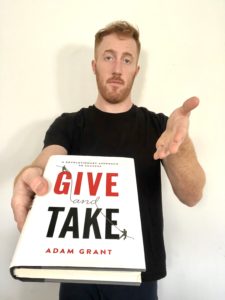 When someone does you a favor, especially one done out of the blue, it often feels as though you owe them one in return. There is something implicit in human social behavior that makes us want to feel as though we are on an equal social footing with our friends, acquaintances, and coworkers. This is the category that most of us fall into, defined by Adam Grant as matchers.
Generosity exists on a spectrum, from givers on one end to takers at the other, with matchers (most of us) somewhere in the middle. In his book, Grant examines the processes of givers and takers in society and charts how well each do in their given field of expertise. The results are surprising. While we might assume that takers or matchers are the most successful in life, it turns out that people who are givers are more likely to find themselves at both the top and also the bottom of their respective hierarchies, regardless of whether they operate in business, academia, politics, or any other realm of life.
“According to conventional wisdom, highly successful people have three things in common: motivation, ability, and opportunity. If we want to succeed, we need a combination of hard work, talent, and luck.” But there is a fourth ingredient that Grant focuses on in his research, one that’s critical but often neglected: Networking. In addition to our work ethic and technical abilities, success also depends on how we approach our interactions with other people. Friends and acquaintances are how we find out about new job offers and new potential romantic partners. Knowing someone in the right office, or knowing someone who knows someone who can get you an interview, can often help you get that job you desire. It doesn’t matter how skilled or nice you are; the job seekers need to know you exist. Having someone they already trust vouch for you not only puts you on their radar, it gives you a step up on the rest of the competition.
So, how is it that givers are simultaneously both the most successful people and also the least? It depends where on the scale from giver to taker they land. Some people are too far out on the extreme of giving, and give to the point of neglecting themselves—these are the people who struggle to find success because they are too busy helping others. Some people are too often takers, doing everything for themselves and neglecting others. The sweet spot is being generous with others while also keeping our boundaries set so as not to neglect our own priorities. Grant calls this ‘otherish’ giving—these are the givers who succeed in spectacular fashion.
Most people assume that self-interest and other-interest are opposite ends of one continuum, but the reality is that you can have both of them at the same time. “There are two great forces of human nature: self-interest, and caring for others,” Bill Gates once said at the World Economic Forum. “People are most successful when they are driven by a hybrid engine of the two.” This is an important balance, one that the most successful givers are able to find and keep. Givers who find this balance describe their definition of success differently than the average matcher or taker might: “Whereas takers view success as attaining results that are superior to others’ and matchers see success in terms of balancing individual accomplishments with fairness to others,” Grant reports, givers understand “success as individual achievements that have a positive impact on others.” Equal parts helping others and helping yourself is how you rise to the top.
Yes, it is possible to achieve great wins as a taker, but that is a different type of success. When takers win, there’s usually someone else who loses—takes live in a zero-sum world. Givers succeed in a way that expands the pie so that everyone gets a larger slice. They rise to the top without cutting others down, finding ways to benefit themselves and the people around them. Which type of success would you prefer: one that others envy, or one that everyone applauds?
- The Notorious Benedict Arnold by Steve Sheinkin August 16, 2022
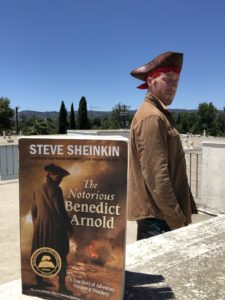 The story of Benedict Arnold is a story about the evils of egoism.
In a day in age when honor and reputation were a man’s most prized possessions, Benedict Arnold was his own worst enemy. Arguably one of the bravest (and most aggressive) generals from the Revolutionary War, Arnold’s service to his budding country started out valiant and courageous. He was leading his countrymen against the British forces in Canada in 1775, before the Declaration of Independence was even signed and a Continental Army formed! “The fact that no one had told Arnold to lead the first foreign invasion in American history meant nothing to him. It was the right strategic move, and he made it.”
While he was a brave commander in the field, always urging his troops forward to victory, he had no gift for politics or the art of promoting his own image and gently persuading others to take his side. “He was brash, bossy, and unable to see other people’s point of view.” His rough personality annoyed his fellow military peers greatly, which led to him being passed over for promotion. This, of course, only enraged him more. Despite his fantastic achievements against the British at Montreal and on lake Champlain (there is a real argument to made that he saved the entire Revolution by stopping the British from storming down the Hudson River from Canada to New York and splitting the northern colonies in two) he received very little public recognition for his valorous service. The stories told by his fellow generals—one prominent one being General Horatio Gates—severely damaged his standing in Congress. “I know some villain has been busy with my fame, and busily slandering me,” Arnold once wrote in a proposed letter of resignation. “I cannot think of drawing my sword until my reputation, which is dearer than life, is cleared up.” These simple words summed up Arnold well: his reputation was dearer to him than his life.
The slights against him were not imaginary. Reporting to Congress on an important battle in Saratoga, one in which Arnold led men and fought valiantly, Gates made no mention of the leading role Arnold and his division played in the day’s success. (The victory at Saratoga was significant because it persuaded the French to side with the Americans in the war.) This was against military tradition and was yet another slight against Arnold’s honor. Not only was his reputation tarnished, but so was his coin purse. Before the war, he had been a successful trading merchant and had volunteered himself and his money to the cause. By this point, however, he was in desperate need of money to help take care of his young sons and sister (his first wife had died years earlier).
After Saratoga, Arnold was confined to a sickbed for months with a left leg that had been shot and smashed horrifically. He would walk with a limp for the rest of his life. Being a man of action, the idle time was not good for his psyche, as he could do nothing but “imagine over and over the beaming faces of congressmen as they handed Gates his medal, as he graciously took credit for the American victory at Saratoga.”
In a strange move, George Washington appointed him the military governor of Philadelphia, a position that Arnold (with his complete lack of political grace) was not appropriate for. He began offending the people almost immediately, putting on large displays of luxury in a city that was suffering from the exploits of war. He hired cooks, maids, and coachmen, and rode around town in a brand new carriage. While he felt as though he had earned these novelties for his services in the war, the people of the city did not.
While stationed in Philadelphia, Arnold met a young woman named Peggy Shippen, who’s family was loyal to the British crown. During the previous year, when Philadelphia had been occupied by the redcoats, Peggy had become close to a Major in the British army named John André, and this connection proved to be Arnold’s undoing. André had recently become the British head of secret intelligence, and through Peggy, began a correspondence with Arnold who expressed his wish to defect to the British side of the war. The slights from his countrymen had finally taken their tole, and he felt that he could best uphold his honor by winning the war for the British, for which he anticipated he would be highly compensated.
Arnold and André’s plan was to surprise attack the American fort at West Point, which was a strategically located base right on the Hudson River. Through a series of chance events, John André was captured carrying the incriminating documents highlighting the plan of attack and was tried and hanged as a spy. Arnold himself barely escaped capture, nearly being caught in his tracks by the one and only George Washington. The plot to was foiled by mere luck.
After that, the rest of Arnold’s life played out with considerably less drama. He led a few small raids for the British against his old countrymen, but as we all know they ultimately lost the war. He moved to England and was unsuccessful in business. He even moved to Canada for a few years and was equally as unsuccessful. He died broken, poor, and unnoticed, the exact opposite of the glory and riches he had once sought after and fought for. Aside from Washington, he did more to win the Revolutionary War than anyone, and had he never given in to his egotistical need for honor and recognition, he perhaps could have been one of the greatest American war heroes in history. Instead, history remembers him as one of its greatest traitors.
- A Guide for the Perplexed by E. F. Schumacher August 2, 2022
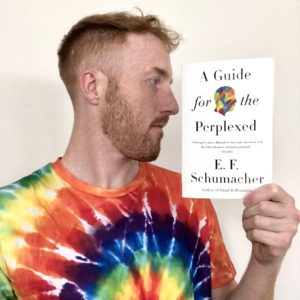 Ever since René Descartes redirected philosophy towards a rationalist, individualist view of life (basically kickstarting the Enlightenment), people’s belief in a higher being has steadily been waning. The centuries since have seen a rise in science and determining the world around us via the scientific method, and we have come to see ourselves as the top of the food chain, the all-powerful beings in our universe. But there are some things that cannot be measured and quantified, and Schumacher’s ultimate conclusion is that there must be something spiritually higher than humanity. For how else can you truly answer the existential questions?
What does it mean to be human? What is the purpose of life? Where did the initial spark of life come from? There is a distinct reason why there are so many different answers to these questions: there are a lot of people in the world, and every person has their own subjective life experiences that determine their answers. We can only do our best to share our ideas with others via communication, and while communication is good for understanding, it can never substitute for true knowing. “We ‘see’ not simply with our eyes but with a great part of our mental equipment as well,” Schumacher writes, “and since this mental equipment varies greatly from person to person, there are inevitably many things which some people can ‘see’ but which others cannot.” No two people know exactly the same things about anything.
Schumacher describes Four Fields of Knowledge loosely broken down as Inner-Personal, Inner-Other, Outer-Personal, and Outer-Other: 1) What is really going on in my own inner world? This we can always know. 2) What is really going on in the inner world of other beings? This we can never know, but can only make educated guesses about based on the clues we gather. 3) What do I look like in the eyes of other beings? This again we can only make educated guesses about. 4) What do I observe in the world around me? This we can know to the extent that we have knowledge about it, but our knowledge is not the same as anyone else’s.
Schumacher’s beef with Cartesian theory is based in his disbelief in rationalism. “Sense data alone do not produce insight or understanding of any kind. Ideas produce insight and understanding, and the world of ideas lies within us.” I find this to be a true statement, for two people can watch the same movie and one can love it and one can hate it. Is it a good movie or a bad movie? “The truth of ideas cannot be seen by the senses but only by that special instrument sometimes referred to as ‘the Eye of the Heart.’” Ideas, as our author alludes to, are the most powerful things we know of. When someone says that the pen is mightier than the sword, this is what they are talking about. Swords and the use of violence can force people to change, but that change is always against a tide of resistance. Ideas, on the other hand, (often demonstrated via the form of writing with pens and ink,) are fabulously more transformative and enduring. Ideas change the world.
It is dangerous to try and scientifically explain phenomena that cannot be observed and quantified. Some thing are better left to subjectivity, the differences between opinions celebrated instead of condemned for one all-purpose answer. This wonder is the essence of philosophy, for as Socrates once said: “Wonder is the feeling of a philosopher, and philosophy begins with wonder.” Perhaps the human need for certainty in our answers to existential questions isn’t even the right path to travel. Is there a God? Is there not a God? Certainty in either answer closes one off from wonder and further exploration and insight. Perhaps decidedly not knowing the answer is ultimately more enlightening.