




I’m a writer and author with a passion for exploring ideas.
Since 2020, I’ve published monthly book reviews as a way to reflect on what I’ve read. I do my best to challenge my own thinking and remember the lessons worth keeping. Here you’ll find my books, my reviews, and my reflections on the ideas that have shaped my perspective along the way.
My Book
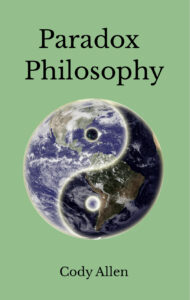 |
Paradox PhilosophyAll things are in both harmony and tension with their opposites—we often choose certainty despite our doubts, fear when there is opportunity for hope, and ourselves when we might think of others—and we should always strive to find greater balance between them. We all want to live meaningful lives, hopefully lives of moral goodness, and philosophy is the study of this venture. Paradox Philosophy is a modern, Westernized version of Yin Yang theory that delivers wisdom towards living a more virtuous life. Available at: |
Book Reviews
- Personal History by Katharine Graham February 16, 2023
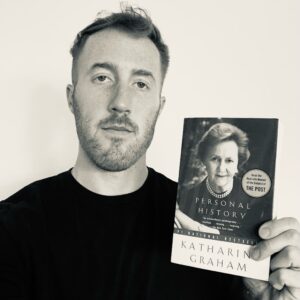 Born into privilege, Katharine Graham’s life was defined by and devoted to her family’s company, The Washington Post. While she could have taken it easy and led a life of leisure (she didn’t know how to fold her own clothes in college because “that was always done for me”) she instead took on the stress and challenges of operating a Fortune 500 company. She did this despite her obvious lack of experience and being the only women in the room, pretty much all the time. “Since I regarded myself as inferior,” she wrote, “I failed to distinguish between, on the one hand, male condescension because I was a woman and, on the other hand, a valid view that the only reason I had my job was the good luck of my birth and the bad luck of my husband’s death.” There was plenty of both, but Graham managed to find success through sheer determination and a deep desire to bring good journalism to the people. While her start at The Washington Post was rocky, her confidence grew over the years as she grew into the job and began to accumulate some successes. She covered many presidents (and knew a few personally) from JFK and LBJ to Nixon and eventually Reagan, Bush, and Clinton.
Graham’s autobiography is also a biography of The Washington Post newspaper and company—the family owned Newsweek magazine for many years in addition to a few local television and radio stations in select cities around the country. The paper, originally founded in 1877, was sold to Graham’s father at auction in 1933. Keeping it in the family, he eventually passed ownership on to Katharine’s husband Philip in 1946. The burdens of the job (and an undiagnosed mental illness) would eventually lead Phil to take his own life in 1963, catapulting Katharine into the position of president and CEO, one which she held for nearly thirty years before eventually passing the family torch once again to her own son Donald.
While ownership of the company passed from one generation to the next, Graham always did her best to maintain her integrity with her readership and insisted on impartial journalism. Today, much of journalism feels as though it is written with a specific ideology behind it, but that was not always the case in the United States. “People who may disagree on politics must still be able to communicate, and it’s crucial for all of us in the press to listen to all sides,” she writes of her time at the newspaper. “I consider it the role of the head of a newspaper to be bipartisan and to bring journalists together with people from government. I think that an easy relationship is constructive and useful for both sides: it helps the publication by opening doors, and provides those who are covered in the news with the knowledge of whom they can suggest ideas to, complain to, and generally deal with.” As a means of honoring their bipartisanship, The Post maintained a precedent of not endorsing political candidates for many years, until eventually breaking this pattern in the 1976 election when they officially endorsed Jimmy Carter.
The relationship between government and press is a vital one to a free and open society, and as one of the most prominent news sources in the capital city of Washington D.C. Graham and her associates at The Post had an important job: keeping those in power in check. While her career spanned many important years, there are two distinct events that had massive impact on her tenure. The first was the publication of the Pentagon Papers—which revealed the US’s involvement in Vietnam to be much more vast and devastating than the public originally knew about—and the second was the Watergate Scandal. Watergate, which progressively unfolded from 1972-1974 and eventually culminated in President Nixon’s resignation from office, was a political scandal unlike any other. “Its sheer magnitude and reach put it on a scale altogether different from past political scandals,” Graham remembers, “in part because of the unparalleled involvement of so many men so close to the president and because of the large amounts of money raised, stashed, and spent in covert and illegal ways.” The story revealed the depths of corruption throughout the different branches of government and the lengths to which Nixon was willing to go to cover it all up. Graham herself spent much of her time during the scandal as one of the top names on Nixon’s list of public enemies. Despite the immense pressure to drop the investigation, Graham pushed her reporters to continue pulling at the strings until the entire sweater unravelled. “As astounding as Watergate was to the country and the government, it underscored the crucial role of a free, able, and energetic press.”
In conclusion, I found two important take-aways from reading this entertaining and informative book: The importance of a free press in keeping those in power in check, and the importance of leading a life of purpose. Graham could have easily taken her family’s money and done whatever she wanted with her life, including nothing at all. Instead, her parents pushed her (and her four siblings) to live lives of fulfillment and productivity. She then passed these same sentiments on to her own children. Playing a central role in the production of news and the diagnosing of politics led Graham to live an extraordinary life, one of equal parts joy and hardship. Her mark on history was made in the face of gender-discrimination and is a shining example to us all of the importance of leading a life of purpose.
- Drawing the Line by Erich Hatala Matthes January 24, 2023
 What do we do with the work of immoral artists? There is no one clear and simple answer applicable across the board: Each artist and piece of art must be evaluated separately within their own context.
The most egregious cases of artist’s immorality is when they use their art to attempt to redeem themselves. For example, in 1994, the singer Aaliyah released a song titled “Age Ain’t Nothing but a Number.” She was fifteen at the time. The song was written and produced by R. Kelly, who was twenty-seven. R. Kelly was the young singer’s mentor—this is not uncommon, as many young artists have mentors, so no problem so far. The trouble started when a marriage certificate was introduced to the public, showing that the two were legally married. With this piece of evidence available, the song suddenly becomes an older man using his art to justify his sexual and romantic relationship with an impressionable teenager. This is socially and morally inappropriate, and we probably shouldn’t listen to the song—there’s plenty of other music out there.
There are, of course, artists who’s immoral actions never cross with their art. Take the case of Kevin Spacey, who has allegedly acted sexually inappropriately towards a number of young men (and some women). When these allegations came to light, he was fired from his current television show and dropped by his agent and publicist. Should we, as consumers of his films and television shows, stop watching? Pay It Forward is one of my favorite movies, a film with no themes about sex with minors or rape allegations. With this example, the answer is much more muddy.
An important point that Matthes brings up in his book is not separating the art from the artist. “Some would have us focus on the artist’s immorality and forget their art. Others act as if art is so important that an artist’s behavior can’t touch it. Both of these perspectives are mistaken. It’s ultimately irrelevant whether we can separate the art from the artist, because we shouldn’t.” It is important to integrate our feelings about the art with our feelings about the artist and embrace whatever bittersweet taste this may evoke. The philosopher Immanuel Kant was racist, but our author and I both “think there is tremendous value in reflecting on Kant’s work, much of which has nothing to do with his racist views and is arguably inconsistent with them.” Kant’s additions to philosophy are important and should be studied. He was also explicitly racist. We must swallow both pills together.
These pills can sometimes feel too large to swallow. Most often, this happens when our trust in an artist is broken. We trust artists because they have a way of bringing complex feelings and ideas further into understanding. “We often feel that our aesthetic loves have a unique ability to eloquently articulate or express our deepest values and commitments in ways that we, less artistically talented folk, are incapable of.” We trust them to take us on a journey, to evoke emotion, to make us think and evaluate beauty. When this trust is broken by an artist’s immoral dealings, we can feel betrayed. When we feel betrayed, we want justice, often (and most recently) via ‘cancellation.’ But cancelling someone is really just a blunt tool, for it does not take into account any of the nuances of what actually occurred. Did the artist transgress on purpose? Do they feel as though their actions are acceptable or do they also morally condemn themselves? The internet mob has no space for nuance, only painting in broad strokes. “When an artist betrays us it doesn’t follow that we must simply abandon their work, any more than we would just abandon a lifelong friend on the heels of a betrayal. To be sure, betrayal can and perhaps should reshape the character of our relationship, but to end a valuable relationship is the last resort, not the first.”
This sentiment brings us back to our original conclusion: Each artist and their art must be evaluated separately. Sometimes conclusions are made on an individual level: we might choose to stop watching Kevin Spacey’s movies because of his sexual misconduct allegations, but we also might not. Personally, I still love the movie Pay It Forward, and will watch it again someday. Sometimes these conclusions are made by the whole group: we should all collectively condemn Bill Cosby and his work now that we understand what a horrible and abusive person he was behind the scenes. The points to be made are simple: do not separate the artist from their art, and evaluate each instance with precision, not broad strokes. Evaluating the work of immoral artists is by definition a muddy practice, so don’t be afraid to get dirty.
- This is Your Mind on Plants by Michael Pollan January 11, 2023
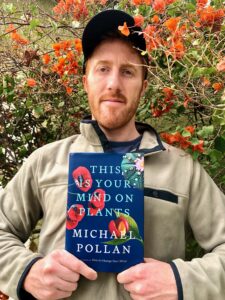 There are two types of ‘drugs’ that exist: those that are natural and come from plants and those that are unnatural and are made in a laboratory. Somehow, in what seems like an inverse of how things should be, modern society has outlawed the natural ones while accepting and distributing the unnatural ones. Why is this the case and how did we get here? In his book, Pollan does some research into three of the natural ones: opium, mescaline, and caffeine, and how society has come to treat each.
Opium comes from the opium poppy plant, scientifically labeled papaver somniferum. On the one hand, this plant is illegal to grow. On the other hand, it grows wildly (and domestically) all over North America, and most people have no idea what it harbors. You can find it in gardens across the world simply for its beauty and richness. Part of the reason why the plant is illegal to grow and yet barely regulated at all is that making opium from it is a time consuming process. Most people simply don’t have the patience (or knowledge) to cultivate the plant, slit the seed pods, harvest the ooze from inside, and distill it into an ingestible format. If you’re looking to get high on opium, you don’t spend months growing it in your garden; you buy it from the guy on the street corner.
Mescaline is in a similar boat to opium, in that it is illegal to grow (most often via the peyote cactus), and yet nobody is really keeping an eye out for it. Mescaline is a psychedelic drug, often inducing hallucinations, and differs from opium in several ways—in his book Pollan reviews these plants mostly through a social and political lens, not how they actually affected him when he ingested them. Via this lens, in the United States for example, only Native American’s are permitted by law to grow peyote due to their cultural history of its usage. It is likewise a federal crime for a non-Native person to possess it, grow it, transport it, buy it, sell it, or ingest it. “According to many Native Americans, [this] is exactly as it should be,’ our author notes. “Given the importance of peyote to Native Americans today, and the shortages of the cactus, surely they have a point.”
This brings us to the case of caffeine, most often consumed in the form of coffee and tea. Caffeine is the most widely distributed ‘drug’ in the world and is consumed by everybody, regardless of class, race, income, or location. It is grown everywhere, shipped everywhere, and consumed everywhere. There is no doubt that caffeine effects the mental processes of the brain, as it is a stimulant and the most popular option when trying to fight off feelings of fatigue. Caffeine is legal everywhere, even given to children—most often in the form of soda.
Having considered these three distinct plants, an obvious question arrises: Why are some outlawed and some not? “Is it the quality of addictiveness that renders a substance illicit? Not in the case of tobacco, which I am free to grow in this garden. Curiously, the current campaign against tobacco dwells less on cigarettes’ addictiveness than on their threat to our health. So is it toxicity that renders a substance a public menace? Well, my garden is full of plants—datura and euphorbia, castor beans, and even the leaves of my rhubarb—that would sicken and possibility kill me if I ingested them, but the government trusts me to be careful. Is it, then, the prospect of pleasure—of ‘recreational use’—that puts a substance beyond the pale? Not in the case of alcohol: I can legally produce wine or hard cider or beer from my garden for my personal use (though there are regulations governing its distribution to others). So could it be a drug’s ‘mind-altering’ properties that make it evil? Certainly not in the case of Prozac, a drug that, much like opium, mimics chemical compounds manufactured in the brain.”
If I want to make a quart of hard apple cider in my garden to get drunk, the government has no issue. If I want to brew a cup of poppy tea for a headache, however, I could go to prison for years. It was relatively recent in the United States that these rules were reversed. So, why are some plants illegal and others perfectly permissible? Because the government doesn’t trust the people to use these ‘drugs’ responsibly. They would instead prefer to exert their will and structure the rules of society to their liking. The answer to this question is the same answer to the question of why plants that produce marijuana, cocaine, psilocybin, and all the other mind-altering substances are also outlawed: People in power want(ed) it that way. This is why prozac, morphine, and codeine are pharmacologically available: they are ‘controlled.’ “Societies condone the mind-changing drugs that help uphold society’s rule and ban the ones that are seen to undermine it.” And by society, of course, our author means those with the power to shape it.
- Charged by James Morton Turner December 19, 2022
 Batteries are a little-talked about yet integral piece of our future (and past) energy usage. We all know that fossil fuels will eventually run out and humankind must switch to renewable sources of energy, (regardless whether it happens during our generation or the next) and in order to capture that energy and store it, we will need the best batteries available. Thanks to a century and a half of innovation, batteries have continually optimized for power, capacity, durability, and safety. It has been a long road.
The first widely distributed battery was the lead-acid battery. These batteries were large and leaky, and manufactured at a time when we didn’t fully comprehend the damages that lead can cause when it infiltrates the blood stream. Once upon a time in the United States, we had lead in our paint, lead in our water pipes, and lead in our batteries. We mined a large proportion of this lead from mines in Louisiana and the safety measures were abysmal. People throughout the entire surrounding area of the mine were documented with lead in the their blood at high enough levels to incite a myriad of health problems, shortening life spans and inciting sickness and death. Eventually, in the 1970s, regulators recognized the bodily harm induced by lead and demanded more safety measures at the mining facilities (in addition to removing lead from paint and pipes). Many lessons were learned the hard way.
On the heels of the lead-acid battery came portable, disposable batteries, which brought a host of other pros and cons into the limelight. The pros were the use and enjoyment of portable electronics that revolutionized the modern world; things like flashlights, toys, and music players. The major con was the pile of trash they became once their charge was used up. “A profusion of products, many designed to be convenient and disposable, meant consumers were buying and throwing away more and more stuff. Although batteries accounted for less than one-tenth of the nation’s household trash, batteries accounted for the vast majority of the toxic heavy metals in household waste.” Logically, the industry began a campaign of recycling batteries for reuse (as they also did with lead-acid batteries as well).
Recycling batteries created new problems: It often took more energy to collect, sort, and ship them to recycling centers than was actually saved by avoiding the production of new raw materials. “In the case of energy consumption, greenhouse gas emissions, and resource consumption, recycling was more costly than landfilling for existing recycling scenarios.” Here again, there were pros and cons, as our author elaborates: “Where it was a net positive was in reducing toxicity—meaning the threat of pollution to human health and the environment—although this was also the metric with the highest levels of uncertainty.”
While regulations in the United States were improving the health and safety of workers in the domestic mineral mines, those aboard were a different story. Cobalt mines in the Democratic Republic of the Congo, nickel mines in the arctic circle in Russia, and lithium mines in Chile and China all sprang up to meet the demand of precious metals needed for newer and more efficient batteries. However, the regulations in these areas lagged behind those in the United States, and many locals communities were (and still are) negatively effected. Their water is poisoned, their children grow up sick, and their land is pulverized until it is empty of minerals, at which point the companies move on. These problems have exacerbated as more and different minerals have been sought for a larger and wider supply of efficient batteries.
While the 1920s saw the rise in batteries attributed to the rise of household radios, the future will see battery production ramp up for usage in electric cars and other transportation vehicles. The newest on the market are lithium-ion batteries, most popularly used by Tesla in their fully-electric vehicles. A major positive for lithium-ion batteries is their rechargability—in addition to their longer-lifespan and low toxicity. Making batteries rechargeable has been another important step in helping to curb the creation of so much waste.
In his conclusion, Turner asserts that we must recognize the reality that a Prius or a Tesla “contributes a lot more than it doesn’t to the wildly high-polluting industrial practices that devastate our atmosphere, bodies, forests, rivers, oceans, wetlands, wildlife, and more.” Batteries these days have a large variety of precious metals that go into their manufacturing, and sourcing these materials from around the world is costly, both financially and environmentally, especially when you consider the fact that we are still using fossil fuels to do it. Even in our modern age, batteries still pose a need for a balance between two important factors: the need for clean, efficient, socially and environmentally friendly energy, and the reality that making these necessary batteries continues to harm our planet and our communities.
While there are many ways to help alleviate this problem, there is one that will change things the most: “reducing economic activity, downscaling consumption, and giving up on the ‘fantasy’ of decoupling economic growth from environmental impacts.” In short, we need to stop our constant growth, for as long as we are growing, we will continue to consume, and the earth only has so much to offer. This idea challenges the very basis of modern society, especially in more-developed countries such as the United States, and will be hard-pressed to be adopted. In the meantime, we must do our best to find the balance between what society demands and what our planet can safely offer.
- Harriet: The Moses of her People by Sarah Hopkins Bradford December 14, 2022
 Harriet Tubman’s life was a journey from bondage to freedom.
She was born into slavery in a rural county of Maryland in 1822. In 1849, at age 27, she ran away, never to be enslaved again. She would return at her own peril over a dozen times throughout the next decade, leading others to northern freedom in New York and Canada. Eventually becoming known as the conductor of the Underground Railroad, she was once quoted as saying: “I was the conductor of the Underground Railroad for eight years, and I can say what most conductors can’t say—I never ran my train off the track and I never lost a passenger.”
Tubman was a very religious woman. She one time prayed for one of her masters to die, and a week later, he did. There are many stories of her not panicking even in the direst of circumstances, fully believing that God was watching out for her, and it truly seems as though he was. She had many close calls on the Underground Railroad, once hiding under a cart as it passed over a bridge swarming with white men, another time escaping capture by fording across a rushing river. When she and her ilk were starving, she prayed for food and was always saved. She often referred to her Maryland homeland as ‘Egypt,’ likening her struggle to that of the Israelites. Indeed, she was referred to as ‘Moses’ by slaves waiting for her next return and hoping to escape.
She worked as a nurse and a spy for the Union army during the Civil War, receiving praise from numerous Union generals despite her status as a woman (and, of course, a black person). She gathered precious intelligence from behind enemy lines via her network of friends and her knowledge of the area. “The thought of fear never seems to have had place for a moment in her mind. She had her duty to perform, and she expected to be taken care of till it was done.” And she fatefully was, living to the fine old age of 90, a remarkable feat of strength and endurance for someone who led such a rough and poverty-filled life.
Her post-war days saw her settled on her own private land in Auburn, New York, bought and paid for with her own money as a free woman. She worked various jobs and spent most of her time taking care of her family and other people in need. She was always tremendously generous to newly freed blacks and was a constant source of support for the downtrodden. Although she struggled for compensation for her wartime efforts, her network of friends and efforts in philanthropy kept her financially afloat throughout the later decades of her life. She eventually passed away in a nursing home, accompanied by friends and relatives.