




I’m a writer and author with a passion for exploring ideas.
Since 2020, I’ve published monthly book reviews as a way to reflect on what I’ve read. I do my best to challenge my own thinking and remember the lessons worth keeping. Here you’ll find my books, my reviews, and my reflections on the ideas that have shaped my perspective along the way.
My Book
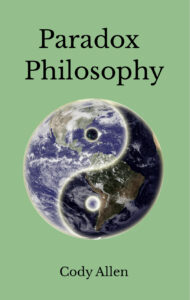 |
Paradox PhilosophyAll things are in both harmony and tension with their opposites—we often choose certainty despite our doubts, fear when there is opportunity for hope, and ourselves when we might think of others—and we should always strive to find greater balance between them. We all want to live meaningful lives, hopefully lives of moral goodness, and philosophy is the study of this venture. Paradox Philosophy is a modern, Westernized version of Yin Yang theory that delivers wisdom towards living a more virtuous life. Available at: |
Book Reviews
- The Narrow Corridor by Daron Acemoglu and James A. Robinson July 19, 2023
 A liberal society is one in which the people are free from violence, intimidation, and oppression. “People must be able to make free choices about their lives and have the means to carry them out without the menace of unreasonable punishment or draconian social sanctions.” Despite what we may think about the structure of such a society, our author’s argue that it requires a balance between a powerful government and a powerful citizenry. “A strong state is needed to control violence, enforce laws, and provide public services that are critical for a life in which people are empowered to make and pursue their choices. A strong, mobilized society is needed to control and shackle the strong state.” With no government, the people are pitted against each other in a zero-sum game. With too much government, there is likewise no freedom. Liberalism requires a balance: when either the state or the people gain in power, the other must respond in kind, otherwise the scales will tip.
In their book, our author’s refer to this balance of power as the ‘Red Queen’ effect, taken from the tale of Alice in Wonderland. In the fable, the Red Queen tells Alice that she must keep running if she is to stay in the same place. Metaphorically, this applies to the populace of a liberal democracy that must keep running if they are to keep up with the expanding powers of their governmental elite. The same is true for governments when their citizens gain power for themselves. If either stop running while the other continues, the balance of power is thrown off and liberalism is jeopardized. Just like Alice, we must all keep running in order to maintain our position (and it may often feel as though we are going nowhere).
One of the earliest liberal democracies examined by our authors is that of Athens at the time of Solon (630-560 BC). What made Solon exceptional was his recognition of the balance needed between state and society. The more he “managed to strengthen regular Athenians politically, the further he went in building state institutions. And the more these institutions took shape, the further he went in establishing popular control over them.” Solon came to lead at a time when the Athenian elite held a majority of the power, and in order to strengthen the power of the people he took actions like banning debt peonage, redistributing lands, and widening access to political decision making bodies. In order to keep some power for the elites, he structured society into four classes, and only men from the top two could be elected to government. He also codified the laws of the land and applied them to everyone: anyone could bring a lawsuit before the judicial councils and have it be heard.
Justice for the poor was instrumental in balancing the power of ancient Athenian society and has remained a pillar of liberal societies since. It was this striving for justice that helped England achieve its own liberal society. King Henry II oversaw the creation of the ‘eyres,’ around 1176, which was a “system of itinerant royal judges who toured the country with broad authority to judge different types of cases.” When considering a dispute, judges began by summoning ‘twelve lawful men’ from the local area to aid them in their deliberations, a practice that would eventually transform into the twelve members of a jury we now hold as standard practice in our current judicial system. This reform triggered a reaction from the people as “society came to participate in conflict resolution in new ways.” This was the Red Queen effect working in beautiful harmony: as the state judiciary gained power, so did the people via their participation in the process, and society as a whole benefitted.
Many people today do not live in liberal societies and are subject to either all-powerful governments (China, for example, or North Korea) or all-powerful societies that have remained factional and resistant to centralized government (Tajikistan and Montenegro, for instance). Some societies have been unable to progress toward liberalism due to a stifling ‘cage of norms,’ which are customs passed down over generations that are difficult to break. In India, for example, this is the caste system, a practice that elevates some, persecutes others, and keeps the whole of society fragmented against itself and therefore unable to organize on a grand scale. In many parts of Africa, tribal traditions have the same effect—disallowing the formation of a central authority.
The founders of the United States understood the necessity of balancing power as well (thus the division of power between executive, legislative, and judiciary branches of government) and tried their best to create a Constitution that honored both the state and the people. Many state legislatures balked at ratifying the Constitution upon first consultation, however, believing that the document awarded too much power to the state. They refused to ratify the Constitution and accept the authority of a federal government without more power in the hands of the people. Thus, a bill of rights was written and added to the agreement so as to further enshrine the balance of power.
Despite these initial precautions, the past several decades have seen the elite members of US society become more and more powerful while the citizenry has failed to keep pace. The signs of increasing governmental and elite power include: the top 1% holding more wealth than the bottom 50%; the monopolization of many industries by massive corporations; the FBI and CIA conducting secret operations with almost no oversight; mainstream media reporting on behalf of the government instead of on behalf of the people; the patriot act and the mass domestic surveillance revealed by Edward Snowden; the FED printing endless money to pay for things that the people don’t approve of. And, on the flip side, the citizenry in our country seems to have less and less power than ever before: union participation is at an all-time low; drug overdoses leading to death are increasing (often due to people feeling hopeless about their lives); a similar increase in gun violence; the cultural divide between Left and Right that causes everyone to suffer needlessly. The general absence of political education is also a sign: I never paid much attention to politics or the government’s actions until my mid-20s, for example. All of these signs point towards a future where we in the United States leave the liberal corridor and become dominated by an authoritarian government.
One of the most important necessities for a proper balance of power is trust. For example, our authors examine the government of Denmark, who in 2006 voted to publish a law requiring internet providers to “store information on users’ source and destination IP addresses, port numbers, session types, and time stamps.” In response, international privacy advocate groups announced that Denmark had become an ‘extensive surveillance society.’ However, the Danish people were not up in arms and did not demand the cessation of the data-collection practices. Meanwhile, the bombshell revelations in the United States that the NSA is collecting the same data on its citizens was met with uproarious anger (despite the fact that nothing was changed). Why were the Danish and the U.S. responses to state surveillance so different? Because the Danish government announced their intentions publicly, promised to use their new power appropriately and with public oversight, and maintained the trust of their citizens. The United States government operated in secret, distrusting the very people they are meant to protect.
What does all this information mean for the future of our myriad global societies? This is a tough question to try and answer, and our authors are quick to point out that it is incredibly difficult, perhaps truly impossible, to predict which countries will remain within the liberal corridor and which will be pulled out either by a despotic government, an absent one, or some calamitous unforeseen event (like war or a pandemic). Whatever comes our way, it is imperative to remember that like many things in life, liberal societies require balance.
- The Creative Act: A Way of Being by Rick Rubin July 5, 2023
 This book was a wonderful treatise on what it means to be and live as an artist. It is comprised of short chapters, each more a musing than anything certain. As a self-proclaimed artist, many of the ideas proposed were things I had considered before, but they were still refreshing to hear from a living artistic legend like Rick Rubin (co-founder of Def Jam records and winner of eight Grammy awards). As he writes, “artists allow us to see what we are unable to see, but somehow already know.” This is how I felt reading his book!
Many of my friends who work traditional jobs, ones with a start time and an end time, sometimes ask me when my weekend is. The thing is, artists don’t really take ‘time off.’ Do we go on vacation? Sure. But we never turn ourselves off from drinking in what life has to offer, for who knows when that next seed of an idea will present itself, one that we must surely plant and nurture. It is the artist’s job to always remain open and ready to receive these seeds.
How do we know when a work is finished? Of course, there is no ‘correct’ answer, it is more of a feeling. We work until it is done; sometimes a project requires long grueling hours and sometimes creating is a short and pleasant endeavor. Regardless what medium of art we are crafting in, “the amount of time we put in and the results we get are rarely in balance. A large movement may materialize all at once; other times a tiny detail may take days. And there’s no predicting how much of a role either will play in the final outcome.” As someone who has written music for over a decade, I can attest that this is true.
One of the hardest aspects of being an artist is feeling successful. What happens when we publish a book, but fail to get anybody to read it? Or film a movie that nobody watches, or produce a song that nobody hears? Luckily, Rubin has an answer for this quandary of the soul as well, reminding us that “success has nothing to do with variables outside yourself.” Once we have finished with our current work, and are ready to release it to the world, we are successful. It is something that “occurs in the privacy of the soul.”
From finding ideas, crafting them, editing them, believing in them, releasing them, getting feedback, all the way to starting again, Rubin’s book touches on every aspect of living the creative life. It is full of wisdom that I will surely revisit in times of need.
The most important question it asks is: Why make art?
The answer: To connect.
- The Happiness Hypothesis by Jonathan Haidt June 21, 2023
 Scholars throughout history have written about happiness: What does a happy life look like? How do we achieve it? Should we be trying to? Obviously, there are no objective answers to these questions, we must all answer them for ourselves. Luckily for those of us living in the 21st century, we have science to help. In this book on happiness, our author Jonathan Haidt (professor of social psychology) combines ancient wisdom and modern social science to help point us in the right direction.
One of the most important ideas developed by modern psychology is what is called the “happiness hypothesis,” and it is an equation that looks like this: Happiness = Setpoint + Conditions + Voluntary Activities.
Our Setpoint is where we start, genetically. It turns out that “happiness is one of the most heritable aspects of personality. Twin studies generally show that from 50 percent to 80 percent of all the variance among people in their average levels of happiness can be explained by differences in their genes rather than in their life experiences.” This is an astounding revelation. The same way that recent research has diagnosed certain types of depression as genetically inherited, so are certain types of happiness.
The Conditions of happiness are about love and work. “We are ultra-social creatures, and we can’t be happy without having friends and secure attachments to other people.” We need loving relationships that make us feel valued. We must also have and pursue the right goals in life “in order to create states of flow and engagement.” Basically, we have to feel a sense of meaning in relationship to others and also to what we spend the bulk of our time doing—hopefully something that contributes to society in what we deem to be a meaningful way. The more loving connections with others we sustain, and the more meaningful we feel as though our work is and our contributions are, the happier we will find ourselves.
Voluntary Activities are also broken down into two categories: pleasures and gratifications. Pleasures are “delights that have clear sensory and strong emotional components” like eating great food, watching great movies, and having great sex. Gratifications are “activities that engage you fully, draw on your strengths, and allow you to lose self-consciousness.” Examples include singing in a choir or having an intense conversation with a friend. They can also be solo activities, like painting, writing, or photography, and are defined by the feeling of ‘flow,’ or total immersion in an activity.
In addition to modern scientific studies, this book also has a collection of ancient wisdom woven in with it. Haidt touches on the similar beliefs of Stoicism and Buddhism which both say that “striving for external goods, or to make the world conform to your wishes, is always a striving after wind,” and that we are better served by breaking attachments to external things and cultivating an attitude of acceptance. He espouses the importance of living a virtuous life and examines the way the Ancient Greeks “focused on the character of a person and asked what kind of person we should each aim to become,” while modern ethics “focuses on actions, asking when a particular action is right or wrong.” He explores the benefits of spirituality, religion, and transcendence, noting that “anyone who wants a full, cross-level account of human nature, and of how human beings find purpose and meaning in their lives,” must recognize that connecting with something larger than the self is an important element in all cultures.
Ultimately, happiness is not something that we can find, acquire, or achieve directly; we “have to get the conditions right and then wait.” Some conditions are within us, our Setpoint. Other Conditions require relationships to things beyond ourselves: Just as plants need sun, water, and good soil to thrive, people need love, work, and a connection to something larger. “If you get these relationships right, a sense of purpose and meaning will emerge,” he writes. Finally, combining these with our Voluntary Activities (how we spend our remaining time) will give us the proper recipe for a happy life: Happiness = Setpoint + Conditions + Voluntary Activities.
- Start With Why by Simon Sinek June 7, 2023
 When most organizations or people think, act, or communicate they start with WHAT they want or WHAT they are selling. In order to create a lasting brand, however, or in order to become an inspiring figure to others, it is more important to start with WHY you do what you do. Your WHAT may be more clear and tangible, but your WHY is philosophical in nature and is rooted deeper in the emotional center of your brain. Ideas motivate people to action more than physical things or potential results.
In his insightful book, our author offers a few examples of companies and people who led with strong WHYs, including Apple and Microsoft (built by Steve Jobs and Bill Gates respectively) and Martin Luther King Jr. and Abraham Lincoln, who built political coalitions in order to create change. All of these men were able to change the world in radical ways, either via technology or politics, because of their strong beliefs in WHY they were doing what they were doing. Steve Jobs wanted to buck the system and empower the individual, as we see with the personal ‘i’ that precedes all of Apple’s product names. Bill Gates wanted to put a personal computer in every home and grant people the same power that only large corporations had at the time. Martin Luther King Jr. believed in a society where everybody was treated equal.
Politicians with a weak sense of WHY must promise all they can in order to get as many votes as possible. ‘When I’m elected, I will pass A, B, and C legislation’ is a message we are used to hearing from people running for public office. Politicians who know WHY they are running for election don’t worry about their competition, they simply shout their message out at every chance they get and hope to inspire people to vote for them. Martin Luther King Jr. didn’t need to convince people to follow him; people following him across that bridge in Selma because they wanted to, because they believed in his WHY.
In order to truly inspire people to follow you, whether you are a politician or an entrepreneur starting a company, it is paramount to establish WHY you do what you do. “Knowing your WHY is not the only way to be successful, but it is the only way to maintain a lasting success and have a greater blend of innovation and flexibility.” There are plenty of companies that sell computers, but why do we buy Apple computers? Because we believe in their rebellious spirit, first embodied by Steve Jobs and instilled within the ethos of his company.
When you know WHY you do what you do, then you never have to worry about comparing yourself to others. Apple doesn’t come out with cheaper and sleeker products in order to beat their competition, they have a company ethos that creates loyalty. Their customers buy from them because they want to, because they believe in Apple’s WHY. When you only know WHAT you do, then you have to constantly be aware of what others are doing in order to continue trying to capture as much of the market as possible. Too often, companies try to lure customers in with WHAT their product is or HOW they intend to improve your life. This is backward; we must always start with WHY we do things, then proceed from this center of focus outwards to HOW we are going to share our WHY with the world, and then again one more layer outwards to WHAT we are ultimately going to sell. When you know WHY you do what you do, you only have to stay true to yourself.
- The Federalist Papers by Alexander Hamilton, James Madison, and John Jay May 17, 2023
 While the Constitutional Convention of 1787 produced the document we now recognize as the Constitution of the United States, it was not automatically (or enthusiastically) endorsed by all the founding colonies. The Federalist Papers are a collection of 85 essays written in favor of ratifying the Constitution, penned by Alexander Hamilton (first Secretary of the Treasury), James Madison (fourth President of the United States), and John Jay (first Chief Justice of the Supreme Court).
Written nearly 250 years ago, the language of these essays is immediately tough to decipher and yet also poetic and profound. Many of the passages required multiple readings (and sometimes a dictionary) in order to comprehend their meaning. Despite these moderate hurdles, the political knowledge espoused by these three men (mostly Hamilton and Madison) is truly breathtaking—their knowledge of history, commerce, and law puts most modern politicians to shame. They are at their best when taking a broad view of human affairs, their general reflections both wise and quotable, and I found many passages that felt prescient of our current society. The trade off between the need for government and the desire for liberty, for example, or the knowledge that it is “the nature of war to increase the executive at the expense of the legislative authority.”
Some of the topics covered in these essays include the division of powers, taxation, and the organization of a national defense and the necessity of a powerful navy. The authors attack these topics with vigor, arguing that the colonies would be stronger together in every instance as opposed to quarreling amongst each other and taxing each other’s imports and exports. One of the most famous essays—#10 (written by Madison)—explains that while citizens may fear that a larger government would impede upon their liberty, extending the sphere would “take in a greater variety of parties and interests,” and would make it “less probable that a majority of the whole will have a common motive to invade the rights of other citizens.” Indeed, essay #7 (written by Hamilton) concludes with the statement “divide et impera (divide and command) must be the motto of every nation that either hates or fears us.”
Something of note was the absence of an essay about slavery. Given that Madison was a slave owner and Hamilton an abolitionist, this is exemplary of the contention around the issue at the time. The term ‘federalist’ is appropriate as it constitutes the compromises required to get the Constitution written and eventually ratified. “It is a matter both of wonder and regret, that those who raise so many objections against the new Constitution should never call to mind the defects of that which is to be exchanged for it,” Madison writes in essay #38. “It is not necessary that the former should be perfect; it is sufficient that the latter is more imperfect.” Compromise was indeed the spirit of the Constitution.
I found these essays to be fascinating and informative despite the difficultly of the language. These men write about infinitely complex issues and do their best to project into the future where they thought their fledging society would go. While they may not have been very accurate, and would surely be appalled at the gargantuan size of our federal government today, we should be thankful they wrote these essays for the public consideration (and for the legislatures who ultimately ratified our Constitution).
The final essay ends with a quote from the Scottish philosopher David Hume: “To balance a large state or society, whether monarchical or republican, on general laws, is a work of so great difficulty, that no human genius, however comprehensive, is able, by the mere dint of reason and reflection, to effect it. The judgments of many must unite in the work; experience must guide their labor; time must bring it to perfection, and the feeling of inconveniences must correct the mistakes which they inevitably fall into in their first trials and experiments.”
The knowledge stored in these pages is profound and insightful and undoubtedly swayed many, including myself, towards the conclusion that the states of America are stronger united than divided.