




I’m a writer and author with a passion for exploring ideas.
Since 2020, I’ve published monthly book reviews as a way to reflect on what I’ve read. I do my best to challenge my own thinking and remember the lessons worth keeping. Here you’ll find my books, my reviews, and my reflections on the ideas that have shaped my perspective along the way.
My Book
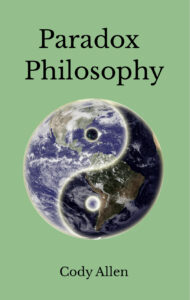 |
Paradox PhilosophyAll things are in both harmony and tension with their opposites—we often choose certainty despite our doubts, fear when there is opportunity for hope, and ourselves when we might think of others—and we should always strive to find greater balance between them. We all want to live meaningful lives, hopefully lives of moral goodness, and philosophy is the study of this venture. Paradox Philosophy is a modern, Westernized version of Yin Yang theory that delivers wisdom towards living a more virtuous life. Available at: |
Book Reviews
- The Rise and Triumph of the Modern Self by Carl Trueman May 2, 2023
 In today’s modern culture, we have come to think about ourselves differently than ever before. Society is more psychological, secular, and sexual than in any other time period from our history. It has been a slow progress of development going back hundreds of years. Our author investigates many contributing philosophers like Nietzsche, Marx, Rousseau and Freud, to name a few. Not only have ideas shaped us, so have modern advancements in science and technology.
It is no secret that we have become a society of psychological beings. For previous generations, job satisfaction was “empirical, outwardly directed, and unrelated” to one’s psychological state: if you had a job that could provide for your family, you were happy (or, if you were a woman, if you had healthy children and a happy husband, you were likewise happy). For our generation, “the issue of feeling is central.” We need to feel good and valued in the things we do, otherwise we are unhappy and depressed. Self-expression and individual psychological well-being are now at the heart of what it means to be human.
When societies were religious, and we all believed in a God greater than ourselves, we all shared in a system of ethics that guided social behavior. Having an affair was wrong because God decreed it, for example. Now that society has become more secular, we no longer have a shared system of ethics and morals. We used to tell children not to steal because it was a sin in the eyes of God. Now, when our child steals, we still teach them that the behavior is wrong, but there is no further justification for why? The answer all too often given by parents is: because I said so. This is what Nietzsche meant when he famously declared that “God is dead,” because without God, what barometer do we humans have for what is good and what is evil? It has become necessary for us to create a system of ethics ourselves, but without the structure once afforded to us by organized religion, this has been a tough challenge. In a psychological society such as our own, “the only moral criterion that can be applied to behavior is whether it conduces to the feeling of well-being in the individuals concerned.” Ethics has become a function of feeling.
Another development of our modern society is that everything has become sexualized. A major catalyst for this was the invention of modern birth control, something that gave women control over their bodily reproduction and unlocked them to discover more potential in their lives. This was undoubtedly a great gift to women, and yet, where has it ultimately led us? Marriage rates have been declining while the number of children raised by single-parents have been increasing. Sex used to be something sacred, something that society viewed as a private enterprise between two adults. Our modern view of it, however, has become the inverse, as we now view sexual relationships as recreational and fun. Sex is on display everywhere in our culture, from movies and music to advertisements selling cars and hamburgers. Children are exposed to sexual themes at younger and younger ages, something that has become very controversial for parents. The great psychoanalyst Sigmund Freud also contributed to our modern sexualization when he published his discovery that “sexual repression was central to the authority relationship that existed between parent and child.”
These culture advancements have all contributed to the changing way we define our identities, the central theme of this book. While yes, all things change as society and culture progress over time, the recent changes in the ways we identify ourselves are newly important: it has transitioned from external to internal. Our identities used to be in relation to others, for example I am the child of Barbara Allen, a waiter at The Cheesecake Factory, and a producer of several albums of hip-hop music. More recently, however, we have began to identify ourselves by our gender and our sexual orientation. He/him, she/her, and they/them; heterosexual/homosexual/bisexual and monogamous/polyamorous.
“If the inner psychological life of the individual is sovereign,” our author contends, “then identity becomes as potentially unlimited as the human imagination.” In the United States, the political Right contends that there are only two genders, man and women. The political Left, on the other hand, now believes that gender is a spectrum and is not constrained by numericals. The Right is holding tightly to the past, while the Left has gone too far creating something new. Perhaps we could all agree on three: man, woman, and, for everybody else somewhere in the middle, trans?
While secularization and sexualization have been liberating to many, there is an inherent problem with identity becoming something internal: it makes it subjective. This is also the case for our collective sense of ethics: things that used to be objectively good and bad have now moved to the subjective realm of interpretation. This makes it difficult to agree upon collective ideas, fracturing society and creating cultural chaos. The freedom of speech, once a paragon of liberal democracies, has become damaging, because “words become potential weapons.”
While the social scaffolding we once had was at times constraining, it also provided structure. We should be wary of tearing this structure down, because societies need structure. Without it, we fall into chaos, and the farther down this rabbit hole we go, where everything in life is internalized and subjective, the more we invite this chaos in.
- More Than Two by Franklin Veaux and Eve Rickert April 13, 2023
 When early humans lived in tribes, both men and women were free to relate emotionally and sexually with whoever they wanted. Primitive societies did everything collectively, including raising children (in addition to sharing resources like food and water and banding together for protection from predators). Our closest primate ancestors are bonobo monkeys, a species known for being sexually promiscuous and for not pair bonding. In fact, very few primates are monogamous.
Monogamy seems to have become popular with the changing dynamic of human social functions. As societies became agrarian, humans began to form clearer boundaries between what belonged to them and what belonged to someone else. This eventually began to include people, and the ‘family’ evolved into what we have come to know it as today: two parents raising their own offspring. This encouraged marriage and monogamy, which quickly became the cultural norm.
Today’s western culture is dominated by monogamy and the ideals around the ‘family unit.’ Despite this, many married men and women report cheating on their spouses, which has contributed to recent skyrocketing divorce rates. Monogamy has become something akin to taxes and speed limits: we say we support them, but most of us eventually break the rules. The reality is that there is no one perfect type of relationship; different types of people will find happiness and satisfaction in different types of relationships.
This is where our authors come in and provide pertinent information for those of us curious about other styles of relating to one another. While this book may advertise that it is about polyamory, it is really about all relationships. Our authors posit that there are two keys to success in any and all relationships whether they be monogamous, polyamorous, or platonic: trust and communication. For a relationship to progress and deepen, we must be able to trust that our partners are continually making decisions for the benefit of the relationship. Every single thing that we can’t or won’t talk about, openly and without fear or shame, “is a crack in the relationship’s foundation.” Obviously, lying (and lying by omission) to those we love is not kind to them nor ourselves. We have to be honest with our wants, needs, and desires in any relationship. We must also be open and receptive to hearing these things from our partners.
The number one reason why happy relationships end is jealousy. Jealousy is “rooted in some sort of fear: of abandonment, of being replaced, of losing the attention of someone you love, of being alone.” What prompts these feelings is first a feeling of possession in relationships. I would like to take this moment to dissuade you, dear reader, of this notion. A good relationship is not something we have, it is something we participate in. The best, happiest relationships, are those in which members are constantly willing to negotiate and renegotiate the groundwork beneath them. Is it important to always work together to overcome any problems without letting the problem come between you and your partner(s).
Our authors propose a metaphor for relationships: a garden. The most important garden we each cultivate is our own: no relationship is as important as our relationship with ourself. I like to read books, and literature is a very important part of my garden. Other people like to play tennis, and they cultivate this flower in their own way. We also have gardens with all of our important relationships: friends, family, and lovers. I have a garden with my mother that we cultivate together. I have a garden with my girlfriend, and the flowers we grow are always intentionally nurtured together for the overall health of us both. Sometimes, other plants pop up in the garden, and we must have the ability to say “hey, there’s a strange plant growing in the corner over there, what is it?” If we cannot communicate openly, we may soon find that our garden is overgrown with weeds. This can happen to our shared gardens in addition to our own personal ones.
“We have relationships because we, as human beings, are wired to love.” Monogamy tells us that we can only love one other person romantically and sexually. We can love our friends, but only to a certain extent—as soon as sex enters the picture, everything changes. The lines weren’t always so stark, however, and they don’t have to continue to be. Society has been telling us all how to cultivate our gardens for hundreds of years, but the beautiful thing about gardens is that there is no correct way to manage them. Everyone’s gardens are different and each deserve respect. As long as you are growing your flowers with love and compassion, you’re doing okay.
- How the Word is Passed by Clint Smith March 29, 2023
 One of the most important ways of remembering history is via the stories we tell about it. In this narrative, Smith visits several historical sites in the United States (including one in Senegal, West Africa) in order to better understand how we tell our stories surrounding the history of slavery. What he found were a series of partially constructed truths, but also many uncomfortable and often completely hidden ones. There is a prison in Angola, Louisiana, for example, that is literally built on top of a plantation that used to house enslaved people. Today, a majority of its prisoners are black. “If in Germany today there were a prison built on top of a former concentration camp, and that prison disproportionally incarcerated Jewish people, it would rightly provoke outrage throughout the world,” Smith justly surmises. “And yet in the United States such collective outrage at this plantation-turned-prison is relatively muted.” Our society seems content to ‘move on’ from slavery, but it’s ugly past is still staring us right in the face.
Slavery has proven that many of the founders of our country were hypocrites. For example, when Smith writes about his visit to Thomas Jefferson’s Monticello Plantation, I was confronted with the reality that while Jefferson owned hundreds of slaves, some of whom spent their entire lives on the property, many of whom were bought and sold a stone’s throw from his mansion, he also thought up many of his ideas comprising the Declaration of Independence right there in that same house. Ideas like ‘all men are created equal.’ And yet, somehow, black people did not fall under the category of ‘all.’
Something else I learned from this book was that while the largest slave market in the US was in Charleston, South Carolina, the second largest was in New York City. Many parts of our country were pro-slavery for one important reason: economics. “The financial capital in the North allowed slavery in the South to flourish. As the cotton trade expanded, New York City became the central port for shipments of raw cotton moving between the American South and Europe. By 1822, more than half of the goods shipped out of New York’s harbor were produced in Southern states.” The industrial revolution that started in England and quickly spread to Europe and the United States was heavily dependent on slave labor. This is, I believe, the biggest reason why slavery was such a contentious issue: it was the economic foundation of our first world. This country was literally, physically built by slaves—the White House, for example, was constructed using slave labor.
For many southerners, the Confederacy that was formed during the Civil War still lives on as a part of their family’s history. They honor their dead the same way we honor the men who died fighting Nazi Germany: as heroes. Nobody wants to accept that they are descendant from violent and oppressive people, and many have white-washed this chapter of history (whether with purpose or because that’s what they were taught in school) and find it near impossible “to confront the flaws of their ancestors,” something deeply uncomfortable if your ancestors treated people like property. Many have constructed different views of history; that the war was fought for states rights, for instance. This is patently false: the war was about whether or not to keep slavery in practice.
Slavery was an institution in the United States for nearly 250 years: the first slave ships brought enslaved humans from Africa to the United States in 1619, and they were legally freed in 1863 when President Lincoln signed the Emancipation Proclamation. Only 160 years have passed since. While we may think of slavery as something in the distant past, it is not. It is still close at hand, only a few generations away.
Smith’s writing is powerful and full of emotion—he himself is a black man born and raised in the south, surrounded by a history that he was not formally taught in schools. It is books like his that share the deep and personal history of slavery and how it relates to our current society. His grandfather’s grandfather was born into slavery, and he notes how “many of the people who threw rocks at Dr. King are still voting in our elections.” Writing like his helps us learn and understand our shared history, and the stories told are paramount to this process. Sadly, some wounds can only be healed with time, and when it comes to our reckoning with the evils of slavery, it seems as though we still need more.
- How to Change Your Mind by Michael Pollan March 15, 2023
 Our society has viewed the use of psychedelic drugs unfavorably for many years. This was not always the case, however, as we are actually in the midst of a second wave of psychedelic research. The first wave came about in the 1950s and 1960s when doctors, psychologists, and university professors were all studying the effects of LSD and psilocybin (the psycho-active drug in magic mushrooms) on their patients. These substances were relatively unknown to the broader public at the time, and yet the researchers who were administering them had high hopes for their application. “A 1967 review article summarizing papers about psychotic therapy published between 1953 and 1965 estimated that the technique’s rate of success ranged from 70 percent in cases of anxiety neurosis, 62 percent for depression, and 42 percent for obsessive-compulsive disorder.” Sadly, however, this research was not to persist; heading into the late 1960s and early 1970s, the public perception of psychedelics changed to one of skepticism and distrust, and these substances were banned by the government. Thus ensued a multi-decade drought of their official study.
The past twenty years have seen psychedelic research resurface (it never truly disappeared, but simply went underground) and the preliminary results have been exceptional. Similar to the findings from the first wave, our current second wave of research indicates that psychedelics can be profoundly helpful to people with addiction, anxiety, depression, and obsessive-compulsive behaviors. Patients with these diagnoses report that their mental ‘journeys’ on psychedelics leave them with new found feelings of love and connectedness to a larger ‘whole.’
Our author tries these drugs himself and does his best to put the indescribable into words. The most important theme he illustrates is how psychedelics dissolve the ego, the part of us that sees ourselves as separate from everything else. “LSD truly was an acid,” he writes, “dissolving almost everything with which it came into contact, beginning with the hierarchies of the mind (the superego, ego, and unconscious) and going on from there to society’s various structures of authority and then to lines of every imaginable kind: between patient and therapist, research and recreation, sickness and health, self and other, subject and object, the spiritual and the material.” Basically, LSD washed all the dividing lines away, until everything felt like one and the same. This is difficult to conceptualize without experiencing LSD’s effects firsthand.
Why do psychedelics have this effect on our minds? Researchers suggest that states of mind dominated by addiction, anxiety, depression, and obsessive-compulsive disorders are evidence of rigid thinking, i.e., when the neural grooves of the brain have become set and hardened. The beauty of psychedelics is that they open the mind up to new and different ways of thinking, connecting disparate parts the brain across new neural pathways that allow people to create new habits and change their unhealthy behaviors. Patients who used psychedelics report quitting smoking, for example, because cigarettes were suddenly reframed as something stupid and pointless.
Psychedelic research is a tricky subject to study because it is very dependent on the set and setting of where and how the drugs are administered. “Set is the mind-set or expectation one brings to the experience, and setting is the environment in which it takes place.” Not only do psychedelics affect different people differently, but compared to other drugs, they seldom affect the same person the same way twice. They are also hard to study because it is near impossible to have a control group, a standard practice when using the scientific method.
This is a big reason why this class of drugs has been so hard to get official approval to study—because they are not scientifically rigorous, and are more closely attributed to spiritual practices administered by shamans then clinical studies proposed by doctors. This new wave of psychedelic research is a blend of both, with supreme importance placed on where and how they are administered and in what way the patient is tended to by the psychiatrist. “This is why it is important to understand that ‘psychedelic therapy’ is not simply treatment with a psychedelic drug but rather a form of ‘psychedelic assisted therapy,’ as many of the researchers take pains to emphasize.” It is indeed a hybrid between medical science and shamanic spirituality.
So, this is where we are today: in the midst of a second wave of psychedelic research loaded with promising initial results. While the medical community is skeptical, slow progress is being made, with more converts to the cause with every paper published on the subject. And how about you, dear reader? Do you suffer from addition, anxiety, depression, obsessive-compulsive disorder, or have a mental blockage in your life that you want to move past? Perhaps psychedelics could be exactly what you need to re-wire your brain. After all, this is why our author titled his book How to Change Your Mind.
- The Patterning Instinct by Jeremy Lent March 1, 2023
 There are many ways to study and interpret human history. In The Patterning Instinct, our author presents an important one: through a cultural lens. Lent argues that the shape of many of our societies today can be understood through a further understanding of the patterns of thought of previous generations. In short, “culture shapes values, and values shape history.”
In 1405, Admiral Zheng and a glorious armada of three hundred magnificent ships left the shores of China. He had over 27,000 crewmen with him on a mission to establish relations with nearby societies. They sailed all throughout the islands of Indonesia and the basin of the Indian Ocean creating trade routes and making friends. Zheng would go on to lead seven of these expeditions over the course of thirty years. Then, in 1492, Christopher Columbus set sail from Spain with a crew of ninety men in three small boats. He would go on to ‘discover’ the new world and begin the process of Europe’s global colonization. Why is it that it was Columbus’ voyage that changed the world so dramatically, while Zheng’s armada left such little imprint? The Chinese were a far more advanced society in the 1500s than Europe, and yet, the Chinese never came to dominate the world the way that the colonizing Europeans would. In attempting to answer why, Lent combs through history, from our earliest hunter-gatherer ancestors to the ancient Greeks, Indians, Chinese, and onwards to Europe and our modern society.
The answer is that the Europeans approached the world with fundamentally different values than the Chinese. “The collective European mind-set was more predisposed to use knowledge as a means to gain power over the environment, including both the natural world and other human societies. In contrast, the collective Chinese mind-set was predisposed to use knowledge as a means of maintaining stability.” The Europeans saw nature as something to dominate, while the Chinese saw nature as something to harmonize with. For example, the Chinese had gunpowder centuries before the Europeans, but it only changed the nature of warfare (and global power) once the Europeans got their hands on it. This was because of their frame of mind: dominate nature. These two cultures viewed life in cognitively different ways, each set in motion thousands of years ago.
The European’s took direction from the ancient Greeks, who believed in a separation of the body and soul. Alternatively, the ancient Chinese concept of qi (pronounced Chee) was both material and spiritual in nature. “Unlike Plato’s substance dualism, which posited two separate kinds of reality—spiritual and physical—and became the foundation for Western thoughts, qi presented a cosmological framework in which there was only one kind of stuff—qi stuff—which was both spiritual and physical at the same time.” This eventually led the Western world to view the natural world as something different from themselves, eventually something to dominate.
Western philosophers went on to believe in a separation of reason and feeling, and championed the abilities of human reason and logic to understand the natural world. Eastern religions (Confucianism, Buddhism, Taoism) were again more holistic in their understanding of life. The muslim world had made advancements in science and math long before the Europeans, setting themselves up for a scientific revolution that never occurred. When ancient muslims were confronted with experimental results that defied their traditional thinking, they chose faith over logic, and turned to the Quran.
These foundational frames of European thought (in addition to their religious absolutism) “underlaid and shaped the European attitude toward their voyages of discovery.” Conversely, the “Chinese saw themselves embedded in a harmonic web of life, which led to the view of a cosmos where the purpose of life was not to seek everlasting salvation but to harmonize one’s existence within the hierarchical network of family, society, heaven, and earth.”
Today, we (in the West) take our worldview for granted, assuming it as objectively true. But it is not, and has never been that way. Our societies are culturally specific and subjective, and have come about as our collective thought patterns have evolved slowly over thousands of years. Today’s consumerist culture praises constant growth and still sees nature as something to dominate. This frame for how we view and interact with the natural world has led us into some major problems like global warming, the depletion of fresh water, and the disruption of ecosystems, along with severe wealth and income inequality, the erosion of democracies, and increasing secularization which has led to a pervasive nihilism. Why has all this happened? Because of the root metaphors underlying the growth and advancement of society. But of course, without these metaphors, we never would have advanced in the first place and invented all of the amazing tools and technologies we have.
Lent does his best to understand the evolving world through the lens of systems thinking. One of the important aspects of viewing life as a system is understanding that “in self-organized systems, the complex interaction of many connected elements causes emergent behavior that could never be predicted by a study of each part alone.” So, while we try to solve problems by breaking them down into elements that we can more easily understand, this, ultimately, does a disservice to the overarching problem, one that must be understood in its entirety to have a hope at solving it. Lent advocates for a cognitive change, from one of dominating the natural world, to one in harmony with it. Otherwise we may eventually run out of natural resources and find ourselves on the brink of a societal calamity.