




I’m a writer and author with a passion for exploring ideas.
Since 2020, I’ve published monthly book reviews as a way to reflect on what I’ve read. I do my best to challenge my own thinking and remember the lessons worth keeping. Here you’ll find my books, my reviews, and my reflections on the ideas that have shaped my perspective along the way.
My Book
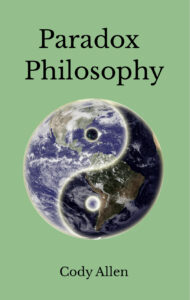 |
Paradox PhilosophyAll things are in both harmony and tension with their opposites—we often choose certainty despite our doubts, fear when there is opportunity for hope, and ourselves when we might think of others—and we should always strive to find greater balance between them. We all want to live meaningful lives, hopefully lives of moral goodness, and philosophy is the study of this venture. Paradox Philosophy is a modern, Westernized version of Yin Yang theory that delivers wisdom towards living a more virtuous life. Available at: |
Book Reviews
- The Archetypes and the Collective Unconscious by Carl Jung May 12, 2022
 Carl Jung developed his theory about human consciousness over a lifetime of psychological study and psychoanalytical practice with patients. He came to understand that human consciousness existed both consciously and unconsciously, and that the unconscious sides of human beings have a lot in common. People from different countries, cultures, and even time periods have expressed similar unconscious impulses and desires, and he reasoned that we all must have something in common, buried deep within our unconscious. He called these unconscious human similarities archetypes, which he defined as “instinctive data of the dark, primitive psyche, the real but invisible roots of consciousness.”
Some of the most common archetypes explored in his work are the persona, the shadow, the anima or animus, and the self. The persona is equivalent to the social ‘masks’ that we all wear in different social situations. We wear a different ‘mask’ when around our family members, our coworkers, or our friends. The persona allows people to adapt to the social world around them and fit in. “The shadow personifies everything that the subject refuses to acknowledge about himself,” for instance, repressed ideas, weaknesses, desires, and instincts. The same way that the persona grows out of a need to behave appropriately in different social settings, the shadow grows out of a need to adapt to different cultural norms. The shadow contains all of the things that are unacceptable to society or to one’s own personal morals and values.
The anima and animus are the latent feminine and masculine traits, respectively, which reside within the unconscious of men and women. When babies are first developing in a mother’s womb, they are a mix of both genders, until one ultimately becomes the dominant. The other gender, however, still resides within, buried inside the unconscious. A lot of Jung’s work can be observed through a similar balance of opposites. The ‘whole’ individual is a perpetual balancing and recalibrating of the conscious and the unconscious, which are often in conflict with one another. This is also the archetype known as the self. (This is similar to yin-yang theory and is analogous to the relationship between Christ and God.) The self is the present understanding of the conscious ego as it relates to the unconscious.
All of these unconscious archetypes are in a constant state of change as they fight for recognition by the conscious mind. The persona is a reflection of social situations; the shadow is that of cultural norms; the anima and animus are the balance of gender within an individual; the self is one’s conscious understanding of the sum of one’s own consciousness and unconsciousness.
While these are the most popular archetypes Jung proposed, there are many, including the father, the mother, the child, the hero, the maiden, the trickster, and more. They are usually acknowledged and expressed in dreams, when the bridge between the conscious and unconscious is most open. They sometimes also occur during intense emotional states of mind when emotions take over and the unconscious explodes outwards. “As a rule, unconscious phenomena manifest themselves in a fairly chaotic and unsystematic form,” first and foremost, in metaphors. One of Jung’s most important discoveries and modes of psychotherapy is the universally observed image of the mandala. The mandala is a metaphor for the self and can be found in pictures throughout time, from the earliest artworks of primitive peoples to the unguided drawings of Jung’s patients. A mandala “is the premonition of a centre of personality, a kind of central point within the psyche, to which everything is related, by which everything is arranged, and which is itself a source of energy.” It makes logical sense when you think about it: a mandala is a circle, and the self exists in the middle.
So, the conscious and unconscious are always in a state of flux, either in harmony or disharmony, but never static. This is important, because this fluctuation is the basis for individual growth. The more the conscious mind can accept and understand its unconscious persona, the better it can operate in social situations. The more it accepts its shadow, the better it can express itself fully in society. Similarly, the more it understands about its anima or animus, the better it can understand itself as a ‘whole’ individual. The acceptance of one’s unconscious archetypes is paramount for psychological growth. It is a process that never ends, analogous to the river of life.
- Power vs. Force by David R. Hawkins April 26, 2022
 The founder of behavioral kinesiology, Dr. John Diamond, was a very spiritual man, believing that all human wellness originated from an inner Life Energy akin to the ancient Chinese concept of Qi. He saw that all of us humans are connected via an all-encompassing metaphysical structure of humanity. A spiritual ‘whole,’ that once realized, can be truly metamorphosing. In 1957, Diamond graduated from medical school in Sydney, Australia, with a degree in psychological medicine. It was there that he developed a lot of his theories on human consciousness and connectedness. In the late 1970’s, he founded the field of behavioral kinesiology, the synthesis of his time studying psychological concepts in science and spiritual concepts in life. This connection between body and mind is the basis for Hawkins’ further exploration of these same concepts in Power vs. Force.
Our mind and body perform in tandem in all endeavors; our thoughts affect how our body operates and our body’s relationship to our mind affects it considerably as well. If we think negative thoughts, our body will ‘feel it.’ This is exemplified by the numerous studies done on the impact of stress on the body: it has been proven that mental stress can have profound and long-lasting physical health effects. Similarly, if you force yourself to smile, you will indeed feel happier. Walking into a room with your shoulders back will make you feel more confident in the presence of others. The mind and body work off of each other in both positive and negative ways.
The single practicable idea posited in this book is the ability to ‘test’ ideas as they are received by the body. The test itself is simple: one person holds their arm out straight, parallel to the ground, and a second person applies pressure to their wrist in an attempt to push the arm back down to the first person’s side. When ideas like love, compassion, reason, acceptance, willingness, and courage are held in mind, they will ‘test positive,’ and the first person’s arm will stay strong in the face of resistance. When pride, fear, anger, grief, apathy, or shame are thought of, they will ‘test negative’ and their arm will succumb to pressure and be easily pushed down. It’s that simple. It is not about physical strength, as bodybuilders and grandmothers alike are susceptible to this test; it is the body’s manifestation of ideas in its physicality. “The body can discern, to the finest degree, the difference between that which is supportive of life and that which is not.” This is also true for physical stimulants as well. Putting organic sugar under one’s tongue will test positive and the arm will remain strong, for example, whilst processed sugar will test negative and the arm will go weak.
Once we have accepted this premise, the further differences between power and force can be explored. “Power appeals to that which uplifts, dignifies, and ennobles,” Hawkins says of things that test positive. Force, on the other hand, is descriptive of conflict and condemnation. “Force always creates counterforce; its effect is to polarize rather than to unify.”
Napoleon Bonaparte, looking back over his years of conquest, is reported to have said: “Alexander, Caesar, Charlemagne and I have built great empires. But upon what did they depend? They depended on force. But centuries ago Jesus started an empire built on love, and even to this day millions will die for him.” The difference between power and force is the difference between Jesus and Napoleon. Napoleon built an ‘empire’ via force, whilst Jesus created a following based on the powerful uplifting sentiments of love and peace. Napoleon came and went in the span of decades. Jesus’ lessons have survived millennia. The same comparison can be made between Hitler and Churchill. Hitler amassed the largest military force the world had ever seen, yet was foiled by the power expressed by Winston Churchill, “who unified the will of his people through [the] principles of freedom and selfless sacrifice.”
Power and force are the two main overarching tools used by those who desire to change the world. The powerful change the world via ideas whilst the forceful change the world via violence. When the two meet, power always eventually succeeds; on a long enough timeline, the power of ideas always outlasts the force of violence. This is because power originates in the mind, whereas force can only manifest itself in the physical world. Through this lens, we can see that the pen is indeed mightier than the sword. Force creates opposition. Power creates unity. It is not a secret which is more effective, and which we should prefer.
By testing our body’s responses to different stimuli, we can gain a tremendous amount of information both individually and collectively. Holding a specific relationship in mind, for example, can produce surprising results: perhaps our significant other makes us go weak, indicating a problem. “By testing, we can prove that a false premise such as ‘the end justifies the means’ is operationally negative, yet this is a routinely accepted justification for much of human behavior.” While it is not a definitive test, it can tip us off to parts of ourselves we were unaware of. The benefit of realizing that an idea is not as foolproof as we first thought is important. This field of behavioral kinesiology is the crossroads between biology and spirituality, between mind and body, and we would be wise to tap into this knowledge.
- The Believing Brain by Michael Shermer April 11, 2022
 The human brain evolved to find patterns. We find them everywhere, from nature to nurture, from math to languages, from individual human behavior to group social dynamics. It is the reason why we say that history repeats itself and why we enjoy music so much. If you look for patterns, you will undoubtedly find them; the human brain has evolved to do so.
Our species developed this pattern-detection software as a means of survival: recognizing patterns in the jungle alerted early humans to things like predators, prey, and weather changes. Recognizing the herding patterns of buffalo or the seasonal patterns of rain were paramount to surviving in a dangerous world. “Because we must make associations in order to survive and reproduce, natural selection favored all association-making strategies,” Shermer writes, “even those that resulted in false positives.” This is important, because while not recognizing a rustle in the leaves as a poisonous snake can lead us to be bitten and killed, recognizing a rustle in the leaves as a potential danger when there is no actual danger proves no harm. Our pattern recognition software is always running, regardless of whether the patterns detected are helpful or erroneous.
In his book, Shermer defines two news vocabulary words. The first is patternicity, which he defines as “the tendency to find meaningful patterns in both meaningful and meaningless data.” Our rational brains have become exceedingly good at finding patterns everywhere, even when no real pattern actually exists Our modern world gives ample opportunity for this pattern detection system to operate. The second word that Shermer brings to his readers is agenticity, which he defines as “the tendency to infuse patterns with meaning, intention, and agency.” Again, this comes from our long evolution as a species. It is important when the sky changes color—incoming storm clouds means something. The problem we have today is when we place too much importance on our false-positive beliefs. When the leaves are rustling, and we believe there is a snake, we might take the longer path home, when in reality there is no snake and we are only making our own lives more difficult. “With this evolutionary perspective we can now understand that people believe weird things because of our evolved need to believe non weird things.”
Sadly, our human brains have only one neural network that is in charge of our beliefs, as opposed to two separate areas for belief and disbelief. This is importantly true, because if you believe that ‘torture is wrong’ and also that ‘2 plus 2 makes 4,’ these occur in the same place in the brain. This can cross our wires between ethics and science, because as far as the brain is concerned, both of these beliefs are similar. Couple this phenomenon with the philosopher Baruch Spinoza’s conjecture—that beliefs come quickly and naturally while skepticism is slow and unnatural—and we have a recipe for trouble. Our strongest held beliefs are oftentimes jumps to conclusions. “The scientific principle that a claim is untrue unless proven otherwise runs counter to our natural tendency to accept as true that which we comprehend quickly.” Science is the best tool we have devised for determining the validity of claims of belief, but it is one that we do not use ubiquitously enough. The only way we know to approach real truth is the scientific method: the experimentation of a hypothesis and the examination of the results. It doesn’t matter how strongly your belief is: if it disagrees with experiment and replicable outcomes, then it is lacking. Still, if you can come to a complete scientific agreement about a phenomenon, the sun being the center of the solar system, for example, the same part of your brain that believes this to be true also might believe that we should jail people for wearing open toed shoes in public. One human can believe both of these ideas, because they are reinforced by the same neural network.
This bring us to the ultimate thesis of this book: human beings form beliefs first, and then rationally back them up second. We are the opposite of Spock from Star Trek, a character infamous for his cold hard logical thinking. We react to situations emotionally. We use our pattern-detection software to understand the world and to subsequently make guesses about how the future will play out, and then we rationalize these thoughts post-hoc. Obviously, this is not a great system for optimizing our potential. It also explains why so many people believe such wildly different (and often completely ridiculous) things.
This further complicates society and our social interactions with one another because “our perceptions about reality are dependent on the beliefs that we hold about it.” Reality exists independent of human minds, but our understanding of it depends upon the beliefs we hold at any given time. If the wind is rustling the leaves a lot, we might believe the area is full of snakes, which could cause us to move our camp to another territory. The reality may be that our first spot was safer than our new one. If we believe that gun ownership is the reason why so many mass shootings occur, that will lead us to take different actions to curb the violence than if we believe that mental illness is the culprit. Each individual’s subjective (emotional and psychological) reasons for believing what causes mass shootings are influenced by their family, friends, and culture, and our pattern finding brains reinforce these beliefs and give them meaning. This is helpful when our patternicity and agenticity align with empirical reality (when there really is a snake in the grass), and harmful when it does not. It is also what makes democracy so difficult—everybody has their own solution to the problems we face, and we all believe ourselves to be accurate and everyone else to be wrong. Coming to a collective agreement can be exceedingly difficult.
So, how do we change our beliefs? The first step is understanding how we come to them and that they are often faulty from the start. We have to recognize the role that our rationality plays in sustaining them, especially in the face of contradictory evidence. Oftentimes this is not enough, with true change only coming from deeper social and cultural shifts in the underlying zeitgeist. These changes are a product of “larger and harder-to-define political, economic, religious, and societal changes.” Nonetheless, a little more skepticism is a healthy thing—especially skepticism of ourselves and our own beliefs. It is important to occasionally hold your beliefs up in the mirror and ask yourself: are these actually, empirically, true?
- The Ones We’ve Been Waiting For by Charlotte Alter March 28, 2022
 Political awareness is a strange occurrence in one’s life. When we’re young, we’re rightfully concerned with our immediate lives, things like school and friends and where we are right now and what we’re doing tomorrow. At a certain age, different for everybody, we come to realize that we exist within the network of the entire world, one citizen among billions, and we wonder how we fit in. “In the same way that the first few years of education determine the way children learn, the first few years of political awareness determine the way adults vote and lead.” This widening of the scope through which one views life is transformative.
Every generation creates their own culture, and this book is about the contrasts between the Baby Boomers, born between 1946 and 1964, and the Millennials, born between 1980 and 1996. The political leanings of these generations of people are markedly different. To boomers, for example, capitalism connotes “hardworking entrepreneurs hiring new workers, and big money on Wall Street if you had the right pedigree.” To millennials, it means “oil executives cutting checks to politicians to stop environmental legislation.” These different conceptions of capitalism are the direct result of growing up at different times in history.
Millennials have a much different idea of environmental disasters than boomers. In 2005, Hurricane Katrina decimated New Orleans and the surrounding areas in the American southeast, causing over 1,800 deaths and around $125 billion in damages. It was called the storm of a generation. It wasn’t. Hurricane Ike followed three years later, in 2008, and wreaked havoc on Cuba and Texas. Hurricane Sandy arrived in 2012 and became the largest Atlantic hurricane ever measured by diameter, recording $70 billion in damages while it churned up every State on the east coast including Cuba and parts of Canada. It knocked out power for a majority of New York City for days, filling entire parts of the subway system with storm water. It was the kind of storm only seen once in a generation. But again, it wasn’t. 2017 brought Hurricane Harvey to Texas and Louisiana, doing another $125 billion in damages to the area and turning the city of Houston into an uninhabitable lake for weeks. If you factor in the increasingly large forrest fires in California, the melting ice caps, and the rising global average temperature, is it any wonder that millennials are concerned with climate change?
Let’s look at another key buzzword in today’s political lexicon: socialism. To boomers, socialism means “Russian gulags or Venezuelan famine,” while to millennials, it means “Nordic-style universal health coverage and subsidized day care.” After the Second World War, when American industries were growing, it made sense to attached health care to employment. Unions were strong and the middle class was expanding. In 2018, however, “more than 40 percent of eighteen- to thirty-four-year-olds worked as freelancers.” Freelance workers must find alternative means of health coverage, and their options are either expensive private insurance or nothing. President Obama’s Affordable Care Act of 2010 did a little to alleviate this problem, offering a public option to those who were uninsured. I myself work at the Cheesecake Factory and will be losing my health insurance due to not working enough hours. Because I only work part-time, and enjoy spending my other time writing and acting, I will not have health insurance for the rest of 2022. “For almost half the largest generation of workers, the traditional work structure that had defined twentieth-century professional life just wasn’t available anymore.” Myself included.
The biggest defining moment of Millennial’s lives is the terrorist attacks of September 11th, 2001, and the ensuing ‘forever wars’ in Iraq and Afghanistan. This was the first major shock to our system, the world letting us know that it didn’t like us Americans very much. And our military overreaction showed just how insecure we are. By the time we pulled all or our troops out of Afghanistan (2021), a majority of soldiers didn’t even remember 9/11. Some hadn’t even been born yet. A majority of Millennials (and those in the succeeding Generation Z) cannot articulate an answer to the question “why do we have a military presence in the Middle East?”
“For most parents in the 1980s and ‘90s, the single biggest goal of raising their children wasn’t to get them married or get them into the family business: it was to get them into college.” While education is undoubtedly important, all of these college-degree holders are saddled with a lifetime of student debt, myself included. I graduated in 2012 with about $37,000 in federal loans, and now, ten years later, I owe over $41,000. I have no realistic hope of ever paying it off, nor do most of my fellow millennials. Because of this financial ball and chain, in addition to mountains of medical and credit card debt, millennials are less likely to get married, have kids, or buy houses. We want to, but we cannot afford it. This is the biggest hurdle for my generation to jump: income inequality. The baby boomers have been in power for so long that they have created a system of governance that keeps the money and power in their hands. This was exposed to us via the Occupy Wall Street movement of 2011. “Occupy identified a central problem (income inequality), pointed at the culprits (big corporations), and described how those culprits had controlled the political system (with campaign donations legalized through Citizens United).”
What is interesting about the millennial generation of lawmakers coming up through the ranks is the blossoming similarities between Republicans and Democrats. Young conservatives don’t “see why the government should have a role in deciding who could get married or who could smoke weed.” They have a more libertarian streak, and are choosing to stand their ground on different issues (like abortion). Another similarity is the understanding and use of the internet and social media. It has become alarmingly true that members of Congress do not understand how Facebook works and that they are “too old to provide effective leadership in twenty-first century America.” Social media is directly responsible for the current state of politics in the United States. Alexandria Ocasio-Cortez and Dan Crenshaw, two of the most prominent millennial politicians, are experts at harnessing the power of social media. Even Donald Trump, despite his status as a boomer (he was born in 1946) excelled because of his use of platforms like Twitter and Facebook. Studies have found that “roughly three-quarters of Americans under twenty-five used the internet to participate in the 2008 campaign.” This makes sense, if you consider the fact that Facebook was launched in 2004, YouTube in 2005, Twitter in 2006, and the iPhone in 2007. “If Kennedy won the 1960 election because of television, Obama won in 2008 because of the internet.” The internet and social media have changed our cultural and political landscape forever.
Baby boomers only have a few more years with which they can cling to the echelons of power. Eventually, time will pass, and millennials will inevitably assume control. We will have to deal with income inequality, a changing climate, and other global powers who do not see America as a realistic threat. With social media as our weapon of choice, young people are poised to take over and lead, something they have always done and will always do. Thomas Jefferson, after all, wrote the Declaration of Independence at the age of thirty-three.
- Ego and Archetype by Edward Edinger March 14, 2022
 When we are born, the ego and the Self are one and the same. The Self is the “unifying center of the total psyche” comprised of both the conscious and the unconscious. Then, via the growth process of an individual’s responses to life’s events, the Self and the ego differentiate from one another and the ego becomes a separate entity—the center of the conscious personality. It becomes the filter through which we interpret the world around us and is responsible for how we let those interpretations shape our personalities. This process is how an individual is formed and is called individuation. “The individuation urge promotes a state in which the ego is related to the Self without being identified with it.” This is what happens when expectations meet reality and the differences must be internally settled.
The balance between the Self and the ego can be either fragile or robust at different times in life, but it must always be maintained. If they get too far out of sync with each other, psychological damage can ensue. Sometimes, our expectations and our reality match up too well, and ego inflation occurs. This is when we think too much of ourselves and feel superior to others. Our modern way of thinking associates an inflated ego with a narcissistic personality—the ego puts itself on a pedestal. Alienation, on the other hand, occurs when our expectations and our reality do not overlap enough and the ego and the Self cannot recognize each other. This is a dangerous area, because “whenever one experiences an unbearable alienation and despair it is followed by violence.” This violence can be either internal or external, and is something we are seeing a lot in our current society. This is because one of the biggest causes of alienation today is the widespread sense that life is meaningless. When we are young, we have daydreams about how our lives will play out and the impact we will have on the world. If those fantasies are not realized, or other dreams supplemented in their stead, meaninglessness can prevail. Meaninglessness leads to violence.
In his book, Edinger posits that the encounter with the Self is equivalent to the discovery of God. For those who don’t believe in God in an external way, the Self is an internal analogous being. Many stories in the Bible are exemplary of this, that the underlying meaning of Christianity is the quest for individuation. “The image of Christ,” Edinger writers, “gives us a vivid picture of the Self-oriented ego, i.e., the individuated ego which is conscious of being directed by the Self.” When our ego is inflated, we think and act in ways that make us feel superior to others, in a godlike manner. When we are alienated, we feel as though God has left us, and violence can occur. It is therefore necessary for the health of the individual to have a harmonious relationship to God, whether they perceive God to exist in the heavens above, or in the Self within.
All humans exist on both an individual level and a collective level, and while it is important to connect with yourself, it is equally as important to connect with others. “At the center of the experience of individuality is the realization that all other individuals share the same experience as ourselves of living in a single, sealed world, and that this realization connects us meaningfully with all other units of life.” While not everybody believes in an external God, we all possess a Self, and the realization that the Self is universal is paramount for connecting us to one another. Sadly, since the modern decline of religion and spirituality, we as a collective have become more and more alienated from one another. “The various pressures of Western society all subtly urge the individual to seek life meaning in externals and in objectivity,” not in any subjective understanding of either the Self or of God.
This is all another way of saying that as a collective, we do not have a healthy relationship between the Self and the ego. Some of us are deeply inflated, seeing everything we want reflected back at us in a social media driven materialistic world. Some of us are equally alienated, looking around at all the fancy things and thinking ‘is this really meaningful?’ It seems as though the chasm is only growing larger, as our society today does not seem to have a collective feeling of equilibrium or togetherness.
It is paramount for both the individual and the collective to keep the Self-ego axis in a healthy balance. This axis is also the bridge between the two. Let us never stop the maintenance.