




I’m a writer and author with a passion for exploring ideas.
Since 2020, I’ve published monthly book reviews as a way to reflect on what I’ve read. I do my best to challenge my own thinking and remember the lessons worth keeping. Here you’ll find my books, my reviews, and my reflections on the ideas that have shaped my perspective along the way.
My Book
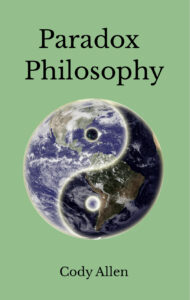 |
Paradox PhilosophyAll things are in both harmony and tension with their opposites—we often choose certainty despite our doubts, fear when there is opportunity for hope, and ourselves when we might think of others—and we should always strive to find greater balance between them. We all want to live meaningful lives, hopefully lives of moral goodness, and philosophy is the study of this venture. Paradox Philosophy is a modern, Westernized version of Yin Yang theory that delivers wisdom towards living a more virtuous life. Available at: |
Book Reviews
- Brave New World by Aldous Huxley October 20, 2021
 This prophetic novel was published in 1932, depicting a world where one central government has scientifically and psychologically taken over the means of production of the human race. People are grown on assembly lines—some purposefully under-grown so as to serve as the working class. Those who are Alphas have everything they want. Everybody is happy.
Truth, science, and reason have all been scarified at the alter of happiness. The mass of regular citizens are all content in their jobs because they don’t and can’t imagine anything else. When they finish their work shift they are rewarded with a ration of soma, which is a soothing happiness-producing drug. Meanwhile the entirety of the elite class is sexually open to any and all partners, has access to a wide variety of games and stimulating pleasurable activities, and are hopped up on soma too. Everything runs smoothly, because everyone is happy.
One day, our perfect world welcomes a stranger, a young man from an old Indian reservation that had remained independent of modern culture throughout the centuries. His arrival was a spectacle, and while at first he desired assimilation, his feelings quickly reversed. He did not understand why nobody had a mother, why nobody had a father, why nobody had a family at all. He didn’t understand the desire for soma and the appeal of mental vacations from the real world. He was heartbroken to see that nobody loved anymore, because love that was lost could potentially cause painful emotions. Everybody was living in a state of perpetual bliss due in large part to their ignorance of the wonderful depth of human feeling. He hated this world without books or religions or differing thought. It was numb.
In George Orwell’s 1984, the government controls the populace through fear and force. Conversely, in Aldous Huxley’s Brave New World, the government has satiated everyone with endless amusement and distraction. Both men foresaw the future as a world dominated by tyrannical governments; Orwell envisioned one created via violence and punishment, whereas Huxley’s was brought into existence by positive reenforcement and non-violent manipulation. While Huxley set his dystopian society 700 years in the future, it is amazing how many of his ideas have become true or partially true within the first century after its original publication. How many of us today are politically mute in favor of reality television and drug use? It has become excessively easy to choose the comforts of cheap perennial entertainment and contrived happiness over the pursuits of truth and knowledge.
The message between the lines is clear: we should all be wary of a system designed to desensitize us as individuals and distract us with shiny objects. The more we give in to the desire for creature comforts, the less fight we reserve for opposing tyrannical ideas and people. Everybody needs occasional leisure time, but do not let that become the norm. Comfort should be respected and not expected, because if we’re not careful, one day humanity will wake up and find itself devoid of all freedoms. If that day should ever dawn, we will most likely only have ourselves to blame.
- Thinking in Systems by Donella H. Meadows October 6, 2021
 Thinking in systems is analogous to ‘zooming out’ and looking at something from a broader perspective. Whether you are examining the functions of a social body, a corporate body, a governmental body, or a human body, the processes are generally the same. Each system has an intended goal (strengthening community bonds, monetary growth, keeping the body alive) and it has different processes for how it achieves this goal.
All systems have a ‘stock’ which is the foundation of what the system uses to achieve its goal. Stocks are things like “the water in a bathtub, a population, the books in a bookstore, the wood in a tree, the money in a bank, your own self-confidence,” which are subject to the flows of the system. “Flows are filling and draining, births and deaths, purchases and sales, growth and decay, deposits and withdrawals, successes and failures.” Stock is what you have at any one moment in time and the flow is how it changes.
Let’s take the human body as an example. The body’s stock is comprised of its organs, bones, muscles, tissues, and all the things on the inside that keep it running. The body’s flow is the intake of food and water, which the system translates into energy, and the output of this energy as human waste. The goal of this system is to keep the body alive.
When systems get tricky is when the reported goal of a system is different from the results it tangibly achieves. For example, what is the ostensible goal of a business? Most business owners would tell you their goal is to deliver customer satisfaction in the form of whatever it is they make and sell, whether it be haircuts or hot meals. This is true for local businesses, but larger businesses are more honest when they admit their company goal is to make a profit. In reality, the true goal of most businesses in a capitalistic system is “to grow, to increase market share, [and] to bring the world (customers, suppliers, regulators) more and more under the control of the corporation.” Ask yourself this: Does McDonald’s pride itself more on its delicious hamburgers or its worldwide recognition?
A system that I have been considering lately is our doctoral system here in the United States. Many doctors work 70-80 hour weeks with overnight hours which means a rotating sleep schedule and off-beat eating habits. The fastest you can reasonably become a doctor is after passing 4 years of undergraduate school, 4 years of medical school, and then completing a 5 year residency. If you graduate high school at age 18, you are finishing your residency at age 31 (probably with hundreds of thousands of dollars of student loans). These are tough conditions and high standards. Our society’s system for training and managing doctors has developed alongside the growth of society for hundreds of years, which means that all of these mechanisms were developed for good purposes. For one thing, there is simply so much more that we know about medicine and the human body that must be learned. It still remains that a major symptom of this system is overtired doctors and we need to adjust the flow and help them out. Alternatively, consider the system surrounding the careers of professors. Tenure was implemented in order to gives teachers academic freedom, which is a good thing. One of its symptoms, however, is that the process of achieving tenure has become ultra competitive.
What happens when a country’s goals are poorly defined? Here in the United States, and in many western countries, we measure our economic goals by our level of GNP (gross national product), which is the value of the final goods and services produced by the economy. This number, however, says nothing about our health, happiness, beauty, strength, intelligence or integrity. Our GNP rises if there are more car accidents and medical bills. Defining business and economics in this way has cost humanity in many major ways including environmental degradation, monopolization of markets by huge corporations, and the suction of wealth from the lower classes to the higher.
All of this analysis leads us to the inevitable question: how do we change a system? The first thing to define is which system we wish to investigate and alter. This is important because there are no separate systems. The world is a continuum. “Where to draw a boundary around a system depends on the purpose of the discussion—the questions we want to ask.” If your house is too cold, then you must examine the insulation and the thermostat. If your body is sick, you must examine the fuel you are putting into it and the people you allow around it. If your country is broken, that too must be examined. Is it the social system, the environmental system, or the governmental system? Is it the financial system, the educational system, or the welfare system? The reality, of course, is that problems lie within each of these systems independently and also as a whole. There are no easy answers here, the difficultly lying in the fact that the farther one zooms out, the more overlapped all of these systems become. To change one requires the agreement and movement of masses of people in one unified direction. But what if fixing one environmental problem causes a cultural one? Or vice versa? The complexities are never-ending.
If you zoom all the way out, you can see that all of us are connected across time and space. “Actions taken now [will] have some immediate effects and some that radiate out for decades to come. We experience now the consequences of actions set in motion yesterday and decades ago and centuries ago.” Many of the systems we inhabit today are like rivers that we were thrown mercilessly into. They were already running, predetermined by forces and people who came long before us, and while it is our job to stay afloat while we are on the water, and to improve upon them as best we can, they will continue to run long after we are gone.
- Enlightenment Now by Steven Pinker September 26, 2021
 Life is better today than it has ever been before and Steven Pinker has the data to show us how and why. He posits that reason, science, and humanism (all Enlightenment values) are foundational to the progress that humankind has made and why we experience the relative luxuries that we do today. The average human alive today can expect to live well into their 70s or 80s (depending on what country they’re in), when just a century ago the global average life expectancy was around 33. That statistic alone is proof that we are doing something right.
Pinker examines his research through the lens of the Second Law of Thermodynamics, which states that in an isolated system entropy never decreases. In physics, entropy is the loss of energy available to do work, and because the total amount of energy in a system is constant (the First Law of Thermodynamics) it can never decrease. So, if you have an isolated system unencumbered by outside forces, that system will “become less structured, less organized, less able to accomplish interesting and useful outcomes” as it continues to exist and transfer energy back and forth. Basically, the flow of energy will always work against us if we let it. For example, a cup of coffee will cool down as its heat leaves and it approaches the temperature of the room it is in. The fast-moving molecules in the hot coffee want to find equilibrium with the slower-moving cooler molecules of the room (pretending, for the sake of this example, that this room is a closed system). While this law was originally codified in the name of physics, it has a socially-ordered application as well. We humans have directed enormous amounts of energy towards bettering our collective existence, and if we stop, entropy will take the reins. “Life and happiness depend on an infinitesimal silver of orderly arrangements of matter amid the astronomical number of possibilities” Pinker writes, and continues: “far more of the arrangements of matter found on Earth are of no worldly use to us, so when things change without a human agent directing the change, they are likely to change for the worse.” To use our hot beverage example as a metaphor, the societies that humankind have developed over time are like a hot cup of coffee (in the form of peace and prosperity), and we must continually keep them warm through applications of reason, science, and humanism, for if we ever stop applying progressive energy and let it cool, the worse off humanity would objectively become (and things like tyranny and violence would reemerge en mass again).
Through this lens of the Second Law of Thermodynamics, Pinker shows (with literal graphs) the many ways in which we Homo Sapiens have improved over the course of our existence. For one example, “in [the past] two hundred years the rate of extreme poverty in the world has tanked from 90 percent to 10, with almost half that decline occurring in the last thirty-five years.” Life today is healthier, wealthier, more equal, more peaceful, safer, more democratic, smarter, happier, and longer lasting than at any point in our history. “An American in 2015, compared with his or her counterpart a half-century earlier, will live nine years longer, have had three more years of education, earn an additional $33,000 a year per family member (only a third of which, rather than half, will go to necessities), and have an additional eight hours a week of leisure.” Reason has shown that people of different cultural and spiritual beliefs can coexist in harmonious communities. Humanism has led societies to provide children with education and play as opposed to hard work and toil. Science has given us the ability to pull nitrogen out of the air and turn it into fertilizer on an industrial scale, enabling us to enrich depleted soil and feed billions.
With these statistical truths in mind, an important question that needs addressing is why we don’t feel better about it? Where are the news stories talking about the amazing acts of progress being made individually and collectively by different members of our global community? Pinker takes a shot at this answer as well. One explanation is what psychologists call the Availability Heuristic, which states that “people estimate the probability of an event or the frequency of a kind of thing by the ease with which instances come to mind.” This explains why people can conjure up many examples of mass shootings, but not mass births of healthy babies born to healthy mothers. All of this leads to a second explanation: The news is overwhelmingly negative. While the goal of a news company is ostensibly to report the news, they cannot do this without an audience. And what is the best way to hold an audience’s attention? Stories of fear or destruction. Negative news trumps positive news by a wide margin. (Fun Fact: In the English language, there are around three-times as many words for negative emotions than positive ones.) With this in mind, it’s no wonder that regardless of progression in any field through any lens, we all still feel the presence of the negative areas of our lives. The daily news cycle keeps it fresh in our minds. We feel the burden of unhappy relationships, financial debt, and looming terrorism without appreciating that we have the opportunity to pursue fulfilling relationships in the first place, or that we have some money and the relative freedom to choose what we do with it, or that ‘terrorism’ has killed less people in the twenty years since September 11th, 2001, than died on that actual day. Once upon a time marriages were arranged, money couldn’t change anything in your life (if you were fortunate enough to even have any), and war was the norm. Instead of allowing cultural and political pundits to frame life today for us, Pinker believes we should let data lead the way, reasoning that a quantitative approach “is in fact the morally enlightened one, because it treats every human life as having equal value rather than privileging the people who are closest to us or most photogenic.” With this sentiment, I fervently agree.
According to the Second Law of Thermodynamics, and through millennia of repeated applications of ever-progressing reason, science, and humanism, we humans have built a peaceful world out of a violent one. We have sewn safety with needles of chaos. We have grown democracies from the ashes of fascism. Against impossible odds, we have kept our cup of coffee warm, but looming threats like global warming and political tribalism require that we continue working together towards keeping social entropy at bay. What we have is precious, and we should be both grateful to those who came before us and disciplined enough ourselves to continue keeping our coffee warm. The moment we take our foot off the progress gas pedal, entropy will begin the process of slowing down and reverting us back to a state of chaos and poverty—what life was like before the Enlightenment.
- The Autobiography of Benjamin Franklin September 16, 2021
 Benjamin Franklin is undoubtedly one of the most remarkable men to have graced the United States with his intellect, living in Philadelphia from age 17 until he died at the age of 84. He was instrumental in founding the first library in the States (initiating the founding of many more across the colonies), the first public hospital, and the University of Philadelphia, all of which still stand today. He rightfully earned the accolade of most prestigious printer in Philadelphia by his early 20’s and only increased his notoriety from there. He is one of the founding fathers of the United States and was instrumental in bringing together the statesmen of the disparate colonies to agree to the laws of the Constitution, being the only man to have personally signed the Declaration of Independence, the Constitution of the United States, and the Treaty of Paris.
While I could list more facts about him, (he invented bifocal glasses, for example, and also designed an experiment enabling the harnessing of electricity from lightning—an exercise generating intense excitement across Western Europe and being dubbed The Philadelphia Experiment) his true genius can be found in his character. “I grew convinc’d that truth, sincerity, and integrity in dealings between man and man were of the utmost importance to the felicity of life;” he wrote, “and I form’d written resolutions, which still remain in my journal book, to practice them ever while I lived.” (Italics his.)
From a young age, Franklin was obsessed with the prospect of living a virtuous life. He toiled long hours at crafting his personal character the same way a farmer in his day might toil from dawn to dusk out in his fields. Franklin’s fields were his books and his study of morals, languages, history, politics, and anything else he deemed important to living a morally good life. He kept a physical notebook of his 13 virtues (temperance, order, and sincerity, to name a few) and would actively mark down in the pages when he found himself faulting in one area or another. His determination to live in a positively virtuous manner was, to me, obsessive.
My biggest take away from reading his autobiography was his determination to bring a healthy amount of skepticism with him into any discourse. He abhorred conviction of opinion, and actively avoided using terms like “certainty, undoubtedly, or any others that give the air of positiveness to an opinion.” He would instead say, “I conceive or apprehend a thing to be so and so; it appears to me, or I should think it so or so, for such and such reasons; or I imagine it to be so; or it is so, if I am not mistaken.” (Italics his.) He learned early on that certainty in the promotion of ideas was the surest way to create opposition to those ideas. Cultivating this understanding throughout a lifetime of politics and civil work led him to be an ideal candidate in helping bring together the disputing colonial representatives and forge the Constitution of the United States. (Fun Fact: While the Declaration of Independence was signed on July 4th 1776, Franklin had first written and proposed a plan for the colonies to unite back in 1754 at the onset of the French and Indian War. Despite this first treaty landing on deaf ears, it shows that he had the idea for unification over twenty years before its fruition.)
We can all learn from the examples that Benjamin Franklin’s life offers. Do we need to forgo all leisure time actives in preference for absolute virtuosity? No. But in a day in age where distractions abound and vice is a click away, the pursuit of a good moral life is more important than ever. Do we need to hone our rhetoric to the point of perfection? Again, no. But again, in an era overburdened with ideas, both good and bad, skepticism in the face of certainty is paramount. His life is the foremost example of always doing your best, always being your best, and always keeping an open mind.
- The Lexus and the Olive Tree by Thomas Friedman September 6, 2021
 Society is now global. I have money invested in the Australian Securities Exchange, I watch soccer live-streamed from Europe, and I buy my sneakers direct from China.
Ever since the end of the Cold War (and the fall of the Berlin Wall in 1989) a new era of globalization has been brought upon us, riding into the arena on the horses of free market capitalism, global technological connectedness, and democratization. When the world was dominated by the two superpowers, the United States and the Soviet Union, it was a world defined by walls and missiles. But, since the fall of the Soviet Union (and also Maoist China), “when it comes to the question of which system today is the most effective at generating rising standards of living, the historical debate is over,” Friedman writes: “The answer is free-market capitalism.”
Basically, America won the Cold War, their main weapon being superior ideas. Communism failed because it is a top down system where those at the top dictate the shape and function of society for everyone else at the bottom. Capitalism succeeded because it empowers the individuals at the bottom to determine their own path in life, allowing people to choose “what to eat, what to wear, where to live, where to travel, how to work, what to read, what to write and what to learn.” While capitalism does have its drawbacks, it is an inherently democratic system that the United States has made its main export, in addition to its cuisine, fashion, music, movies, assorted cultural ideas (freedom of speech, for example) and more around the globe. Today, there is a McDonald’s in nearly every country on the planet.
The new system we inhabit today is defined by connectedness. The internet gives anyone and everyone with a modem the ability to connect to anyone and everyone else. When you open a business that has a website, “wherever you are in the world, you will have to think globally—in terms of both who you competitors might be and who your costumers might be.” A daunting thought indeed, but a task with tremendous upside if the positives can be harnessed and exploited. Coupled with this, options for investment are also global. The global financial market is driven by what Friedman calls the ‘Electronic Herd.’ This herd consists of anybody with an internet connection, whether they be individuals, corporations, or nation-states, and their desire to invest their money in other individuals, corporations, or nation-states. Being able to send money all around the world from a computer anywhere else in the world is so novel that most people don’t even know they can invest in Mongolian cashmere if they want to. (Fun fact: it is estimated that over 90% of the money in the world is non-physical, meaning that it exists as numbers on a computer.) This book was first published in 1999, but there is a very prophetic paragraph in Friedman’s conclusion where he predicted that “Global financial crises will be the norm in this coming era. With the speed of change going on today, and with so many countries in different stages of adjustment to this new globalization system, crisis will be endemic.” It took the United States over 200 years, with many faults and failures along the way, to figure out the best systems of operation for a capitalistic economy (and there are still many flaws). Now, we are prodding the rest of the world to catch up, and to do so in a fraction of the time. Expecting a formerly communist nation to put on a capitalistic hat without time to develop social safety nets and a Securities and Exchange Commission and to jump head first into the global market is downright crazy. The ride will inevitably be bumpy for some and downright catastrophic for others.
As the walls have come crumbling down, both literally and figuratively, the world has been forced to ‘open up’ and either embrace the free market and democratization or be left in the dust. The sad reality is that those who resist are dragged along anyways (think poor countries in Africa or culturally different places in the Middle East.) “We have moved from a world where the big eat the small to a world where the fast eat the slow,” remarked Klaus Schwab, Executive Chairman of the World Economic Forum, and he is right. Apple coming out with a new iPhone every year is a great micro-example. But while those of us in the first world have either grown up in it or are easily adaptable, the rest of the world is not. One of the biggest differences between the ‘West’ and the ‘East’ is that in the West, we value individualism as our highest ideal. Older cultures, such as those in China, Japan, and most Middle Eastern countries value the community and what is best for the group over the necessities of the individual. You can see how it would be harder for someone in Cairo to adopt a capitalistic and democratic way of thinking, verses someone from Canada or Germany. It requires the citizen from Cairo to adopt an entirely different culture, one that is being forced upon them. But adapt they must, or they will be left behind in the dirt while the rest of the world enriches itself.
This book is called the Lexus and the Olive tree because those two things are metaphorical representations of the divide between the globalized industrial economic future (the Lexus) and the rooted traditions of community and culture (the olive tree.) “The challenges in this era of globalization—for countries and individuals—is to find a healthy balance between preserving a sense of identity, home and community and doing what it takes to survive within the globalization system.” Being able to enjoy aspects of other cultures, ie. going to a McDonald’s in Tokyo or ordering curry in London, is a wonderful delight for many people to be able to experience without having to buy a plane ticket to the United States or India. Where the balance tips too far to one side, however, is when a culture eradicates another, as American culture has done many times over throughout the world. Part of the reason for the rise in terrorist attacks throughout the western world in the past two decades is due to the backlash against our exported ideas and customs, which some people in other cultures find destructive to their own. In his book, Friedman states that the onus is on us, and he is right. We, the United States, introduced this system to the world, and it us our job to help everyone adjust to it as best we can. Yes, we here in the United States are quite literally the leaders of the free world, but freedom comes with tremendous responsibility and we must not shy away from the task. The fate of the world rests in our hands.