




I’m a writer and author with a passion for exploring ideas.
Since 2020, I’ve published monthly book reviews as a way to reflect on what I’ve read. I do my best to challenge my own thinking and remember the lessons worth keeping. Here you’ll find my books, my reviews, and my reflections on the ideas that have shaped my perspective along the way.
My Book
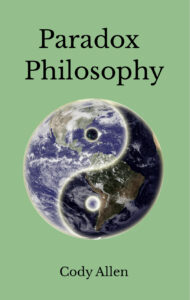 |
Paradox PhilosophyAll things are in both harmony and tension with their opposites—we often choose certainty despite our doubts, fear when there is opportunity for hope, and ourselves when we might think of others—and we should always strive to find greater balance between them. We all want to live meaningful lives, hopefully lives of moral goodness, and philosophy is the study of this venture. Paradox Philosophy is a modern, Westernized version of Yin Yang theory that delivers wisdom towards living a more virtuous life. Available at: |
Book Reviews
- Supercommunicators by Charles Duhigg December 4, 2024
 Existing in a society requires communication—it’s how we get anything and everything done. Why is it, then, that some people are better than others at this essential task? The reasons are myriad, but in his book, Duhigg brings some fundamental components to light.
The first task is figure out what kind of conversation we are having, and Duhigg illuminates three different categories of discussion: “What’s this really about?,” “How do we feel?,” and “Who are we?” To put them simply, are we having a rational conversation, an emotional conversation, or a conversation about identity? Miscommunication often occurs when we are having different conversations, like when a friend reports a bad day and we offer practical solutions when all she really wanted was to vent. “If you are speaking emotionally, while I’m talking practically, we are, in essence, using different cognitive languages.” So, sometimes figuring out what kind of conversation we want to have at the outset can put both parties on the same page and avoid what could have been a frustrating experience. As a general rule, if we are having a “What’s this about?” conversation, we want to lean into data and reasoning, if we are having a “How do we feel?” conversation, we want to lean into stories and compassion, and if we are having a “Who are we?” conversation, we want to be mindful of the different identity groups those we are talking with might belong to.
Communication is much more than just the words we say aloud, it’s also our vocal tonality and our body language. Are we whispering or shouting, speaking quickly or in a slow drawl? Are our arms and legs folded and tense, or are we open and relaxed? The nature of our vocal delivery and our bodies can communicate tremendous information. This is where supercommunicators—or high centrality participants as Duhigg labels them in his book—can outperform the norm. “High centrality participants were constantly adjusting how they communicated,” he writes. “They subtly reflected shifts in other people’s moods and attitudes. When someone got serious, they matched that seriousness. When a discussion went light, they were the first to play along. They changed their minds frequently and let themselves by swayed by their groupmates.” The key word here is matching. When the energy in a conversation goes up, so does theirs; when it dips, theirs does as well. They are also able to shift between rational, emotional, and identity conversationa seamlessly on the fly. They match whatever their conversation partner(s) are emitting.
Another important aspect of these high centrality participant’s conversational prowess is their curiosity. In his research, Duhigg discovered that “high centrality participants tended to ask ten to twenty times as many questions as other participants.” They were also much more likely to repeat others’ ideas and admit their own confusion, seeking a deeper level of understanding and remaining open minded. They encouraged their groupmates and laughed at others’ jokes. “They didn’t stand out as particularly talkative or clever, but when they spoke, everyone listened closely.”
We may not be supercommunicators, but matching conversational energy and asking questions (and, of course, listening to the answers) can greatly improve our ability to connect. And connection is what makes being human worth it. The final chapter of the book focuses on why communicating effectively is important, and the answer is that it fosters close relationships. Duhigg quotes a longitudinal study of happiness when he reports that “the most important variable in determining whether someone ended up happy and healthy, or miserable and sick, was how satisfied they were in their relationships. The people who were the most satisfied in their relationships at age 50 were the healthiest (mentally and physically) at age 80.” The evidence is clear: Happiness is derived from our connection to others, and our ability to communicate is what makes or breaks these connections. Therefore, we should all want to be the best communicators we can be, and this book outlines the strategies.
- End the Fed by Ron Paul November 13, 2024
 “Follow the money,” says the snitch to the protagonist, just before they are taken away to jail. How many times have we heard a similar line like this in the movies and watched a similar scene unfold? Countless times, of course, because it is a well-known maxim in today’s culture: Money is the base of power for the powerful.
Therefore, it makes sense that when analyzing the roots of power of the government of the United States of America, we should similarly follow the money. Ostensibly, the government collects money in the form of taxes from its citizens, and uses that money to carry out the desires of those same citizens. What does the government do when it has more expenditures than income? It borrows money from the bank, the same as you or I.
Banking in America (and the western world in general) has been following foolish practices for decades. A bank has two main functions: 1) to store our money safely and allow us access to it when we want/need it, and 2) to loan it out (to commercial ventures or for real estate investments, for example) in the hopes of making a profitable return. Foolishly, banks have combined these two services in a practice called ‘fractional reserve banking,’ where money that was earmarked for storage becomes the money used for lending. That newly loaned money is deposited yet again, which is then loaned out again and deposited again, “with each depositor treating the loan money as an asset on the books.” In this way, banks create new money, pyramiding new deposits on top of a fraction of old deposits. The amount of money in a bank at any given time is only a fraction of the amount they have recorded in their books.
We like to think that we have access to our money whenever we want it, but we do not. If enough people try to withdraw their money at the same time, and the bank cannot provide them all with the funds, it can simply shut its doors and refuse to pay. To avoid this, and in order to keep the banking system functioning, The Federal Reserve has agreed to back up the fractional-reserve system with a promise of bailouts and money creation. Basically, if the money is ever not there (for banks that are correctly allied), the Fed will print it out of thin air. This is where the core of the problem exists: the Fed’s ability to print money.
The biggest borrower of money is the federal government, and we have reached a point in history where our expenditures far outweigh our income. The solution has been to print the difference, a practice called deficit financing. Over time, the government has become fully backed by the Fed and its infinite money printing machine, and this is how we have become trillions of dollars in debt. “It is no coincidence that the century of total war coincided with the century of central banking,” Paul writes. “Imagine an irresponsible teenager with an unlimited line of credit. The parents, teachers, pastors, and authorities in his life are ultimately powerless to change his habits. Now imagine that teenager armed to the teeth and also immune even from the rule of law. This is what we have with a government backed by a central bank.”
The gold standard (that America abandoned in 1971) worked like a regulator. Before they were guaranteed a bailout (and, in effect, immunity from poor investment decisions), banks had to function like every other business: they could expand and make risky loans if they desired, but when faced with bankruptcy, they had nowhere to turn. They would have to contract loans and deal with extreme financial pressures. “Risk bearing is a wonderful mechanism for regulating human decision making.” Adherence to the gold standard created a culture of banking and lending discipline. Once we moved away from commodity money to fiat currency, our money has been inflating.
In addition to the century of foreign wars enveloping the world since the creation of the Fed in 1913, we have seen a colossal growth of the government in general. We must remember that there is always a trade-off, and that when government grows, liberty suffers. Democracy requires a balance in power between the people and their government, but the bigger the government grows, the more power it gobbles up for itself, and the more it becomes tyrannical. This happens no matter what justification is given for the government programs being financed; it is brought upon its citizens via its growth. And, of course, it cannot grow without being financed.
The logical conclusion to our search for the collective problems of America, then, is The Federal Reserve. Money is power, and when a government is able to produce its own money, it is able to produce its own power. This is what we are seeing with the inflation of the money supply today: The elite members of society are getting richer while the purchasing power of everyone else’s dollar declines. Economist John Maynard Keynes (before he changed his tune and became a champion of inflation) wrote quite correctly of the grave danger of inflation in his book The Economic Consequences of the Peace: “Lenin is said to have declared that the best way to destroy the capitalist system was to debauch the currency. By a continuing process of inflation, governments can confiscate, secretly and unobserved, an important part of the wealth of their citizens. There is no subtler, no surer means of overturning the existing basis of society than to debauch the currency. The process engages all the hidden forces of economic law on the side of destruction, and does it in a manner which not one man in a million is able to diagnose.”
The Federal Reserve has been around for so long and has become such a fundamental tool of government use that we take its existence as mandatory. This does not have to continue, however. What would happen, as our author hopes, if we were to abolish it? The people would “enjoy all the privileges of modern economic life without the downside of business cycles, bubbles, inflation, unsustainable trade imbalances, and the explosive growth of government that the Fed has fostered.” We would also be able to disempower the secretive cartel of powerful money managers who exercise disproportionate influence over the conduct of public policy. In essence, it would hobble the ability of the government (the largest and most powerful government humanity has ever known) to do whatever it wants. If we the people ever want to hold our government accountable, we must follow one single, simple piece of advice: follow the money.
- Atlas of the Heart by Brené Brown October 2, 2024
 This book might best be described as ‘The Encyclopedia of Emotions.’ It covers (pretty much) all the emotions we might feel in our lives, including the ones that make us feel good, like joy and wonder, and the ones that make us feel bad, like shame and envy. We are all human, and therefore susceptible to feeling any and all emotions on a daily basis, and it is therefore paramount for our personal growth to understand our feelings.
What is the purpose of Brown’s toil in these expansive emotional fields? The desire to help people better connect with one another. (After all, what is life without other people to experience it with?) She defines connection as “the energy that exists between people when they feel seen, heard, and valued, when they can give and receive without judgment, and when they derive sustenance and strength from the relationship.” We are all emotional creatures, and being able to communicate our thoughts and feelings to one another is what strengthens our social bonds.
Brown helps us achieve emotional understanding via her focus on language. “Language does more than just communicate emotion, it can actually shape what we’re feeling,” she writes. “When we don’t understand how our emotions shape our thoughts and decisions, we become disembodied from our own experiences and disconnected from each other.” Our thoughts, feelings, and behaviors all work together, and a large part of their connection is our own understanding of their relationship inside of us. This understanding hinges on our ability to properly label our emotions—the central theme of Brown’s work.
Developing this social communication starts with our own self-communication because if I don’t know and understand who I am and what I need, want, and believe, I can’t share myself with you. “I need to be connected to myself, in my own body, and learning what makes me work” in order to develop the grounded confidence I need to move through the world and cultivate meaningful connections with others. This is one of the oldest philosophical maxims—the words “Know Thyself” having been found inscribed upon the Temple of Apollo in the Ancient Greek precinct of Delphi.
In this emotional encyclopedia, I found some definitions for emotions surprising and thought-provoking. For example, Brown describes shame as the birthplace of perfectionism. Healthy striving is internally driven, she correctly observes, meanwhile perfectionism is “externally driven by a simple but potentially all-consuming question: What will people think?” For another example, she defines narcissism as “the shame-based fear of being ordinary.” This really gave me much to think about: When we fear that society will judge us improperly (or negatively), we might attempt to control the narrative ourselves, which can often lead to narcissistic behavior. Fear and shame dictate many of our behaviors, a sentiment I plan to try and observe within myself going forward.
With over eighty different emotions defined and discussed in this tome, it is designed to be revisited whenever we need a refresher. This book can help us put words to feelings, aiding us in understanding both ourselves and others. As it says on the cover, Brown’s work is designed to help us understand the language of human experience and use these tools to further develop meaningful connections. It is a wonderful guide to the emotional world and an excellent almanac for increasing our emotional intelligence.
- Clear Thinking by Shane Parrish September 11, 2024
 Whether or not we are consciously aware of it, most of us go through our daily lives functioning on autopilot. We have our habits and our ways of doing things, and for our day-to-day tasks, they work. Consistently making our decisions this way, however, actually moves us farther away from the success we seek. In his book, Parrish suggests that we should be making our decisions—the important ones—with rationality and purpose. This makes obvious sense, and so the question becomes how do we go about doing this?
The first thing we must understand about ourselves is that our human brains are emotional (and reactionary) first and foremost, which is our ingrained, evolutionary behavior. Our rationality and analytical thinking comes into play second. Knowing this, it is important not to make decisions with our emotional and reactive selves. Are we tired? Hungry? Angry? If so, we should probably wait to make that important choice. We need to hone the skill of recognizing when we are emotional and allowing ourselves to take the time necessary to come back to equilibrium. Only once we have had time to calmly and coolly assess the situation and circumstances can we make the best decision.
Another major aspect of decision making is diagnosing the correct problem before we begin to solve it. Trying to increase sales when customers are complaining about poor product design, for example, or changing a baby’s diaper when they actually want to be fed will get us nowhere. This is a problem that we often see in group settings, when coworkers assemble for a meeting and immediately start pitching ideas before anyone has had a chance to agree on what the problem actually is. Parrish even suggests that breaking a meeting up into two parts can be helpful, with the first one for diagnosing the problem, and the second one for prescribing the solution.
It is not just important to consider when we make decisions (are we in the right state of mind?), or how we make them (are we targeting the correct problem?) but also why we are making them. Why are we choosing one particular course of action over another? What are the second and third level outcomes we might expect to occur, and how might these potential scenarios change the decision we are making now?
Let’s say we are working for a company that is going out of business, and we are faced with unemployment. Should we look for a similar job in our industry? Should we change industries and try our hand at that creative endeavor we always wanted to try? Should we go back to school and get a better degree, so that we can get a job that pays more in the future? These are all important questions to consider, but let’s take things a step further. If we look for a similar job right away, how long might we expect to look before finding one? Are they available in our current location, or would we have to move? Let’s say we choose to pursue a creative endeavor instead: how much can we reasonably expect to earn doing it? Is that enough to support us and our family? And what if we go back to school, is there a program nearby that matches our area of interest? How much do we have saved up to get us through the year(s) of education? What can we reasonably expect to make at a new career assuming we complete the education needed? The possibilities to consider quickly multiply.
“Avoiding responsibility is a recipe for misery,” writes Parrish, “and the opposite of what it takes to cultivate good judgment.” What this means is that knowingly taking on important responsibilities is the best way to become better decision makers because the best way to improve at anything is to put ourselves in a position where we have to do it. This includes making decisions. We must keep in mind the when, how, and why we are making decisions, and then we must get out there and make them!
- 1984 by George Orwell August 28, 2024
 This prophetic novel was published in 1949, imagining a future society (only 35 years in the future when it was published) that is under the thumb of a totalitarian government. It is a world where no individual freedoms are allowed and everyone is monitored all the time by advanced technology. If the ruling Party suspects an individual of treason, they are ‘vaporized’ and not only disappear, the records are permanently changed to make it as though they never existed. The Party figurehead is a man named Big Brother (possibly real, possibly imaginary) whose image is posted everywhere and who is always watching. Life is dismal and grim and contains no hope of a brighter future.
Our protagonist is a member of the Outer Party (as opposed to the more superior Inner Party), a simple administrator named Winston Smith whose job is to rewrite the past so as to always cast the Party in a positive light. If a newspaper article from last year references a war with Eurasia, but the Party is currently at war with Eastasia, Winston rewrites the article and changes history to reflect the new reality: the war has always been with Eastasia and never different. This allows the Party to maintain their monopoly on ‘truth.’ This is also one of the main ways the Party is able to keep control: by controlling the past. In the book, there are several times where characters talk about how controlling the present allows the Party to control the past, and controlling the past is how they control the future. Winston isn’t even sure if it is in fact 1984, all he knows is what the Party allows him to.
As we get to know Winston, we see him trying to battle his own rebellious thoughts, lest he be arrested for ‘thoughtcrime.’ Eventually he breaks, writing the words Down With Big Brother in his journal, the catalyst for his journey to freedom. What transpires afterwards is an affair with a young woman named Julia, also a secret rebel, and their journey to join other revolutionaries. Love is forbidden in their world and they risk severe punishment for even the small act of holding eye contact too long. Eventually they are caught, tortured, and turned into shells of their former selves by the Party.
At its core, this book is an exploration of how fear and hate fuel a society of oppression. Everyone is scared of one another, for who knows who might work for the Party? Coworkers are scared of each other, as are husbands and wives, and even parents are scared of their children who are educated by the state and known to report suspicious behavior inside the household. Anyone could be an agent for the Thought Police; anyone could be an enemy. The country is perpetually at war, and the people are taught to hate their enemies. Every day, all party members are made to participate in a ritual called the ‘Two Minutes Hate’ during which they are shown films of their enemies and expected to loudly voice their hatred for them. Through both fear and hate, the Party is able to dehumanize others, and therefore keep control.
The message is clear: fear and hate will take us to a dark and dismal place, one that we certainly don’t want to go to. This book, and its author, is the reason why we call the future ‘Orwellian’ when our government behaves in authoritarian ways. Things have become especially scary with the recent and rapid advancements in technology and artificial intelligence and the government’s desire to control them. The solution is to continue to stay connected to one another and our shared humanity. We must continue to stoke hope for a better future, and we must find love in our hearts for all the other people we share this world with.