




I’m a writer and author with a passion for exploring ideas.
Since 2020, I’ve published monthly book reviews as a way to reflect on what I’ve read. I do my best to challenge my own thinking and remember the lessons worth keeping. Here you’ll find my books, my reviews, and my reflections on the ideas that have shaped my perspective along the way.
My Book
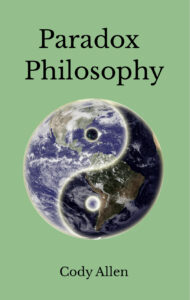 |
Paradox PhilosophyAll things are in both harmony and tension with their opposites—we often choose certainty despite our doubts, fear when there is opportunity for hope, and ourselves when we might think of others—and we should always strive to find greater balance between them. We all want to live meaningful lives, hopefully lives of moral goodness, and philosophy is the study of this venture. Paradox Philosophy is a modern, Westernized version of Yin Yang theory that delivers wisdom towards living a more virtuous life. Available at: |
Book Reviews
- The Fountainhead by Ayn Rand March 11, 2026
 On its surface, this book is about two different architects who simultaneously embark upon their careers in New York City. At its core, it’s about the difference in philosophy between individualism and collectivism.
If you know Ayn Rand, then you know she is a champion of individualism, and thus her protagonist is a man named Howard Roark, an architect who expresses his individualism with every project he designs. He is innovative and fiercely independent and simply doesn’t give a damn what other people think. Sometimes, his indifference to the opinions of others gets him in trouble, and yet there are also times when other characters express their admiration of his strong will, lamenting the fact that they themselves care what other people think. Roark represents Rand’s ideal of the creative individual who lives for himself and not for others.
Rand is the mother of a school of philosophy called Objectivism, which she once described as “the concept of man as a heroic being, with his own happiness as the moral purpose of his life, with productive achievement as his noblest activity, and reason as his only absolute.” With this definition in mind, it is evident that Roark embodies her philosophy as he is a man who only cares about his own happiness, to varying degrees of success and failure.
Roark’s classmate and counterpart is Peter Keating, a man who represents collectivism in all its forms. Keating is a natural conformist whose architectural designs are all reproductions of past styles—like Renaissance, Gothic, or Beaux-Arts—and are based on whatever he thinks will win him more clients or public approval. He is constantly seeking validation from others and is dependent on them for his success. While Roark’s designs come from his own creative soul, Keating’s designs are simply a mirror of popular taste and client demands, but never anything original. While he initially finds success, by the end of the book Keating has become a shell of a man.
The main antagonist of the book is a journalist, architecture critic, and political activist named Ellsworth Toohey. Toohey is a power-seeking intellectual and collectivist who uses his talents to shape public opinion. He organizes numerous groups and committees and uses people’s desire to help others (their altruism) as a means of control and mass manipulation. He wants to crush individuality (often in the form of Howard Roark) and promote collectivism, and what he ultimately gets for this endeavor is mediocrity.
One of the other major themes in this book is the relationship between power and the media. This is first expressed in the character of Toohey as he uses his circulated writing in order to mold public opinion, and is then later encountered again when the character of Gail Wynand is introduced as one of the most powerful newspaper magnates in the city. At one point, Wynand tries to use his newspaper to uplift Roark and is nearly run out of business for it and must relent his efforts. The take-away from this is twofold: both the power of those in charge to manipulate public opinion, and the power of a collectivist mindset once an idea takes hold.
All in all, this book is a philosophical novel that expertly expresses the struggle between creative independence and societal conformity. While Rand lands firmly on the side of the individual, I was very aware of points throughout the book when I did not. I won’t share specifics so as not to spoil the plot, but my take-away was not that we should all champion the creative rights and rationality of the individual and condemn those of the collective, but that a balance between the two is necessary. There are certainly times when individual creativity and ingenuity should be put on the front page of the newspaper and celebrated by the world, and also, there are times when we should all come together and adopt a hive mind. Take architecture: If I’m designing a new train station, perhaps I should be allowed to express my individual talents and make a one-of-a-kind train station that is beautiful and functional and unlike any other. Alternatively, if I’m designing a community of one hundred houses, perhaps I should model them after a community that has already been constructed elsewhere so as to keep costs down and make them affordable to families. I believe that whether we should adopt an individualist mindset or a collectivist one should depend on the context.
With that as my own personal take-away, I must praise the prose of Rand’s writing: her book, while long, is exquisite. Her characters are well defined and not afraid to speak their minds and often said and did things that I did not expect. Her vivid descriptions of people, places, and things brought them to life in my mind. Her writing is engaging and full of ideas, and while I speculated that individualism would win out in the end (knowing the author’s philosophy ahead of time), at no point did I know what was going to happen next. I enjoyed this book wholeheartedly, both for the surface story and for the underlying philosophy.
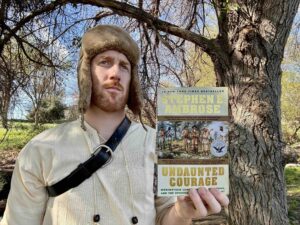
- Undaunted Courage by Stephen E. Ambrose February 12, 2026
 We live in a known world. Google maps can show us what every inch of the earth’s surface looks like right from the comfort of our own home. We can get on an airplane and fly from the Atlantic seaboard to the Pacific in a few hours time, all while watching a hallmark movie and eating roasted peanuts. But life wasn’t always known, for before the modern age a majority of things were unknown and new discoveries were happening all the time. This is the world that Meriwether Lewis and William Clark lived in.
The turn into the 1800’s saw the blossoming of the United States from a war-torn group of colonies into a stable and thriving nation of Americans. With their independence from England secured, the next obvious thing to do was expand the empire west. Nobody knew what lay in the lands west of the great Mississippi River, but there were plenty of men hungry to find out.
President Thomas Jefferson was one such man and it was he who made the Louisiana purchase with Napoleon of France, officially buying over 800,000 square miles of land stretching from the Mississippi River to the Rocky Mountains. It was land that had been inhabited by the indigenous Native American tribes for centuries before white people arrived on boats from Europe, but despite their prior claim, Jefferson and the American colonizers had their sights set on the west and nothing was going to stop them. Napoleon might have “sold” the land to Jefferson and the Americans, but France was on the other side of the known world and the sale was more for diplomatic theater than practical necessary. Regardless which government claimed they “owned” the land, white Europeans were coming to explore it.
Jefferson had a grand vision of the future of the United States: he envisioned that the Union might someday encompass all the land between the Atlantic and Pacific oceans. It was also Jefferson who personally selected Meriwether Lewis to Captain a group of explorers to investigate the territory, a band of men that would become known as the Corps of Discovery. Lewis immediately chose William Clark as his co-Captain, and the team was formed.
Their primary goal was to find an all-water to the Pacific Ocean and link it to The Mississippi and Missouri Rivers (which connected to all the main eastern waterways). They were tasked with mapping the territory and studying and recording as much information as possible about the geography, plants, animals, weather, and longitude/latitude of major river junctions. In addition to basic fact-finding, they were ordered to establish positive relationships with the numerous indigenous tribes they encountered along the way so as to create trading partners. If Congress was going to approve funding for the expedition, they wanted to know what the States were going to get in return, and Jefferson’s promise was economic: Think of the fur trade we will gain with the Natives, he told them, and access to a port on the Pacific would grant American merchants the ability to trade with the Orient (Asia).
Lewis and Clark and their band of thirty or so hand-selected soldiers and frontiersmen left St. Louis in May of 1804 and didn’t return until September of 1806, a full two years and four months later. For the entirety of that time, they were on their own, out of contact from their known civilized world and destined to live off the land, same as the numerous Native American tribes they encountered. They traveled nearly 8,000 miles on their journey, mostly by river (their main route west via the Missouri River took them through what is now Missouri, Kansas, Nebraska, North and South Dakota, and Montana) but also on horseback through the Lemhi Pass that leads through the Continental Divide at the Rocky Mountains and the Lolo Trail that leads through the Bitterroot Mountains (present day Idaho). Then they made canoes and took a few more twisting rivers through Idaho, Washington, and Oregon before reaching the Pacific at the mouth of the Colombia.
The men spent the winter of 1804-1805 with the Mandan tribe in what is now North Dakota and the winter of 1805-1806 with the Chinook and Clatsop tribes on what is now the Oregon coast. Luckily, these tribes were willing trade partners and generally amicable to the white visitors, similar to the friendly Shoshone natives they encountered near the Rocky Mountains who provided horses for their treacherous journey across the continental divide. The men of Lewis and Clark’s expedition almost certainly wouldn’t have found the success that they did without the help of these tribes; there were several times they found themselves close to starvation only to be saved by the generosity of the Native Americans. They also encountered antagonistic tribes, like the Sioux in what is now South Dakota, a tribe that demanded tolls for passing through their territory and were displeased with what was offered them, nearly leading to armed conflict. The Blackfeet natives also become hostile when they discovered that Lewis’ group was trading guns to rival tribes and a violent skirmish occurred where two Blackfeet Indians were killed and Lewis and his men were forced to flee the territory.
The men of the expedition saw herds of buffalo numbering in the thousands. They saw birds and reptiles and trees and flowers that no white Europeans had ever laid eyes on before. They made contact with tribes of Natives Americans that had never seen white people before, or black ones, as many were enamored with Clark’s slave York and his dark skin. They often struggled to communicate with the Natives, frequently needing multiple translators to convert even a simple idea from one native language to another to French and finally to English. They were fortunate enough to be accompanied by a young Native woman named Sacagawea for roughly half of their journey, a teenager at the time but a willing travel companion and interpreter for the group.
Considering the length and peril of their journey into the unknown, it is remarkable that only one member of the Corps of Discovery died during the journey, Sergeant Charles Floyd with what is believed to be appendicitis, although it’s impossible to truly know. He died only a couple of months into the excursion, exhibiting for the rest of the men how dangerous the mission was to be. Despite his early passing, every other member of the Corps survived the expedition and many wrote journals along the way and their stories were preserved and told to the world.
Sadly, Meriwether Lewis’ story took a dark turn, as he took his own life in 1809, only a few short years after his return. It was a combination of mental health struggles, substance abuse, financial debt, and personal and political stress that led him to turn a gun on himself. It was a tragic shock to Clark and Jefferson and it wasn’t until many years later that Lewis’ journal of his travels was published and circulated, although by the time it became available the public had somewhat moved on. His journals, and the scientific discoveries he made and recorded in its pages, gradually increased in relevance and importance as more Americans looked west for travel and trade opportunities, and now it is a treasured document kept safely at the American Philosophical Society in Philadelphia.
All in all the trip was a resounding success, as Lewis and Clark’s expedition turned one of the last remaining unknown parts of the world into a known one. They were the first white ‘westerns’ to travel the width of the continent and return with their lives and their stories. They brought back invaluable information on the geography, plants, animals, and Native peoples, and set the stage for the American expansion into the final frontier: The Wild West.
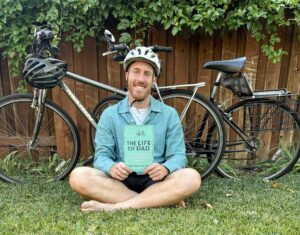
- The Life of Dad by Anna Machin January 16, 2026
 Traditionally, dads are the hunters, the breadwinners, and the ones who initiate rough and tumble play. These are all important aspects of raising little ones, and they will continue to be, yet despite many of us living in the twenty-first century, many dads still feel relegated to the sidelines in preference for mom. While interviewing dads (of younger children) for her book, Machin found that many shared stories of exclusion. When the baby is on the way, dads are frequently asked to “wait outside while mums are examined,” are ignored in favor of mom when nurses have questions regarding wishes for the birth or aftercare, and are “left to let their worst imaginings run riot when their partner is whisked off for an emergency procedure.” Sure, mom is the one physically carrying the baby, but this exclusive focus on mom can be to the detriment of dad’s well-being and have led many men to report being made to feel like an imposter during the birth of their own child.
Machin’s work focuses on dads and specifically because I don’t have one, I was drawn to her research. The evidence she found is that dads are instrumental in the child-rearing process, even reporting on a number of recent studies that showed “the health outcomes for mum and baby, and the continuing health of the new family, are improved by fathers being involved in all aspects of antenatal care and birth.” When dads are involved, everybody wins. She also reports that “regardless of the socio-economic background of the mother and the general health of the baby, babies whose fathers were not named on their birth certificate were 2.5 times more likely to die in their first year of life.” This is even more evidence of the importance of dads.
Yet, this research doesn’t coincide with my own life experiences, and I wonder if perhaps the real difference between healthy and successful children and those that struggle is the difference between having one parent in the household instead of two sharing the load.
I was raised in a family with two moms and from personal experience I can assure you that even without a father figure in the house, all the chores still got done, the bread was still won, and admittedly the play was probably a little less rough and tumble than it might have been, but I still participated in sports and roughhoused with my friends. Humans have an amazing ability to adapt, and my moms were cognizant of the necessary element of raising children and maintaining a household and were each instrumental in both of those endeavors. In her book, Machin writes that in single parent households, the mom or dad will often take on the role of both parents: making the money while also doing the cooking and the cleaning. In my household growing up there were never any strict guidelines for who did what, both of my moms assumed the role of homework-overseer, dinner-cooker, and money-earner depending on the day.
There are, of course, some distinct differences in the way dads raise their children compared to moms, and Machin lays them out in her book. For example, she writes that while a dad has “some influence on his child’s actual academic attainment, his real power sat with the influence he had on his child’s attitude to learning.” She found that “dads who were involved with their children—who fostered good behavior, strong psychological health and a healthy attitude to life and school—taught their kids to have a good learning attitude, allowing them to reap all the benefits they could from their schooling.” This is an interesting phenomenon to evaluate in the home, basically asserting that moms make sure the homework gets done whereas dads make sure the kids know why they’re doing it and even have fun while they do. As anyone with kids will tell you, having fun is the secret to getting them to do any activity, even traditionally non-fun ones like homework. Again, in my own experience, my moms both played both roles, making sure I did my homework and also that I knew why it was important to do so.
In summation, our author argues that dads shouldn’t be shunned from the parenting spotlight like they so often are and should instead be celebrated for the contributions they make to the family. Having dads involved in the child-raising process undoubtedly makes for healthy and well-adjusted children and we as members of modern western societies should recognize this. Countries like South Korea, Japan, Germany, Norway, and Sweden have government mandated paternity leave for new dads, but that list is not nearly long enough. Many countries and companies offer no paternal leave at all.
The true take-away from this book, and one that I can personally attest to, is that the gender of the parent is less important than their emotional availability. Machin’s research supports this finding as well. “Regardless of whether the primary carer was a mum or a dad,” she writes, “the most basic of parenting behaviors—touch, simple soothing speech and gaze—underpinned a child’s ability to regulate straightforward emotions such as joy. Further, the extent to which parent and child were in bio-behavioral synchrony during infancy—that’s behaviors, physiological measures and bonding hormones all in synchrony—predicted how well a child could handle their more complex emotions, such as frustration and anger, and parents who were warm and positive but used suitable levels of control and employed boundary-setting—those are the social rules being enforced—had children who were well socialized within the pre-school setting.” Obviously, this can be a parent of either gender.
So, while this book is expressly pro-dad, it is perhaps better described as pro-team-parenting. Whether you’re a family of two moms, two dads, or a mom and a dad, both of you should be involved with raising the children if you want them to be healthy and well-adjusted adults. The real difficulty lies with single parents. With this in mind, it is true that in heterosexual couples dads do often take a backseat to moms, especially in healthcare settings. Dads can get postnatal depression just like moms can, and healthcare professionals, in addition to teachers, policymakers, and everyone else, all need to respect their involvement and input. Dads, just like moms, should be included and celebrated for their contribution to raising little ones.
- The Body Keeps the Score by Bessel van der Kolk December 5, 2025
A traumatic experience is any event or series of events that overwhelms a person’s ability to cope with the present moment, causes intense physical or emotional stress, and leaves a lasting impact on either mental, emotional, and/or physical well-being. Soldiers returning from war, children abused by their caregivers, and people who have experienced a sudden and shocking death or extreme tragedy are all prime candidates for trauma. It rewires our brain and changes “not only how we think and what we think about, but also our very capacity to think.” Trauma encodes itself in our brains, our minds, and our bodies, and after a traumatic incident, the world is experienced with a different nervous system now focused on suppressing inner chaos at the expense of active involvement in life. It burrows deep, and for some people, traumatic experiences can be very difficult to recover from.
This book is filled with both good news and bad news. The good news is that our understanding of trauma and how it affects us mentally, emotionally, and physically has greatly improved, as have the ways in which we treat it. The bad news is that sadly, trauma isn’t as rare as we would like to believe. Research has shown that “one in five Americans was sexually molested as a child; one in four was beaten by a parent to the point of a mark being left on their body; and one in three couples engages in physical violence.” This, of course, doesn’t include trauma we might experience as an adult like natural disasters, car accidents, or acts of terrorism, and, of course, the most common candidates for trauma: soldiers returning from war.
An important question to consider is what all of these disparate events have in common in the way they affect us, and the answer is in how the emotions we experience at the time of the trauma stay with us and become encoded in our brains, minds, and bodies. “Ideally our stress hormone system should provide a lightning-fast response to threat, but then quickly return us to equilibrium,” Van der Kolk writes, “in PTSD patients, however, the stress hormone system fails at this balancing act.” When something traumatic occurs it produces physiological changes including “a recalibration of the brain’s alarm system, an increase in stress hormone activity, and alterations in the system that filters relevant information from irrelevant,”—it literally changes the way we see and understand the world around us and how we interact with it. Then, when something similar triggers us in the future, our brain and body react as if the traumatic event were happening in the present. We may not even be aware that we are re-experiencing and reenacting the past—all we know is that we feel furious, terrified, enraged, ashamed, or frozen. The continued secretion of stress hormones is expressed as agitation and panic and, in the long term, can wreak havoc with our health.
The most common example is the ex-soldier who hears a loud motorcycle and throws himself to the ground for cover because his body reacts as though it’s an enemy tank. It’s also true for the women (and men) who have been sexually assaulted and now can’t stand to be touched by anybody without it feeling like their attacker again. It is likewise true for the adult who was hit by their caregiver as a child and cannot figure out how to connect with others in an intimate way. In each scenario, when the stimulus occurs (a loud motorcycle, someone touching them, or their inability to connect emotionally with others) the brain, mind, and body react as though the original trauma is occurring.
So, what can be done to help people rehabilitate their lives after a traumatic experience? Van der Kolk devotes an entire section of his book to healing and makes a point to include strategies that not only attempt to soften the effects of trauma on the brain and the mind, but also on the body. For some people, talking about the traumatic event with a close friend or therapist is enough to get themselves back to a healthy internal state. The trick is to talk to someone who provides a sense of safety, because “being able to feel safe with other people is probably the single most important aspect of mental health; safe connections are fundamental to meaningful and satisfying lives.” Van der Kolk suggests activities like yoga or theater to help us reconnect with ourselves in a physical way. Yoga’s central theme is connecting the breath to the body, which can directly target bodily tension left over from traumatic experiences. When it comes to theater, embodying a fictional character as they tell their story and go through a life transition can aid trauma survivors by helping them vicariously tell their own stories and go through their own transitions. “Traumatized people are afraid of conflict” he writes, and “conflict is central to theater—inner conflicts, interpersonal conflicts, family conflicts, social conflicts, and their consequences.” Performing in a play requires us to use our body, and, similar to yoga, being active in our body can help us locate places where we may hold tension from a previous trauma and help to release it.
An important first step is diagnosing people correctly. All too often patients with horrible histories of trauma are diagnosed with depression and prescribed a medication from a pharmacy which is the equivalent of putting a band-aid on a bullet hole. While depression may be an accurate description, clinicians need to go deeper and uncover what is at the root of the problem in order to treat it successfully because the emotions associated with the traumatic event are stored separately in the mind, brain, and body. Even with a prescription for medication, the right stimulus will send someone with PTSD right back to the pivotal moment in the past when the event first occurred, maintaining their inability to integrate the experience into their sense of self. “Normal memory integrates the elements of each experience into the continuous flow of self-experience by a complex process of association,”—but the problem with PTSD is that memories are dissociated. So getting a prescription from a doctor may block or numb some of the negative feelings, but it doesn’t heal the patient.
Van der Kolk pinpoints childhood as the location of much trauma and describes how “child abuse and neglect is the single most preventable cause of mental illness, the single most common cause of drug and alcohol abuse, and a significant contributor to leading causes of death such as diabetes, heart disease, cancer, stroke, and suicide.” We need caregivers who support and love us in our infancy so that we can develop proper relationships with the other people and experiences we will encounter throughout our lives. This is the same for adults who suffer traumatic experiences—we need people we can trust to support us through the healing process. We need to recognize that trauma imprints itself in our brains, our minds, and our bodies, and that treatment and therapy should target all of these areas so as to best help us heal mentally, emotionally, and physically. It takes the right diagnoses, a proper support network, and the time and perseverance required to do the work. Both individually and collectively, we can heal from trauma, for if all we know is fear, then that’s all we’ll ever know.
For those looking for more information about trauma, its symptoms, effects, and how to heal from it, this book is a wonderful place to start.
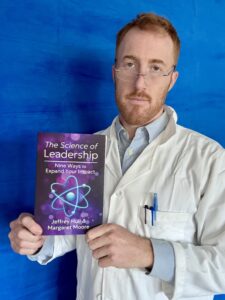
- The Science of Leadership by Jeffrey Hull and Margaret Moore November 19, 2025
 From a wide lens, leadership can be broken down into three broad categories: self-orientation, other-orientation, and system-orientation.
First and foremost, if we are the leader, we must be willing to be honest with ourselves about our strengths and weaknesses. This requires humility, honesty, and flexibility. Humility is described as “(a) a manifested willingness to view oneself accurately, (b) a displayed appreciation of others’ strengths and contributions, and (c) teachability, or openness to new ideas and feedback.” Just because we are in charge of making decisions doesn’t mean we are always going to make best one and it can be wise to take a few humble lumps of sugar in our ego tea. It is also very important to be conscious of our emotions and how we are feeling at any particular time. Moments of extreme emotion, when we are angry or sad for example, are not good times to make important decisions. Leadership has its ups and downs, just like every other journey in life, and when problems arise and obstacles present themselves the true mark of a leader is how they respond. We must be flexible to where the open road may take us, and trust that it will be the right destination.
The second step in examining our abilities as a leader is considering the ways in which we relate to other people. Our authors place importance on always staying positive because pessimists “tend to believe bad events will last a long time, will undermine everything they do, and are their own fault,” while “optimists view setbacks as temporary, as challenges to overcome.” We have to be compassionate with others and think about how we talk to them and how we support them so they can do their best work. Sometimes being a leader means being a coach and helping others help themselves. We have to trust our teammates to do their duties and give them the best tools to do so.
This leads to our third area of emphasis: the way we organize the group and manage the team. We have to foster an environment that is positive and supportive of the members of the organization. Do we know when to lead from the front and make hard decisions? Do we know when to lead from behind and act in a service role towards others in our organization and empower them to make decisions? Are we manifesting our vision for the future and managing forward progress?
My biggest takeaway from this book was the idea that leadership exists in the space between. Sometimes the leader makes a decision, sometimes they get a consensus. Sometimes they must be strong and competent, sometimes humble and vulnerable. Sometimes they have to communicate rationally and sometimes they have to tap into their emotions. The definition of leadership is someone who “guides or directs a group,” and it is therefore paramount to remember that true leadership “lives in a collective web of relationships.” In other words, if we consider leadership as something that ‘exists,’ it can be found in the space between people.
This book is essentially a study-guide for those interested in learning more about the art of leadership. The writing is dry, the stories are vague, but the information is valuable. Every chapter ends with discussion questions and the last chapter is a study guide for readers who want to assess their attributes and discover areas where they may be able to improve. It’s a very practical book.
Summary of the 9 pillars of leadership as diagnosed by the scientific community:
Self-Oriented capacities
—Conscious: What enables you to be calm, stable, and objective?
—Authentic: What matters most to you and those you serve?
—Agile: How will you be flexible when things change, and inclusive of diverse, opposing interests?
Other-Oriented capacities
—Relational: How will you help others do their best work?
—Positive: How will you help others leverage and expand their strengths?
—Compassionate: How will you generate resonance with others on a vision, purpose, and action?
System-Oriented capacities (organization/team orientation)
—Shared: How will you elevate leadership capacities across your team/organization?
—Servant: How will you best serve followers, customers, and other stakeholders?
—Transformational: How will you co-create and manifest a vision that positively impacts all stakeholders?