




I’m a writer and author with a passion for exploring ideas.
Since 2020, I’ve published monthly book reviews as a way to reflect on what I’ve read. I do my best to challenge my own thinking and remember the lessons worth keeping. Here you’ll find my books, my reviews, and my reflections on the ideas that have shaped my perspective along the way.
My Book
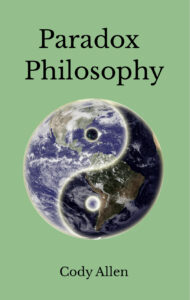 |
Paradox PhilosophyAll things are in both harmony and tension with their opposites—we often choose certainty despite our doubts, fear when there is opportunity for hope, and ourselves when we might think of others—and we should always strive to find greater balance between them. We all want to live meaningful lives, hopefully lives of moral goodness, and philosophy is the study of this venture. Paradox Philosophy is a modern, Westernized version of Yin Yang theory that delivers wisdom towards living a more virtuous life. Available at: |
Book Reviews
- Not For Profit by Martha Nussbaum July 10, 2026
 Democratic education is on the ropes. In many countries throughout the world, the “demands of the global market have made everyone focus on scientific and technical proficiencies as the key abilities, and the humanities and the arts are increasingly perceived as useless frills that we can prune away to make sure our nation remains competitive.” While an emphasis on science and technology has grown national GDPs around the globe, the imaginative and critical abilities that lie at the core of the arts and humanities are being left behind.
Democracy needs the arts and humanities—they are how we teach kids to empathize with people from different races, classes, genders, religions, and cultures. Learning the music from a different culture is a great way for young people to explore that culture in a curious and non-threatening way. Reading the poetry of someone from a lower socio-economic class helps children understand the difficulties of those who are less fortunate. Why is this important? Because these people are our neighbors and coworkers, and as the world has become an increasingly intermixed place, a global melting pot, the ability to understand where other people come from is paramount for our coexistence with them.
As an alternative to the “growth-based model,” which raises children to be autonomous cogs in the profit-driven machine we call an economy, Nussbaum advocates for what she calls the “Human Development paradigm.” According to this model, the most important element in a proper education is developing smart citizens capable of existing in a democracy, “a form of government in which the people inform themselves about crucial issues they will address as voters and, sometimes, as elected or appointed officials.”
One of the reasons educators in the United States have insisted that undergraduates at liberal arts universities take courses in philosophy and the humanities is that “they believe such courses, through both content and pedagogy, will stimulate students to think and argue for themselves, rather than defer to tradition and authority.” They believe that the ability to argue in this Socratic way is, as Socrates proclaimed, valuable for democracy. The Socratic method of asking questions and respectfully debating with those whose ideas differ from your own is the key to developing critical thinking. Critical thinking, in turn, is one of the most important skills necessary for the citizens of a democracy. ‘Teaching to the test,’ which increasingly dominates public school classrooms, produces an atmosphere of student passivity and teacher routinization. The creativity and individuality that mark the best humanistic teaching and learning has a hard time finding room to unfold. Learning math, while important, does not typically foster open-ended critical debate as the answers to problems are mostly fixed and predetermined. It is most often through the clash of ideas, presented to students via classes in philosophy and the humanities, that independent thinkers are created. These are the kinds of people we need in order to sustain a healthy democracy.
Despite the reality that democracies around the world are suffering, as our social-media driven bifurcated political landscapes continue to grow, as governments continue to measure progress by economic output, we are seeing a decline in democratically-necessary educational values. In Britain, for example, “humanities departments are required to justify themselves to the government, which funds all academic institutions, by showing how their research and teaching contribute to economic profitability.” If they are unable to show this, government funding for the school can drop and in some cases disappear entirely. This, sadly, has led to a decline in the number of philosophy and humanities classes offered to students, in preference to those that maximize economic output. The truth is that businesses need employees with the capacity to imagine, for innovation requires minds that are flexible, open and creative. It is literature and the arts that cultivate these skills.
“A mixed liberal arts education recognizes that higher education prepares students in two distinct ways,” Nussbaum writes, “for a career, but also for citizenship and life.” I believe her assessment of the current educational situation in the world to be mostly true, and while it is important to prepare young people for a career, it is paramount that we don’t neglect the importance of educating them for citizenship. Luckily, we in the United States have a tradition of liberal arts education and while it is in decline, it is not dead yet. Sadly, the same cannot be said of many places in the rest of the world. Her writing is a call to all of us to continue valuing the arts, humanities, philosophy, and the spirit of debate inspired by Socrates himself. If we don’t, we risk our very democracy.
- Behave: The Biology of Humans at our Best and Worst by Robert M. Sapolsky June 4, 2026
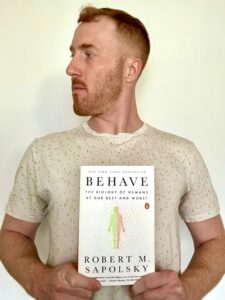 Why do humans act the way we do? What determines our behavior and our thoughts about our behavior? Is there any philosophy or scientific study that can help us begin to unravel the mystery that is our words, actions, and thoughts? This book is a sweeping review of the neurobiology of humans and it provides some clues to the mystery of our behavior.
The first chapter is the shortest and starts with an action: We kill someone, or, perhaps guided by our better angels, we save someone’s life. Then, Sapolsky spends the rest of the book examining why we chose a particular action, starting with one second before our behavior occured and expanding out to minutes, hours, days, weeks, and years before. He covers biology, evolution, morality, empathy, nature vs. nurture, and much more. Sapolsky has compiled seemingly every scientific study done by a neurologist in the past century into one book and organized it in beautiful fashion.
A classic study is the story of Phineas Gage, a railroad worker from 1848 whose job was to blast rock (to make way for the train tracks) by using a long iron tamping rod to pack gunpowder into a drilled hole. One fateful day on a September afternoon, something went wrong, and the iron rod blasted out of the hole and straight through his head, entering under his left cheek and coming out the top of his skull. Amazingly, he didn’t lose consciousness for more than a few moments, took himself to the doctor, and survived. What’s most amazing, and the reason why his story is studied by neurobiologists, is that his personality drastically changed. Before the accident, friends and coworkers described him as responsible, hard-working, and even-tempered, whereas afterwards he became impulsive, profane, and unreliable. Gage’s story reveals that specific parts of the brain control specific functions, and that the left frontal lobes could be where personality and executive function live.
Another classic study is the Stanford Prison experiment, where 24 male students were randomly assigned to be either guards or prisoners in a pretend prison environment set up by their professor, psychologist Philip Zimbardo. Zimbardo was interested in how the social roles we inhabit and the environment we operate in affect behavior, and the results were monumental. Within days, the ‘guards’ began abusing the ‘prisoners’ who complementarily showed emotional distress. Some of them even had emotional breakdowns, and things became so intense that the study was stopped after only six days (it was planned to last fourteen). While the ethics of the study are questionable, what is still talked about in psychology classes today is how both the environment and the social relation of the people involved (those in positions of authority vs those who are not) impact behavior.
Sapolsky examines studies about maternal care and epigenetics, testosterone and oxytocin, population density and social pathology, delay of gratification, implicit associations, utilitarianism, adverse childhood experiences, and more. The point is, there are tons of studies all explored carefully in his writing, and each is included because it reports on a different aspect of human behavior. So, what are his the meta-conclusions?
First and foremost, there is no single cause of behavior. To understand behavior better, we must take into consideration our neural firing patterns, our hormones, our immediate environment, our larger social context, our childhood and prenatal environment, our parents, and our evolutionary history, just as a place to start.
Secondly, our actions are heavily dependent on the context of their occurrence. Authority, stress, anonymity, and group pressure are some examples of phenomena that can radically shift behavior depending on the context. For example, oxytocin doesn’t simply create feelings of love and bonding, it strengthens in-group bonding, which, in the right context, can also lead to increased feelings of out-group hostility.
Thirdly, adolescence is a critical window of development because it’s when our frontal cortex grows the most. Because it is the last past of the brain to mature, by definition the “frontal cortex is the brain region least constrained by genes and most sculpted by experience.” And what does it do? Its list of expertises includes “working memory, executive function (organizing knowledge strategically, and then initiating an action based on an executive decision), gratification postponement, long-term planning, regulation of emotions, and reining in impulsivity.” No behavior can truly be diagnosed without understanding the frontal cortex.
Fourthly, stress is a major player in our decisions and actions and has deleterious long-term effects. It changes brain architecture, impairs impulse control, increases aggression, and alters risk assessment, just to name a few. Combine stress with early development and adolescence and its effects can change the biology of the brain permanently. “Childhood adversity increases the odds of an adult having (a) depression, anxiety, and/or substance abuse; (b) impaired cognitive capabilities, particularly related to frontocortical function; (c) impaired impulse control and emotion regulation; (d) antisocial behavior, including violence; and (e) relationships that replicate the adversities of childhood (e.g., staying with an abusive partner). And despite that, some individuals endure miserable childhoods just fine.”
Fifthly, humans are capable of incredible acts of cruelty and also extraordinary acts of altruism. We are able to dehumanize others with frightening ease and we are also able to see others as ‘Us’ and not ‘Them’ if we can shift our lens of who we consider an ‘Us’. You might like the Yankees while I like the Red Sox, you might be South African while I’m American, but at the end of the day, we’re both human.
While these are some of the main themes, in a book this expansive, there are tons of fascinating nuggets of information throughout its pages. For example, judges have been shown to give out harsher punishments when they’re on an empty stomach, and are statistically more lenient after lunch. For another example, “the linking of visceral and moral disgust is bidirectional.” So, if we commit a morally dubious act, we are likely to feel dirty and will spend longer washing our hands. Likewise, if we are tired and covered with sweat and dirt after a long hard day at work, stealing a can of soda from the corner store is a much easier act to commit than if we are freshly showered and shaved.
In conclusion, the important thing to keep in mind is that all of these findings are broad trends in the data. Each and every individual is different and will behave differently in different situations based on a combination of what happened in their brain one second before they acted, what happened to their ancestors a generation ago, and what the context of the situation is. Humans are a one of a kind species, with a one of a kind brain, and despite thousands of years of self-contemplation and scientific study, our behavior is, well, complicated.
- The Machiavellians: Defenders of Freedom by James Burnham May 11, 2026
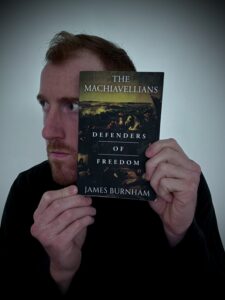 Niccolò Machiavelli is a misunderstood character in history. He is often thought of as an advocate for immoral and unethical ways of achieving power, so much so that the term Machiavellian is frequently used to describe someone who is manipulative and deceitful. While this definition is useful for understanding and talking about our societal and political systems, it’s not an entirely accurate interpretation of his writing and philosophy.
In his book, Burnham examines Machiavelli’s political philosophy and one of his core conclusions is that people are naturally self-interested. “The primary object, in practice, of all rulers is to serve their own interest, to maintain their own power and privilege,” he writes, “There are no exceptions. No theory, no promises, no morality, no amount of good will, no religion will restrain power.” Some people are truly altruistic, he admits, but they are not the types to rise to power. “If one is to govern men, more useful than a sense of justice are perspicacity, a ready intuition of individual and mass psychology, strength of will and, especially, confidence in oneself.”
At his core, Machiavelli was a realist. His political philosophy has grown to become “immoral” and “unethical” because that is the nature of politics as he experienced it. His answer to the question “How do people gain power and keep it?” is that they are deceitful, and if you want to gain power, you must act in kind. If you behave in moral or ethical ways, you will not gain power. It is not a matter of feeling but a matter of fact. “I have found it always true, that men do seldom or never advance themselves from a small beginning, to any great height, but by fraud, or force,” he writes. We the people see this every time a politician makes promises on the campaign trail and then fails to deliver them once assuming office. They tell us what we want to hear and we give them our money and attention and votes, yet once they are victorious they go about their own agenda.
He encourages us to never believe what a politician (or person in position of power) says without also considering their actions, motivations, and outcomes. Speech is just one data point among many, and often the most compelling yet least informative. He believes that “the high-minded words of the formal meaning serve only to arouse passion and prejudice and sentimentality in favor of the disguised real aims.” In fact, the majority of speech made by people in power is designed to keep them in power, and when someone speaks out against them, they retaliate. For example, when Machiavelli says that rulers lie and break faith, they say he libels human nature; When Machiavelli says that ambitious men struggle for power, they say he is apologizing for the enemy opposition and is trying to confuse you; When Machiavelli says that we must keep strict watch over officials and subordinate them to the law, they say he is encouraging subversion and the loss of national unity; When Machiavelli says that no man with power is to be trusted, they convince us that his aim is to smash all our faith and ideals. When anybody attempts to point out the fraud of the elite they are viciously attacked for subversion and treated like a criminal because the elite cannot let the truth be known for fear that their power will be taken away.
This devious tactic used by those in power—denouncing those who denounce them—is one of the routes by which Machiavelli has become the devious historical figure we think of him as today. The truth is, if people understood his philosophy they would become much more difficult to govern.
Machiavelli disabuses us of the idealization of democracy, which he argues can never truly exist. The reason for this is quite simple: when any social organization becomes large enough, not every voice can be heard. Sure, democracy might work in a group of five, but once the numbers grow too large (in a community, city, state, or country) some members most forgo their right to voice their opinions for the sake of time. What naturally occurs is that the populous majority grants a minority of people in the group the power to make decisions and to allocate money and resources. “Social life cannot dispense with organization,” he explains, “the mechanical, technical, psychological, and cultural conditions of organization require leadership, and guarantee that the leaders rather than the mass shall exercise control. The autocratic tendencies are neither arbitrary not accidental nor temporary, but inherent in the nature of organization.” This is an iron-clad law of social organization: regardless what form it takes (democratic, authoritarian, etc.), when groups of people get together and organize, a minority govern and a majority follow.
If we combine this reality with the fact that people are naturally self-interested, it becomes simple to see that those in power will allocate more money and resources for themselves and bend the rules in their favor so that they and their ilk will maintain their grip on power. It is the natural product of social organization in all its forms.
Machiavelli was not suggesting that people should be morally or ethically ambiguous, he was simply stating that if you have a desire for power, you must be. Fraud is the name of the game. Because of this, he (and Burnham) caution us against believing what the powerful say and instead remind us that they are only looking out for their own interests. “An honest statement to the masses, which by the nature of the case of a politician cannot give,” Burnham writes, “would have to say: you cannot rule yourselves; distrust all leaders, and above all those who tell you that they are merely expressing or representing your will; erect and cherish every possible safeguard against the unchecked exercise of power.”
- Rules for Radicals by Saul Alinsky April 20, 2026
 Power is held in two places: money and people. The wealthy elite class, otherwise known as the “Haves,” wield power via their money; for the rest of us, the “Have-Nots,” power can only be found in organizing together as a united people. The first step to revolutionary change is reformation, which is when masses of people have “reached the point of disillusionment with past ways and values. They don’t know what will work but they do know that the prevailing system is self-defeating, frustrating, and hopeless.” I believe we have reached such a boiling-point in America (and in many places around the world), and people are ready for change. This book is an excellent place to start in our education of what steps to take next.
The task of a social organizer is to “inseminate an invitation for himself, to agitate, introduce ideas, get people pregnant with hope and a desire for change,” and to identify themself as the person most qualified for this purpose. A key element of this is the invitation—a group of people who want radical change aren’t going to follow just anybody into a fight, the organizer must first prove they are worthy. The best way to do this is to “maneuver and bait the establishment so that it will publicly attack him as a ‘dangerous enemy,’” Alinsky writes. The word ‘enemy’ identifies him or her with the Have-Nots, while the word ‘dangerous’ reveals the establishment’s fear of the organizer. Through this reaction of the establishment, the people will see that the organizer is on their side in their fight for change, and only then, once he or she has their ‘birth certificate,’ can the real work begin.
Their first job is to create a coalition comprised of members who care about a wide variety of issues so as to incorporate the most amount of people possible and increase their organization’s power. It is important to have members that care about different issues so that the fight is never dead. If one issue is being held at a standstill, there is always another avenue that can be exploited.
So, what does an organizer actually do to create the changes their people desire? They put pressure on the establishment via whatever tactics are appropriate and available to them at the time and place of their fight. There is no tactic that works everywhere and always—all tactics are situational. Are you a group of tenants organizing against a landlord for better living conditions? Perhaps you all withhold your rent payments at the same time. Are you a group of auto-workers organizing against your employer for better wages? Perhaps you all go on strike. Are you a group of college students organizing against your administration because they don’t allow bikes or skateboards on campus? Perhaps you all chew a tremendous amount of gum and leave the chewed pieces stuck all over the sidewalks in protest. Whatever the tactic, it should hopefully be something the people enjoy! The rush of ‘sticking it to the man’ is one that pretty much everybody can get behind. Then, once the initial tactic is performed, you wait and see what the establishment’s reaction is. “Accident, unpredictable reactions to your own actions, necessity, and improvisation dictate the direction and nature of tactics,” Alinsky writes, “then, analytical logic is required to appraise where you are, what you can do next, the risks and hopes that you can look forward to.” Let’s say we are the students chewing gum on campus in protest against the administration. We leave the gum stuck everywhere, but we don’t get what we want: bikes and skateboards are still not allowed. Perhaps we change our tactics again and organize a day when nobody goes to classes and instead stands in front of the administration building with signs and bullhorns and someone makes a call to the local news station to gain wider attention for our issue. The reaction of the administration to this new and alternative tactic will once again dictate what we do next.
Alinsky spends considerable time discussing means and ends and the morality and ethics attached to each and his conclusion is simple: it depends on the context. “Means and ends are so qualitatively interrelated” he writes, “that the true question has never been the proverbial one, ‘Does the End justify the Means?’ but always has been ‘Does this particular end justify this particular means?’” This, of course, depends on both the situation itself and the moral decision making of whoever is suggesting a particular means. There are a few iron laws that come with this subject: in war, for example, the end justifies almost any means. Furthermore, in any context, one’s concern with the ethics of means and ends varies inversely with one’s personal interest in the issue—do you stand to gain or lose? Depending on whether it is the ‘Haves’ or ‘Have-Nots’ who are sitting in judgment will determine whether a particular means is determined to be ethical or unethical.
The road to social change is not a nicely paved one straight up the mountain to the top. Instead, it is a twisting path filled with switch-backs and dead-ends. In essence, there is no map, only the guiding words of a man who has climbed plenty of other mountains before, but not the mountain any of us find ourselves facing right now. All mountains are different, the same way all organizations of people and the issues they face are. This book is a wonderful guide, but it is up to us to blaze our own trail forward.
- The Surrender Experiment by Michael A. Singer April 5, 2026
 Most of us believe we are leading our own lives. Mickey Singer knows that we’re not. In The Surrender Experience, he chronicles his journey through his life as he let it lead him.
As a young man, he found himself wanting to quiet the loud chatter of his inner voice. It was constantly announcing its likes and dislikes, compelling him to think in certain ways, and annoying him. He was fed up letting its every whim dictate his life and he wanted it to be quiet. This, it turned out, was the beginning of his spiritual journey. It led him to make the crucial decision that he was going to surrender to what his life had in store for him; he was not going to try and be in control.
The first thing he did was move to the woods for solitude. He bought a few acres, parked his van, and meditated all day as he became acquainted with his inner voice. He was finishing up a degree in economics (even though his heart wasn’t in it) and through a turn of events was offered a part-time teaching job at his university after graduation. He took it, and the measly salary was plenty for him to sustain his simple lifestyle.
One day he decided he wanted to build a house to live in. Nothing extravagant, but a building with a permanent roof sounded nice. So he invited some friends over and they built one from scratch. They put their hearts and souls into the house and it turned out great. People liked it so much that one day someone asked him to build them a porch. Then someone needed a shed. Then a couple asked him to build them a house of their very own. Every time someone asked, despite whether or not he really wanted to do the project, he surrendered to life and said yes, and always did the job to the best of his ability. His business grew slowly over time until eventually Singer was the owner of a state licensed construction company with multiple crews working on projects all over his home state of Florida.
In the meantime, he continued with his spiritual practice, meditating twice a day, once in the morning and once in the evening. He built a Temple (The Temple of the Universe) on his property and began leading numerous weekly meditations. He invited renowned spiritual leaders to visit his Temple and hold mass prayers. He even started a prison group that he would go on to attend twice a month for decades. He signed his land over to the Temple and soon other people came to live on the property, each on their own journey, each a caretaker in their own way.
One day he was in a Radio Shack and saw a new electronic product on display called a personal computer. Something drew him to it and he bought it on the spot. He quickly became interested in programming and started writing his own programs just for fun. When he got good enough, he wrote a program to help do the accounting for his construction company. He put his heart and soul into it and it turned out great. People liked it so much that one day someone asked him to write a program for their business too. So he did, and just like his construction company, before long he became owner of a (nation-wide, multimillion-dollar) software company called Personalized Programming.
All the while, he never lost his spiritual path and continued teaching others at his Temple how to quiet their own inner voices. His community grew, as did his family. He bought adjacent plots of land as they came up for sale and the Temple’s acreage grew, too.
All of his life’s adventures (I won’t spoil the ending for you) are a result of one core philosophy: surrendering. Every time the voice in his head announced its preferences, Singer quieted it down. He allowed his life to unfold in front of him, preferring to travel where it lead him, not where his inner voice told him to go. “It’s not that surrender gave me clarity about where I was going” he writes, “I had no idea where it would lead me. But surrender did give me clarity in one essential area: my personal preferences of like and dislike were not going to guide my life. By surrendering the hold those powerful forces had on me, I was allowing my life to be guided by a much more powerful force, life itself.” Singer doesn’t swim against the current; he follows the flow.
The debate is out about whether we are running our own lives or if life is making plans for us, but there is truth to be found in the sentiment that surrendering to the way things are, or seem as though they would like to be, as opposed to how they might be, or how we might wish them to be, is a good thing. Trying to control things beyond our control is a recipe for frustration. Life is an adventure, one we are going to experience whether we like it or not, so perhaps it’s best to let it unfold with as little friction as possible. Who knows where our life might take us?