




I’m a writer and author with a passion for exploring ideas.
Since 2020, I’ve published monthly book reviews as a way to reflect on what I’ve read. I do my best to challenge my own thinking and remember the lessons worth keeping. Here you’ll find my books, my reviews, and my reflections on the ideas that have shaped my perspective along the way.
My Book
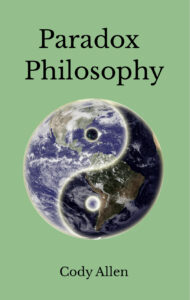 |
Paradox PhilosophyAll things are in both harmony and tension with their opposites—we often choose certainty despite our doubts, fear when there is opportunity for hope, and ourselves when we might think of others—and we should always strive to find greater balance between them. We all want to live meaningful lives, hopefully lives of moral goodness, and philosophy is the study of this venture. Paradox Philosophy is a modern, Westernized version of Yin Yang theory that delivers wisdom towards living a more virtuous life. Available at: |
Book Reviews
- Same as Ever by Morgan Housel October 18, 2026
 As a financial writer, people are always asking Morgan Housel what he thinks they should do with their money. He has shared his advice in countless articles and even a bestselling book (The Psychology of Money). What he’s realized, however, is that markets change. So does technology. And politics. And so many other things that influence the decisions people make about their money. This book is a collection of timeless lessons about the things that don’t change: the things that were true thousands of years ago and are still true today, and will continue to be true a thousand years from now.
“Most great things in life—from love to careers to investing—gain their value from two things: patience and scarcity,” he writes, “patience to let something grow, and scarcity to admire what it grows into.” This is an insightful bit of wisdom, a great quote to write down and repeat if it is meaningful to you, but it also remains an open-ended question. Why don’t people value patience and scarcity more? Why do we find value in speeding things up and trying to acquire more?
Each chapter discusses a timeless truth and covers themes like humility, prudence, and understanding different people’s perspectives. He writes about the difference between good things slowly compounding over time and bad things blowing up in an instant. What he writes about incentives I have found to be particularly true in my own life: “Incentives are the most powerful force in the world and can get people to justify or defend almost anything.” I worked at a corporate restaurant for over a decade and was often frustrated with my management’s resistance to my suggestions for improvement. Then one day I realized their incentive was simply to get a paycheck and not rock the boat. That was the day I stopped making suggestions.
Another timeless truth Housel touches on is the captivating effect of a good story. Author Yuval Noah Harari’s best-seller Sapiens is a great example. Published in 2014, Harari’s book has been criticized for not expressing anything new, only recounting truths that many historians have already discovered before. Yet, the reason Harari’s book has sold so many copies is due to his ability to relate a known history through the telling of a new and compelling story. I’ve read it, (and reviewed it) and it’s great.
While you may or may not agree with Housel’s assertions about human behavior, the important question he raises is: Why do we spend so much time trying to predict things that constantly change instead of trying to understand the things that don’t? It’s an important question, one that the book doesn’t actually try to answer. It simply poses the question.
Through his writing, Housel posits that it is more important to spend time trying to understand recurring patterns of human behavior, because joy and jealousy are the same today as they always have been. Same goes for greed and generosity. And for hope and fear. And love and hate. With this in mind, the question “What timeless truths do we find most important?” is left for us readers to consider for ourselves. The answers will be different for all of us, and they should be. When we consider why this is so, we might then ask each other why we don’t agree, and Housel has an answer for this when he writes: “‘Why don’t you agree with me?’ Can have infinite answers. Sometimes one side is selfish, or stupid, or blind, or uninformed. But usually a better question is, ‘What have you experienced that I haven’t that makes you believe what you do? And would I think about the world like you do if I experienced what you have?’” This timeless truth is about perspective and is an interesting thought experiment, which I think is the whole point of the book.
In conclusion, this book left me with two important questions to consider. Firstly, which timeless truths matter to us? And secondly, why do we spend so much time trying to predict things that constantly change and so little time trying to understand things that don’t?
- Every Moment Matters by John O’Sullivan September 25, 2026
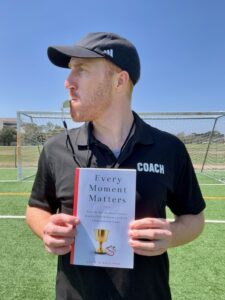 Part one of this book is titled: Why do I coach? and it is a question all of us who decide to coach must answer for ourselves. I recently became a soccer coach and despite coaching four days a week for over a year, I still feel as though I’ve barely begun my journey. I picked up this book hoping to gain some knowledge about how to navigate the difficulties I have been encountering as a coach and am happy to report that I learned a lot.
“Great leaders and teams are outcome aware but purpose and process driven,” O’Sullivan writes, and I believe this to be true. As coaches, we have little control over who wins and who loses and must exert whatever influence on the game we might have from the sidelines. Our objective, then, should be to inspire our athletes to perform their best. As long as they are showing up for themselves and their teammates, are always trying to improve in practice, and are playing to the best of their ability in games, we are doing our job as a coach.
Part two of this book is titled: How do I coach? and the number one answer is to never stop learning. “Great coaches are innovators,” O’Sullivan says, “they never stop learning, they never stop honing their craft, and they are always looking both inside and outside their sport for information they can borrow and use with their own teams.” The beauty of coaching is that it isn’t just a science, it’s also an art, and while there are plenty of bad ways to coach, there is no ‘correct’ way to do it.
O’Sullivan doesn’t just deal in philosophy, he offers practical tips as well, like making training sessions as game-like as possible so that skills acquired in a practice environment transfer to the game. He’s a proponent of a practice technique called “interleaving,” which is when different yet related skills are mixed and matched in a variety of ways throughout a training session. Research shows that solving similar yet slightly different problems promotes long-term retention compared to massed (or blocked) practice. It works in the classroom as well as on the field.
As you might surmise, there is a lot more to coaching than running drills in practice and setting your starting line-up on game day. That practical part is important of course, and every coach worth their salt spends time planning training sessions and consulting their roster, but simply focusing on the tangibles won’t turn your team into a successful one. It’s the intangible aspects of coaching, like how to inspire our players to show up and play hard, that are tricky.
Part three is titled: How does it feel to be coached by me? and talks about the intangibles. “Culture comes first, and everything else follows,” O’Sullivan writes, “your DNA will promote improvement in the good times, keep you on the right path when the scoreboard may not be in your favor, and tell you when you have veered even if the scoreboard is in your favor.” O’Sullivan advocates for collectively creating team standards as opposed to the coach setting rules, because “when young athletes encounter rules, they constantly test them to see how far they can go before they are held accountable for breaking them. Standards, on the other hand, are something to be strived for and attained.” Having standards that everyone on your team buys into encourages your athletes to hold themselves accountable and can be a great way to build a positive culture.
One of the most important things a coach must do is establish trust with their players. It is paramount to creating a positive team culture. “Trust is the secret ingredient of great coaching and great teams,” he says, “it is the foundation of all great relationships, and great relationships are the basis of winning teams.” Every team must establish a triangle of trust between players, coaches, and parents, because without this triangle coaches cannot get the most out of their players, players cannot perform their best, and parents don’t feel comfortable releasing their children to the guidance of coaches.
These are just some of the tidbits I picked up from this book, but there are many. For example, do players feel emotionally safe enough to make mistakes and try new things in the quest for improvement? Are we praising effort, which we can control, as opposed to outcome, which we can’t? If our players are young, how are their parents talking to them in the car ride home after a tough game? And, one of the most important questions we always need to keep in mind, is are we having fun?
If you have any inclination to learn about the ins and outs of coaching from someone who has done a lot of it (O’Sullivan has coached every level from young children to college athletes for over twenty years) this book is a great place to start. It won’t just help you develop better athletes, it’ll help you nurture better people.
- Range by David Epstein September 10, 2026
 This book attempts to answer a specific question about education: is it better to go deep and specialize in one specific field of study, or is it better to go broad and learn about a wide variety of topics? The answer is that there is no singular answer; it depends on the circumstances.
Before answering the question, Epstein identifies two different learning environments: kind and wicked. In kind learning environments the rules are clear and unchanging and the feedback is quick and tightly connected to your actions. The quintessential game learned in a kind environment is chess, where every move made provides immediate feedback on its consequences and the rules never change. Another kind learning environment examined in the book is golf, where practice, repetition, and pattern recognition pave the way forward for students of the game. Conversely to chess and golf, in wicked learning environments, the rules can be subjective, constantly shifting, or altogether absent, and the feedback from decisions made can be ambiguous or inaccurate. Examples of wicked learning environments are politics, dating, or diagnosing a patient and prescribing medicine. These learning environments require critical thinking and conceptual reasoning because they often have no right or wrong answers to problems, only better or worse outcomes. For example, prescribing two different patients with the same medication to treat the same illness may not result in both recovering: perhaps one will recover while the other has an allergic reaction and gets worse.
Do you want to be a professional golfer like Tiger Woods? Then you should start young and focus all of your attention on golf. Do you want to be a doctor? Then you need to study medicine, but you should also keep your interests somewhat broader so as to foster critical thinking and aid your pattern recognition. One example used in the book was taken from two different groups of scientists in two different laboratories both trying to solve the same problem. One group of scientists were all biologists, while the other group of scientists consisted of one biologist, one chemist, one physicist, one mathematician, and one statistician. The more diverse group of scientists solved the problem faster because they were thinking about the problem from five different points of view, as opposed to the group of biologists who all thought about the problem in the same way. This example can also be used in terms of the individual: the more specialized someone’s knowledge, the more constrained they are to that specialized way of thinking; the broader someone’s knowledge base is, the more diverse their thinking patterns will be. Specialists may be able to answer the most complex problems in their field, but generalists are often better at solving problems that exist between fields of study—including problems that are new and unseen.
When writing about professional musicians, Epstein notes how contrary to popular belief, many great performers do not spend their childhood devoted to a single instrument. Instead, they often spend years experimenting with a variety of different instruments and styles before eventually picking one to specialize in. “The sampling period is not incidental to the development of great performers,” he writes, “it is often integral to their success.” This same principle appears in the world of sports—Epstein compares and contrasts Tiger Woods’ ascendancy in golf with that of Roger Federer’s in tennis. Tiger’s life story is the quintessential one of specialization: his father recognized his interest in golf when he was a toddler and set him on a path towards success that never wavered. Federer, on the other hand, played many sports as a child including soccer, basketball, badminton, and others. He was not considered a prodigy at a young age and spent his youth developing a broad range of athletic skills from a variety of sports. Eventually, he fully committed to tennis as a teenager. The point that Epstein is making with this comparison is not that one strategy is better than the other, but that we as a society have come to cherish Tiger’s story and downplay Federer’s as we over-value specialization in our children in the hopes of giving them a competitive edge in adulthood. The expression ‘young and foolish’ describes the tendency of young adults to gravitate to risky jobs, “but it is not foolish at all,” Epstein writes, “it is ideal. They have less experience than older workers, and so the first avenues they should try are those with high risk and reward, and that have high informational value. Attempting to be a professional athlete or actor or to found a lucrative start-up is unlikely to succeed, but the potential reward is extremely high. Thanks to constant feedback and an unforgiving weed-out process, those who try will learn quickly if they might be a match, at least compared to jobs with less constant feedback. If they aren’t a match, they go test something else, and continue to gain information about their options and themselves.”
Children are the biggest learners in a society and a large portion of this book examines how we as a society raise them, specifically the dangers of our current educational system that is geared towards early specialization and away from nurturing a broad range of interests. This is not a wise system as children (and adults) are subject to change. Who among us is exactly the same person today as we were when we were 16-years-old? Who among us has the same interests and wants the same things now that we did back then? People change throughout the course of a life, and Epstein believes that our approach to education should reflect this reality. If we don’t, and continue to focus our attention on early hyper-specialization, what kinds of adults are we as a society likely to produce?
Throughout the book, Epstein argues that the process of experimentation (especially for young people) is not a detour from success, but often the very pathway to it. Many people only discover where they fit in after first trying a bunch of things and figuring out where they don’t. Epstein does not argue that specialization is inherently bad, but that we have become overly enamored with it and often push children toward narrow expertise before they have had a chance to discover who they are and what their interests are. In a world increasingly defined by complex and unpredictable problems, breadth of experience may be more valuable than we realize. This book serves as a reminder that wandering is not always wasted time; sometimes it is the very process by which we discover what our interests truly are and where in society we belong.
- Extreme Ownership by Jocko Willink and Leif Babin August 22, 2026
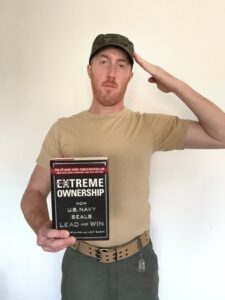 For Jocko Willink and Leif Babin (former Navy SEALS), leadership starts with taking extreme ownership of oneself. “On any team, in any organization, all responsibility for success and failure rests with the leader,” they write, “the leader must own everything in his or her world.” There should never be blame placed on anyone else, they believe, especially subordinates. If a junior member of the team doesn’t understand something, the leader must assume responsibility for not communicating the plan to them effectively. When a mistake is made, the leader must take ownership of the team’s failure and develop strategies so that it doesn’t happen again.
There have been countless books on the topic of leadership written over the course of human history and the real challenge isn’t finding one, but finding the right one. This one is written by soldiers, and it has many gems to offer. Willink and Babin developed their philosophy of leadership on the dusty urban battlefields of war in Iraq and their methods are now the standard operating procedure for US Navy SEALS, some of the world’s most dedicated warriors. For these brave men, success or failure is a question of life or death, which is why their philosophy starts with ownership of oneself.
With extreme ownership as the overarching theme of the book, the authors then explore other tenets of their philosophy of leadership, each accompanied by a relevant war-story and subsequently a relevant business-story. One of their first is checking the ego because only humble leadership builds trust. Ego clouds and disrupts “the planning process, the ability to take good advice, and the ability to accept constructive criticism” and can even stifle someone’s sense of self-preservation. Another important idea is the ability to prioritize and execute, especially when time is short and people are stressed. In the book, Babin tells a story about his team of SEALS finding themselves trapped on an exposed rooftop in Ramadi (the city in Iraq where our authors spent a majority of their combat deployment) and having to figure out a way to safety before the enemy found them. He had to prioritize his team’s safety and execute an improvised plan of escape in a matter of minutes in order to save everyone’s life. Hopefully we will never find ourselves in such a life-or-death situation, but the message is clear: It is the leader’s job to prioritize the most important thing for the team to focus on and enlist everyone in its execution. A third tenet is decentralized command, which is the process by which a leader entrusts and empowers his or her junior leaders to make decisions and take ownership of those decisions. This simultaneously allows senior leaders to focus on the bigger picture and junior leaders to take extreme ownership of whatever job they have been assigned.
What if my boss is a weak leader? What if my boss makes me do things I think are wrong or ineffective? “Leadership must always present a united front to the troops,” our authors write, because a public display of discontent or disagreement within the chain of command undermines the authority of leaders at all levels. This can be catastrophic to the performance of any organization (and is especially important if you have a weak leader). Every leader is aware of their job to lead those below them in seniority, but Willink and Babin suggest an additional strategy: leading up the chain of command, not just down. Leaders must be able to approach their superiors with questions, concerns, and solutions to problems the same way their subordinates must be able to approach them. It’s a two-way street; the influence goes both ways.
Last year, I got a new job coaching soccer for a youth academy and have found myself in a new leadership position. Not only do I have kids to coach, but I have younger coaches who work beneath me, a manager I report to directly, and a boss who owns the company. Within our network, all of the tenets of Willink and Babin’s philosophy are present. My boss gives me the game plan for each week’s lesson, but then allows me to coach my players in what I deem to be the best way possible (decentralized command). My manager and I coordinate on the best way to organize our players by age and skill level (prioritize and execute). I check in with my younger coaches during practice and ask for their ideas about what is working and what we need to improve upon (checking my ego). When I have a practice or a game that isn’t going well, I try to assume extreme ownership of the failure and examine what I can do to fix it and not let it happen again in the future. Willink and Babin’s philosophy of leadership has been very helpful for me in my job as a soccer coach and I suspect it is useful in many hierarchical contexts like sports, business, government, military, and others.
I’ve only touched on a few of the main takeaways in my review, but the exploration of leadership continues in what Willink and Babin call “the dichotomy of leadership,” which is the idea that the best leaders must exhibit the correct leadership quality in the right circumstances. Sometimes they must make decisions, sometimes they must delegate decision-making to others. Sometimes they must go first, sometimes they must watch from the rear. Sometimes they must remain stoic in the face of hardship, sometimes they must show emotion when connecting with their teammates. The only constant is taking ownership. “Leadership is both art and science,” they write, “there are no exact answers or specific formulas to follow in every case. In any situation, there exists a great deal of gray area, neither black nor white. There may be an infinite number of options for potential solutions to any one leadership challenge.” Given that it is true that no leader has ever faced the same problems as any other, the best strategy is to develop guidelines for how to lead, a philosophy of leadership, which is exactly what our authors have done. With the right philosophy, a leader can tackle any challenge. Their philosophy starts with assuming extreme ownership of any and every situation because the individual who takes extreme ownership of their situation is one who is proactive about solving problems.
- Why The World Doesn’t End by Michael Meade August 1, 2026
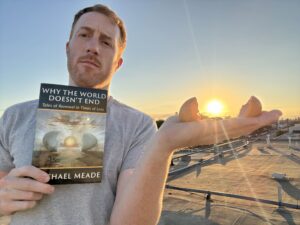 Endings and beginnings are eternally intertwined; “most end-of-the-world visions and end-time myths involve images of a regenerated world.” Life is cyclical, and despite the feelings we get when we find ourselves hurtling towards what feels like an end, it is important to remember that after that end comes a beginning. We are simply in the middle of another one of life’s many cycles. Cultures from across the world and throughout history all have myths associated with the cycle of life, death, and rebirth, and in his book Meade tells a number of these tales.
One of the myths our author shares is about a Native American woman who lives in a cave and alternates between weaving a cloth and stirring a pot of broth. There is a black dog that lives in the cave and every time she puts down her cloth in order to stir the broth, the dog approaches it and unravels it with his teeth. Then, when she puts down her spoon and leaves the pot unattended, its contents begin to settle on the bottom and burn. So, she is caught in a perpetual balance of tending to one and then the other, with each becoming undone when she turns her attention away. It’s a simple story that is packed with metaphor.
The woman represents Mother Earth and the cave is her earthly home; the weaving of the cloth represents the slow and patient construction of life and the interconnectedness of all things while the pot of broth symbolizes sustenance. Together, they mirror life, as the cloth creates meaning and the broth sustains life. The black dog represents entropy, the unknown, and death, and it doesn’t destroy the cloth out of malice, but unravels it as a necessary function of the cycle of creation and destruction.
The story itself is a metaphor for creation: it is never finished, but is in a constant state of becoming and unbecoming. Life’s creation and destruction are found in balance with one another, synonymous with order and chaos, yin and yang. “The most animated, surprising, and soulful places are those spaces found betwixt and between one thing and another” Meade writes, “between sleeping and waking, between culture and nature, where the inner and outer and the above and below entwine.” The story teaches us that true balance requires opposition—if the woman ever managed to complete her cloth, it would represent perfect harmony, a state of affairs we can never truly achieve. This tale of Mother Earth helps us understand that time is circular and has no end—it is an eternal loop of activity.
This is one of many mythological stories shared by Meade and extrapolated upon in the pages of his book in addition to many anecdotes on change. He writes about how when cultures fall apart it “happens in two places at once: where its youth are rejected and not fully invited into life and where its elders are forgotten and forget what is important about life.” This idea struck me as appropriate for our current day: young people are struggling to get their first foothold in society and older people have forgotten what is truly important in life as they have pulled the ladder to success up after themselves.
Intertwined throughout the myths of renewal and anecdotes of change, Meade writes about the journey we all take towards greater realization of our own role in the grand stories of life. “Every pilgrimage is secretly a journey to the center of oneself,” he says, “when we risk seeking what we most long for, we also begin the path of self-discovery.” This journey is an important spiritual one to take, for it is how we understand how creation and destruction take place in our own personal lives. The cycle of change happens on the individual level and also the societal level, and the myths we tell about one are appropriate for the other.
My overall take-away from reading this book is that regardless of where we are in our lives, either individually or collectively, we are in the middle of a cycle. If the end feels near, there is a beginning waiting in the wings, and vice versa. Despite the cloudiness of the future, we can all count on one thing: life will go on.