




 From a wide lens, leadership can be broken down into three broad categories: self-orientation, other-orientation, and system-orientation.
First and foremost, if we are the leader, we must be willing to be honest with ourselves about our strengths and weaknesses. This requires humility, honesty, and flexibility. Humility is described as “(a) a manifested willingness to view oneself accurately, (b) a displayed appreciation of others’ strengths and contributions, and (c) teachability, or openness to new ideas and feedback.” Just because we are in charge of making decisions doesn’t mean we are always going to make best one and it can be wise to take a few humble lumps of sugar in our ego tea. It is also very important to be conscious of our emotions and how we are feeling at any particular time. Moments of extreme emotion, when we are angry or sad for example, are not good times to make important decisions. Leadership has its ups and downs, just like every other journey in life, and when problems arise and obstacles present themselves the true mark of a leader is how they respond. We must be flexible to where the open road may take us, and trust that it will be the right destination.
The second step in examining our abilities as a leader is considering the ways in which we relate to other people. Our authors place importance on always staying positive because pessimists “tend to believe bad events will last a long time, will undermine everything they do, and are their own fault,” while “optimists view setbacks as temporary, as challenges to overcome.” We have to be compassionate with others and think about how we talk to them and how we support them so they can do their best work. Sometimes being a leader means being a coach and helping others help themselves. We have to trust our teammates to do their duties and give them the best tools to do so.
This leads to our third area of emphasis: the way we organize the group and manage the team. We have to foster an environment that is positive and supportive of the members of the organization. Do we know when to lead from the front and make hard decisions? Do we know when to lead from behind and act in a service role towards others in our organization and empower them to make decisions? Are we manifesting our vision for the future and managing forward progress?
My biggest takeaway from this book was the idea that leadership exists in the space between. Sometimes the leader makes a decision, sometimes they get a consensus. Sometimes they must be strong and competent, sometimes humble and vulnerable. Sometimes they have to communicate rationally and sometimes they have to tap into their emotions. The definition of leadership is someone who “guides or directs a group,” and it is therefore paramount to remember that true leadership “lives in a collective web of relationships.” In other words, if we consider leadership as something that ‘exists,’ it can be found in the space between people.
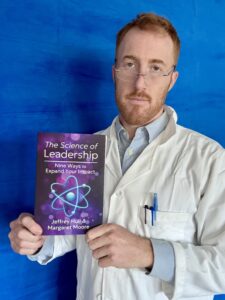
This book is essentially a study-guide for those interested in learning more about the art of leadership. The writing is dry, the stories are vague, but the information is valuable. Every chapter ends with discussion questions and the last chapter is a study guide for readers who want to assess their attributes and discover areas where they may be able to improve. It’s a very practical book.
Summary of the 9 pillars of leadership as diagnosed by the scientific community:
Self-Oriented capacities
—Conscious: What enables you to be calm, stable, and objective?
—Authentic: What matters most to you and those you serve?
—Agile: How will you be flexible when things change, and inclusive of diverse, opposing interests?
Other-Oriented capacities
—Relational: How will you help others do their best work?
—Positive: How will you help others leverage and expand their strengths?
—Compassionate: How will you generate resonance with others on a vision, purpose, and action?
System-Oriented capacities (organization/team orientation)
—Shared: How will you elevate leadership capacities across your team/organization?
—Servant: How will you best serve followers, customers, and other stakeholders?
—Transformational: How will you co-create and manifest a vision that positively impacts all stakeholders?
Leave a Reply