




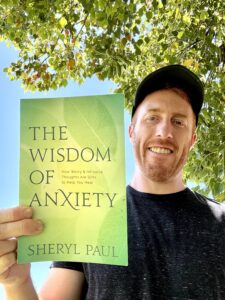
 We all have anxiety. We worry that our spouse has eyes for someone else, that our kids aren’t growing up in the same world that we did, or where the money will come from if we finally decide to quit our job. We worry about family, friends, money, jobs, and what in the world tomorrow may bring. All of these are important things to think about and our lives would be worse if we didn’t, but they need not emotionally control us, cripple us, and keep us up at night. “Anxiety is the soul’s way of communicating that something inside is awry, out of balance, or needs attention,” Paul writes, “it’s a messenger pointing to a need or wound that needs attention inside.”
Anxiety is a doorway to self-awareness, and when we suppress it, or take a doctor’s prescribed medication to mute the feelings, we cut ourselves off from receiving the messages it’s trying to convey. Anxiety is our body and soul communicating to us and it’s our job to explore our feelings in order to further understand. The appropriate response is not avoidance but curiosity and compassion, because the more we respond with curiosity and compassion, the more we are able to understand and heal. When it comes to understanding our anxiety and working with it to heal ourselves, Paul suggests we break it down into four different realms of self: physical, mental, emotional, and spiritual.
Physically, we feel anxiety when our muscles are tight and our breathing is shallow. The antidote here is simple exercise, which is both “prophylactic and prescriptive: when we exercise regularly, we create a less inviting environment in our physical body for anxiety to take hold; and when anxiety is stirring, exercise reduces its intensity.” We should also be aware of how much we’ve had to eat and drink, as sometimes a throbbing headache is a symptom of low blood sugar or dehydration, not the existential death we imagine it to be.
Mentally, we may listen to intrusive negative thoughts and get stuck in a worry loop. Whether or not our partner is ‘the one’ is a thought that can keep us up at night as we play out endless scenarios in our heads about what the future with this person might hold. If we examine our thoughts closer, however, we may realize that these thoughts are our anxiety trying to communicate with us that what we are truly scared of is commitment or vulnerability and has nothing to do with our partner. This is similar to the emotional realm, where buried emotions can come to the surface as anxiety, like for example when we move to a new place and find ourselves angry at our new surroundings when in reality we’re lonely and sad that we’ve left our old friends and neighbors behind.
Our spiritual anxiety is often existential and usually arises during major life transitions. When we have a birthday we may find ourselves wondering ‘Am I on the right path in life?’, or after we achieve a big life goal we may ask ourselves ‘What is my purpose now?’ These questions are getting at something deeper—questions of purpose, mortality, uncertainty, and the meaning of our lives. These are important questions to contemplate, but they need not consume us. It’s our job to consider them with curiosity and compassion as opposed to fear and distress.
The strategies Paul promotes for understanding and working with our anxiety are simple, albeit not easy. The first and mort important is not to hide from our anxiety or shame it, but to recognize that it is trying to tell us something deeper. It is an alarm bell and we must answer the call, not cover our ears to the sound. Physically, we can journal, meditate, practice an artistic hobby, or spend time in nature. Mentally and emotionally we can practice allowing our uncomfortable feelings to be felt and to pass through us, for things bottled up will eventually explode. Spiritually, we can access what Buddhists call refuge, which is “the quiet resting place inside where you can hear the noise of your mind settle down and physically feel your soul relax. It’s your own private retreat that’s accessible and free.” This is what Paul calls our “well of being,” which makes sense, because anxiety is helping us examine our well-being.
Ultimately, it all starts and ends with self-compassion because our anxiety is a part of us. If we ignore it or tamp it down, we remain ignorant to its messages. If we open ourselves up to exploring anxiety’s deeper meanings, we not only come to a greater understanding of ourselves, but we grow stronger. We must lean in and accept, not back away and hide.