




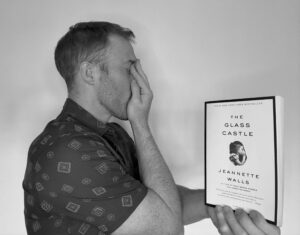
 Jeannette Walls was raised by parents who did not make economic security for the family a priority. Her father was an engineer and quick to share his intelligence with his children. He could fix most engines and knew the names of the stars and planets. He was also a hopeless alcoholic, spending his paycheck on booze and leaving everyone’s stomachs empty. Her mother was an artist and writer who never sold a painting or a book. She made no money except when Walls and her siblings pleaded with her to be a teacher—a job she could never hold down because she didn’t like showing up. Her parents were irresponsible, and throughout her entire childhood, Jeannette and her siblings never knew stability.
When they lived in California, they camped in the desert and worried for water. When they lived in Arizona, they lived in a house filled with cockroaches that had no locks on the doors. When they lived in West Virginia, winter froze the water, rainstorms poured through holes in the roof, and a mudslide carried the front steps away. There were many instances when, without warning, their father would disappear for a few days, or their mother would refuse to get out of bed, or they wouldn’t have anything to eat.
What is captivating is that despite her poor circumstances, Walls developed and maintained a strong internal sense of responsibility (so did her three siblings). If her parents weren’t going to take care of her, then she was going to have to take care of herself, and she started learning early. She taught herself how to cook and do household chores, she made her own braces, she fought off a bigger kid who wanted to rape her, and she learned how to manage the little money that they did have. She developed a spirit of resourcefulness throughout the book that led to her paying her way through college with scholarships and part-time jobs and eventually becoming a published author.
The book is well written. It moves at a great pace and kept my attention from cover to cover. I enjoyed her voice as narrator and enjoyed getting to know each member of her family intimately through her eyes. It was beautiful to see her question her circumstances and slowly come to recognize that she both loved her parents for their kindness and intelligence and hated them for their abuse and neglect. Her stories have the full range of human emotion infused into them and are equal parts heartfelt and entertaining.
At the end of the book, the kids are all adults and living in New York City. Their parents are living in the city too and are voluntarily homeless. Walls and each of her siblings relates to their parents in different ways, much reflective of each of our own complicated family dynamics. If this book had a message it would be: You can’t choose your family, but you can choose how much responsibility you take for yourself.
Leave a Reply